E-AWAS2: The Gov-Tech Stack That Treats Registration Like a Security Boundary
A deep dive into the Firebase-first design behind two-phase signup, role-based access, audit trails, and lifecycle management for housing and guest-house logistics.
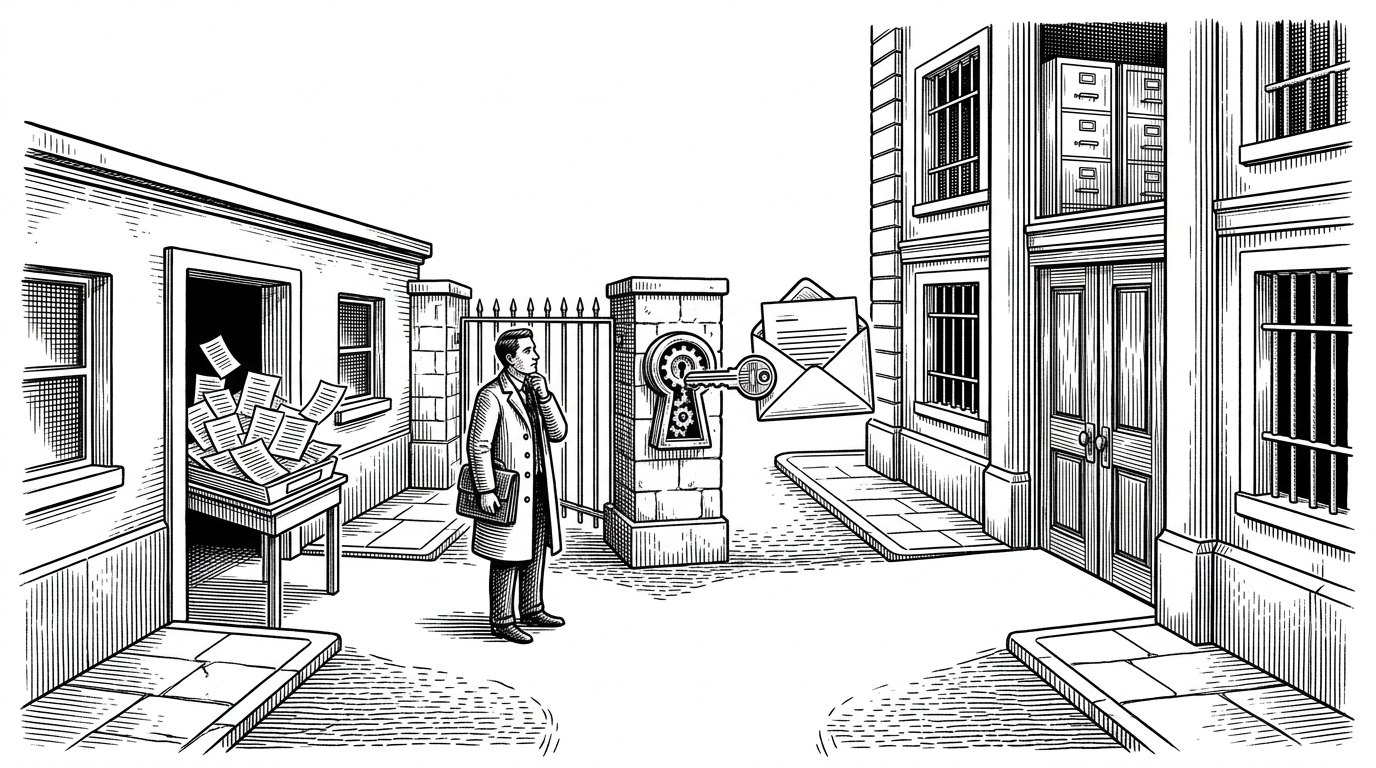
- E-AWAS2 turns registration into a trust gate by holding signups in Firestore until email ownership is verified and the account can be safely promoted into Firebase Auth.
- The repo gets a lot of mileage out of a lean stack because Firestore, custom claims, and audit logs are doing the work that heavier infrastructure often handles elsewhere.
- The real product is not the form screen but the workflow state machine, which moves applications through approval, release, and vacating with clear role boundaries.
- Its strongest design choice is practical restraint: enough structure to satisfy government-grade control, but not so much machinery that the system becomes brittle.
The First Gate Is Not Login. It Is Proof
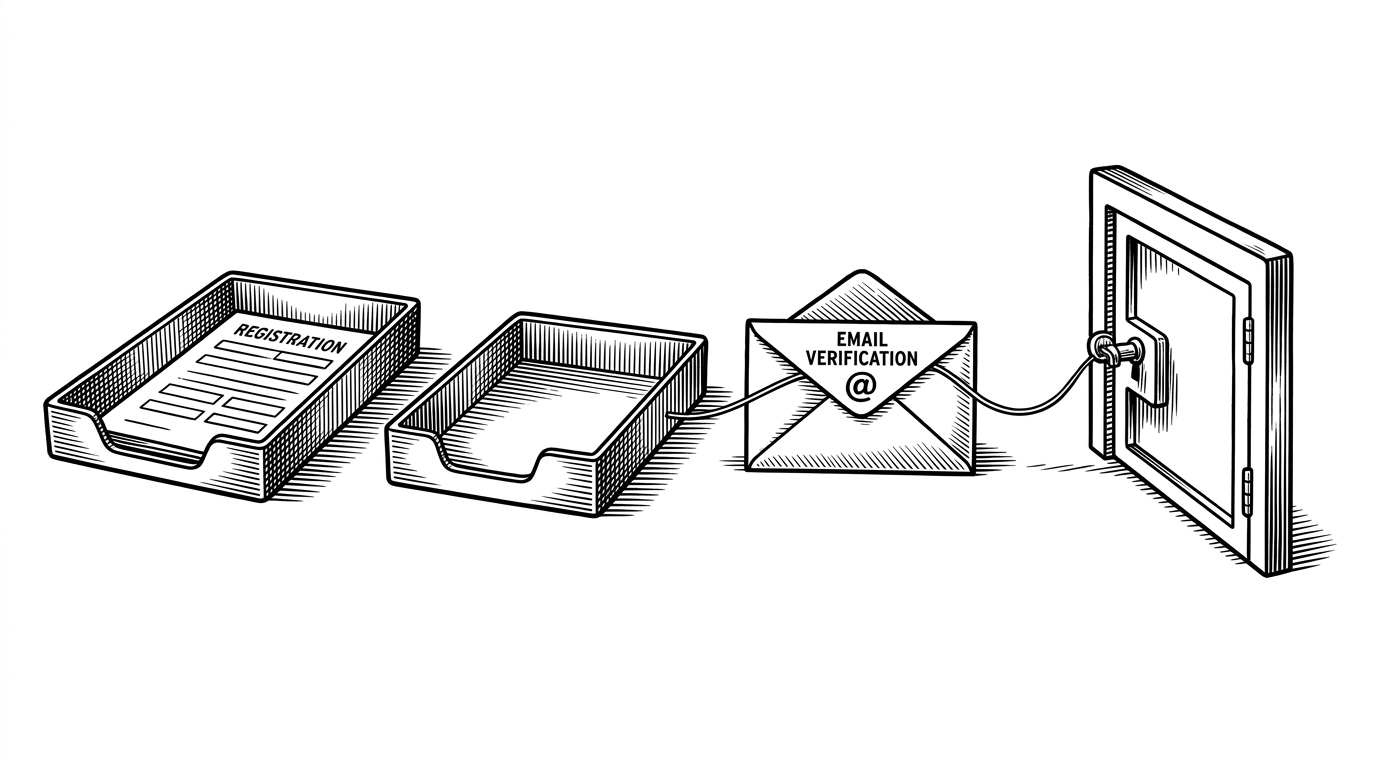
Most admin systems treat signup as a form. E-AWAS2 treats it as a boundary. A user does not become real on the first submit, because the system first parks the application in temp-registrations, sends a verification token, and waits for proof before it creates a permanent identity.
That choice changes the whole security posture. It stops the database from filling with half-finished accounts, keeps identity collision under control, and makes the expensive step, Firebase Auth creation, happen only after the email address has been checked and confirmed.
Why Firestore Is Acting Like a Queue
The clever part is that E-AWAS2 does not introduce a separate queueing system just to solve a temporary problem. It uses Firestore as ephemeral state storage, which keeps the architecture lean for a project already committed to Firebase.
The triple-check availability logic is what makes the design feel defensive instead of merely convenient. The email has to be clear in Firebase Auth, clear in the users collection, and clear in temp-registrations. That is how you avoid race conditions when two people try to claim the same address at the same time.
| Dimension | Lean Firebase approach | Heavier queue-and-Redis approach |
|---|---|---|
| Registration state | Temporary Firestore record with TTL | Dedicated queue plus separate cache layer |
| Identity promotion | Verify first, then create Auth user | Often split across more moving parts |
| Collision prevention | Triple-check across Auth, users, and temp records | Usually handled by more infrastructure |
| Operational overhead | Low | Higher |
| Fit for gov workflows | Strong, because the control point stays visible | Can be overbuilt for a single workflow |
RBAC Is Not an Afterthought Here
Once a user gets through the front gate, the next question is not who they are in the abstract. It is what they are allowed to do. E-AWAS2 answers that with Firebase custom claims, a hasRole middleware pattern, and audit logging tied directly into sensitive actions.
That matters because the system serves different actors. Government employees apply. Officers review. Guest-house workflows run under a different set of rules. The app is not just logging in users. It is routing authority.
The Application Lifecycle Is the Real Product
The best way to understand E-AWAS2 is to follow one application through its states. Applied becomes Approved or Rejected. A release can be requested. Eventually the accommodation is Vacated. That is not a toy CRUD loop. It is an operational lifecycle with consequences.
This is where the service layer earns its keep. Controllers stay thin. Business rules live in services. Bulk rejection, force release, and other high-stakes actions are organized as transitions, not scattered as one-off UI events.
| Lifecycle concern | What a basic portal does | What E-AWAS2 does |
|---|---|---|
| State handling | Save and update records | Model explicit workflow transitions |
| Officer actions | Single-row admin edits | Bulk review, release, and rejection flows |
| Traceability | Optional logs | Audit logs attached to sensitive steps |
| Failure mode | Hidden edge cases | Visible state changes and permissions |
This Stack Is Lean, But It Is Not Casual
The production hardening tells you how the repo expects to be used. Rate limits are split by action type. Helmet enforces CSP. XSS, HPP, and logging are in place. Swagger docs and scheduled jobs round out a system that assumes abuse, mistakes, and compliance pressure are all normal.
That is a very different mindset from a dashboard that only works when everyone behaves. E-AWAS2 is built like software that will be asked to explain itself later.
How It Compares to a Typical Admin Portal
Compared with a standard CRUD admin dashboard, E-AWAS2 spends more effort on trust than on convenience. Compared with a heavier multi-service stack, it keeps the moving parts contained. That is the sweet spot: modern enough to be credible, restrained enough to stay governable.
The design trade-off is clear. If you only need a login screen and a table, this is more machinery than you want. If you need controlled identity promotion, role-based access, auditability, and a stateful public-sector workflow, it is exactly the kind of machinery that pays for itself.
| Model | Best at | Weak spot | When it fits |
|---|---|---|---|
| Basic CRUD portal | Fast setup | Weak identity and audit discipline | Simple internal admin tasks |
| E-AWAS2 | Controlled workflow and trust gates | More backend logic than a toy app | Government housing and guest-house operations |
| Heavy distributed stack | Scale and decoupled services | More operational complexity | Broader platforms with multiple teams |
What E-AWAS2 Suggests About Gov-Tech Done Well
The lesson here is not that government software should copy startups. It is that it can borrow the useful parts of startup tooling, like Firebase, React, and service-layer discipline, without giving up the controls that public systems need.
E-AWAS2 shows that a lean stack can still enforce serious rules. It treats identity as provisional until proven, permissions as explicit, and workflow as something worth modeling instead of improvising. That is what modern gov-tech looks like when it respects both speed and accountability.