anogs-analysis: The anti-cheat that waits to punish you
A reverse-engineered iOS framework that breaks startup into 51 steps, hides its strings in layers, scans loaded libraries, and lets the server deliver the real verdict.
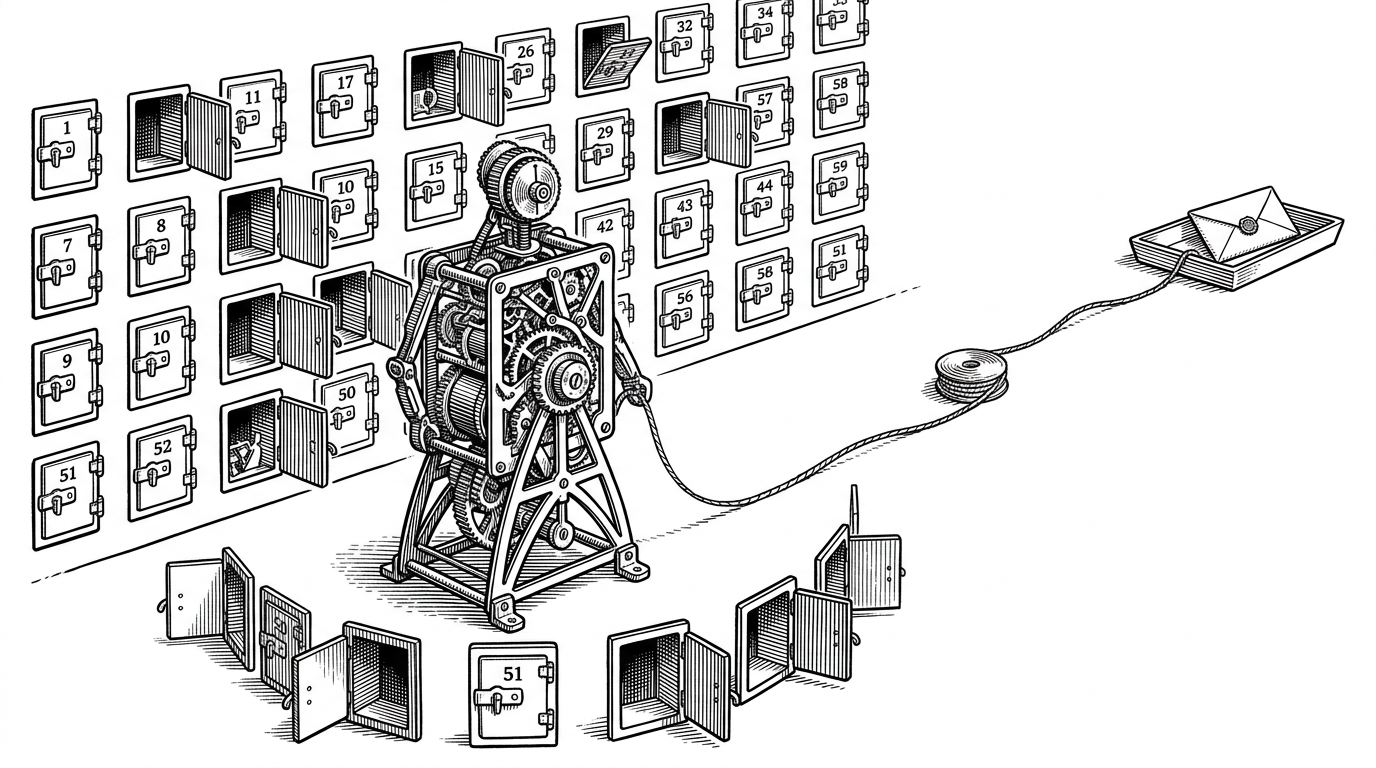
- anogs-analysis matters because it treats punishment as a delayed server-side judgment, not a local tripwire.
- Its 51-step startup and layered string decryption are there to deny analysts a single clean patch point.
- The framework watches loaded images and ASLR state so it can reason about the process, not just scan for strings.
- Deferred enforcement changes the economics of reverse engineering because cause and effect are split across time.
The ban comes later
If you expect anti-cheat to behave like a tripwire, this repo pushes in a different direction. The local SDK looks less like a judge and more like a witness. It collects signals, fingerprints the environment, and flags suspicion. The punishment arrives later, after the backend can combine what the client saw with broader account context.
That delay is the trick. Immediate bans expose thresholds, make experiments obvious, and give cheat developers a clean cause-and-effect loop. A deferred verdict muddies that loop. The client can be one signal among many, which makes the system harder to probe and easier to scale.
A researcher’s notebook, not a product page
There is no glossy vendor narrative here. The repo reads like a reverse-engineering notebook built from static analysis, offsets, and reconstructed control flow. That matters, because the article is not taking the framework at its word. It is reading the binary as evidence.
The target is an arm64 iOS framework, and the analysis stays close to the mechanics. Function names, image enumeration, and decryption routines do the talking. That is the right level of detail for a project like this. It tells you what the system does without pretending that a decompiled binary is a press release.
Fifty-one steps before the real work starts
The most conspicuous design choice is the fragmented startup path. Instead of one obvious `init()` that an analyst can patch out, the analysis describes fifty-one separate initialization functions. That spreads setup across a chain, which makes the system harder to disable with one surgical edit.
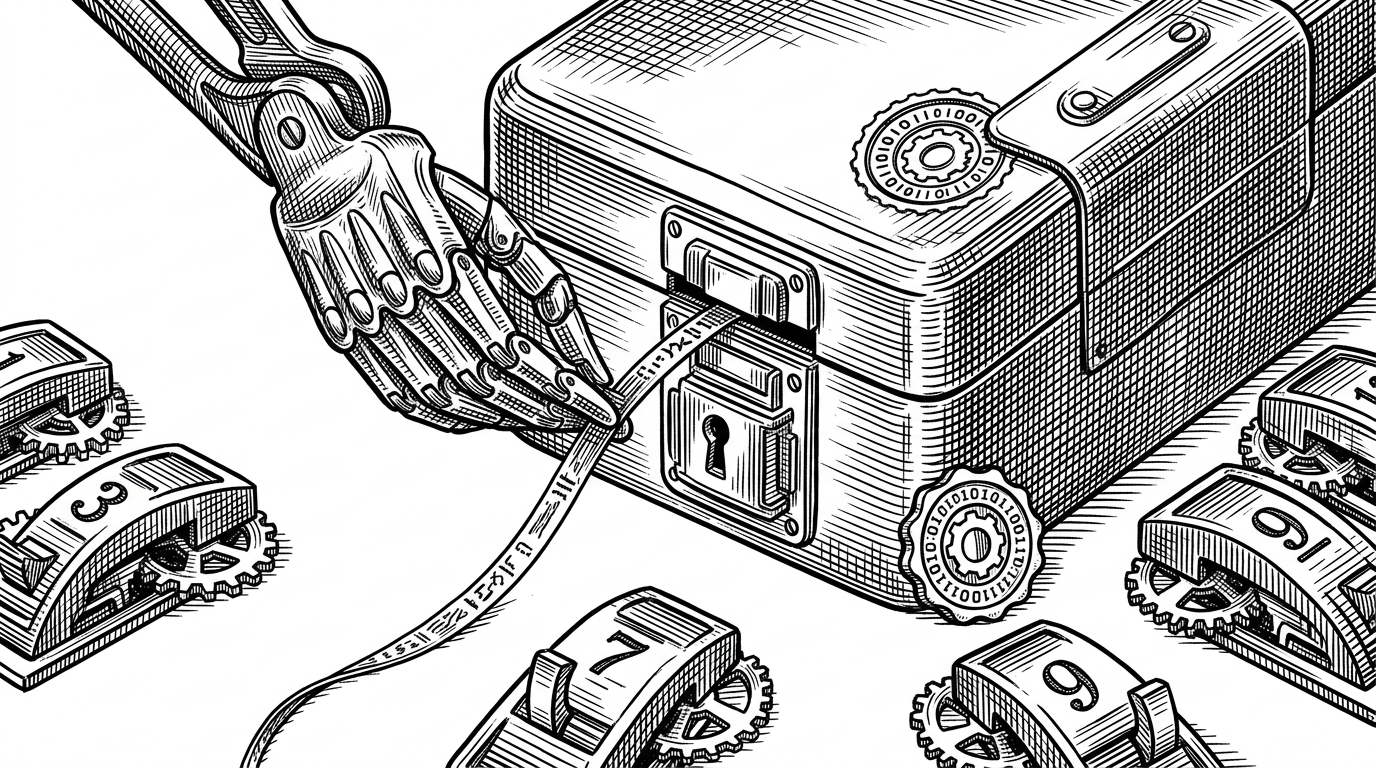
The order matters. Strings are decrypted first, memory and environment preparation follow, and only then does the core security logic come alive. In other words, the binary does not just hide data. It stages the conditions under which the data can safely be read and acted on.
uint8_t decrypted_byte = encrypted_table[index + 2 + i] ^ (((xor_key + i) ^ 0x3B) + 4);

if (calculate_checksum(encrypted_table, length) != expected_checksum) {
    // Treat tampering as a security event
}
The binary watches its own environment
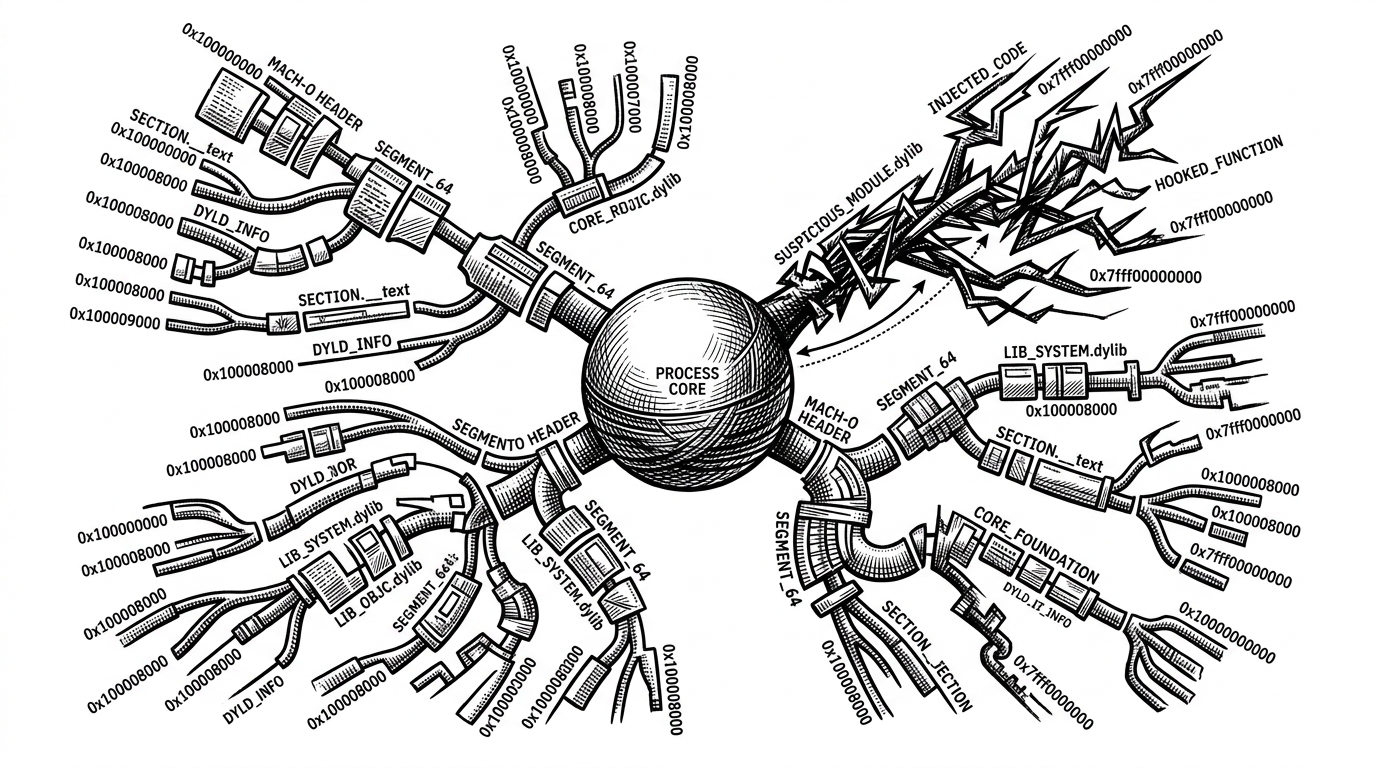
The other half of the design is surveillance. The analysis points to dyld image enumeration, image-name inspection, and ASLR slide calculation. That is a precise way of saying the framework maps the process it lives inside. It does not just ask, “Am I running?” It asks, “What else is running with me?”
That distinction matters. If an injected library, debugger, or hook leaves a footprint in the loaded image list, the SDK can spot the shape of the environment instead of relying on one brittle string match. ASLR awareness helps it turn abstract addresses into real ones, which is exactly what you need if the process itself is part of the battlefield.
Why delayed banning changes the game
This is the article’s center of gravity. A local scan is not the same thing as a local verdict. The client can flag suspicion, record evidence, and keep going. The backend can then fold that evidence into a broader decision and punish later, when it has enough context to make the ban look less like a single trigger and more like a pattern.
That separation makes reverse engineering harder in a very specific way. If the effect is delayed, the analyst cannot assume the last thing they changed was the thing that caused the ban. The system gets to hide its causality inside time. That is a different kind of defense from obfuscation, and a more frustrating one.
What this looks like next to ordinary anti-cheat
| Trait | Conventional anti-cheat | anogs-analysis | Why it matters |
|---|---|---|---|
| Enforcement timing | Ban or block as soon as the client trips a rule | Flag locally, then let the server deliver the verdict later | Delays weaken the analyst’s ability to infer the exact trigger |
| Startup shape | One obvious initialization path | Fifty-one-step initialization chain | Splitting setup denies the attacker a single patch point |
| String handling | Plain strings or lighter packing | Layered XOR-style decryption with integrity checks | Tampering can be detected while secrets are still being unwrapped |
| Runtime awareness | Basic checks for obvious hooks | dyld image counts, image names, and ASLR slide inspection | The process becomes a mapped environment, not just a running app |
What the repo teaches
The lesson is not that obfuscation alone wins. It is that obfuscation, environment awareness, and deferred enforcement work best as one system. Together they stretch the moment of interpretation across time, which makes the binary harder to study and the punishment harder to tie to one visible event.
For engineers, that is the real takeaway. A security control does not have to react immediately to be effective. It can wait, correlate, and decide later. That changes the shape of the attack surface, and it changes the shape of the reverse engineer’s job too.