decrypted Turns Apple’s Own Debugging Tools Into a FairPlay Decryption Pipeline
A Swift UI, a Python engine, and a vulnerable `gcore` entitlement combine to dump decrypted iOS app memory, patch the Mach-O, and make the runtime state permanent.
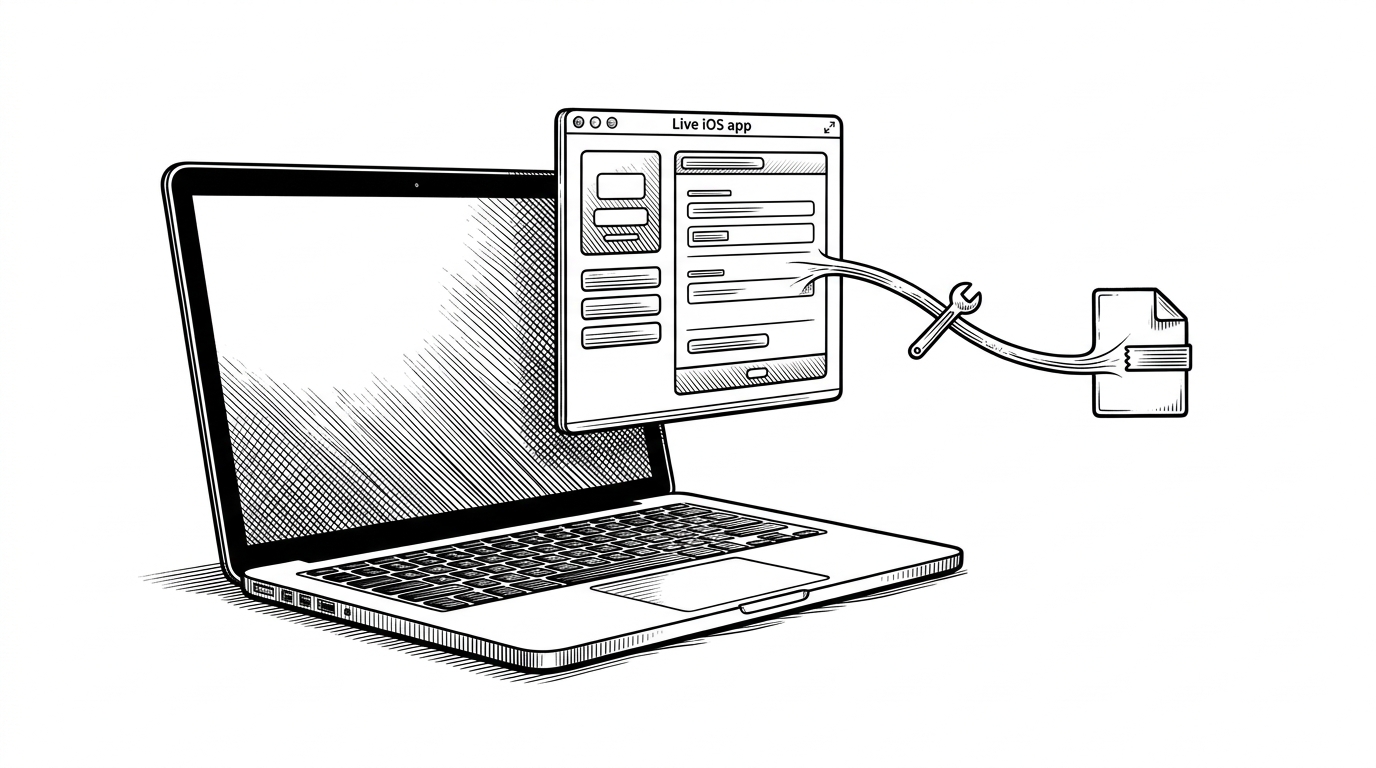
- `decrypted` works because FairPlay protects the file at rest, while the useful code briefly exists in RAM.
- The repo’s real leverage is Apple’s own trust chain, with `gcore` acting as the extraction point.
- SwiftUI handles discovery and control, while Python handles memory dumping and Mach-O surgery.
- The tool is narrow by design, and that narrowness is what makes it revealing.
The sharp part of decrypted is not that it can strip protection off an iOS app. It is that it does so by standing on a trusted macOS debugging path and waiting for the decrypted state to appear in memory. That shifts the problem from cracking a file to freezing a running process.
The trusted tool is the twist
This is a living-off-the-land exploit in the most literal sense. A system utility that should help developers inspect crashes becomes the mechanism that drains decrypted pages out of a protected app. The binary on disk stays protected until execution starts, which is exactly why runtime capture is the leverage point.
| Project type | Target surface | Method | Output | Tradeoff |
|---|---|---|---|---|
| decrypted | Apple Silicon Mac running iOS apps | Dump live memory with a trusted debug utility, then patch Mach-O metadata | A usable decrypted binary | Narrow, sharp, and tied to one exploit window |
| Classic jailbreak decryptors | A jailbroken iPhone | Use device-side access to pull protected app code | A decrypted IPA or app binary | Depends on a compromised phone |
| Broad awesome lists | Reverse-engineering ecosystem | Curate links across many tools and topics | A reading list, not a pipeline | Useful for breadth, weak on leverage |
Apple Silicon moved the target
Apple Silicon changed where the interesting moment happens. With Designed for iPhone and iPad apps running on Mac, the desktop becomes the place where mobile code is actually executing. That matters because the old jailbreak workflow depended on the device itself, while this one turns a Mac into the collection point.
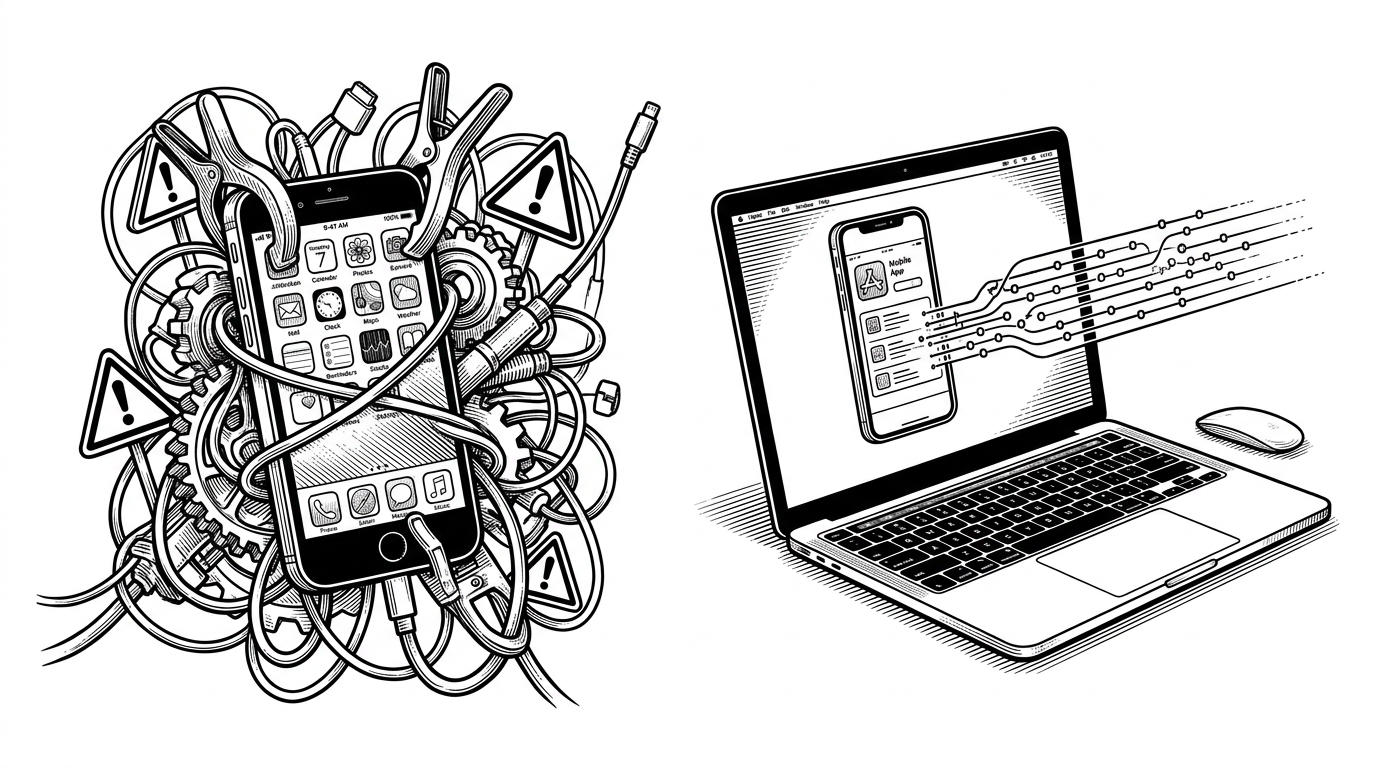
Scan, launch, dump, patch
The pipeline is simple to read and hard to execute cleanly. First the tool scans /Applications for bundles that look like iOS wrappers. Then it checks whether the binary is still encrypted, launches the app, maps its memory, and snapshots the process with gcore. The last step is the most important one: rebuild the Mach-O so the dumped runtime state becomes a durable file.
The code paths mirror that sequence. Discovery lives in the scanner, execution lives in the runtime helper, and reconstruction lives in the binary patcher. That separation is what makes the repo feel more like a production pipeline than a one-off script.
decrypted/
  ContentView.swift   -> SwiftUI app browser and progress view
  decryptedApp.swift  -> entry point
  app_scanner.py      -> find .app bundles and iOS wrappers
  decrypt_fairplay.py -> launch, dump, and patch the binary
  setup.py            -> environment and entitlement checks
Swift for the shell, Python for the surgery
The split is practical, not accidental. SwiftUI gives the project a native macOS front end for browsing apps and showing status, while Python does the brittle work where libraries matter more than polish. That is where LIEF and radare2 fit: they are better suited to memory maps, load commands, and Mach-O surgery than a thin UI layer would be.

The Mach-O patch makes the output durable
The dump is only half the story. A core file is evidence, but it is not yet a reusable binary. The patcher rewrites the Mach-O load commands, flips the encryption state, and swaps the runtime pages back into a file that behaves like the decrypted app the user actually ran. That is the difference between a forensic snapshot and a practical artifact.

Specialization beats breadth when leverage matters
Broad reverse-engineering lists are useful, but they are catalogs. decrypted is opinionated. It assumes you want one thing only: FairPlay out of a running app on a Mac that can host the target. That makes it smaller than a general reference repo and more interesting as a technical artifact, because it compresses a whole attack chain into a narrow tool.
That narrowness also explains why the project feels sharp rather than generic. A broad list gives you options. This repo gives you a path, and the path depends on a specific entitlement failure, a specific OS window, and a specific relationship between disk encryption and runtime memory.
This kind of tool ages fast
The README signal matters here. The project is still under development, which fits the shape of the technique itself. Tools like this are most revealing when they sit on top of a fragile assumption in the platform, because that is where the boundary between protection and exposure is easiest to see.
That is why the repo reads as more than a utility. It is a case study in trust misplaced at the system level. Apple’s own tooling is doing the work, the decrypted state already exists, and the only question is whether you can catch it before the process closes.