tele-bot-ipa: Turning Telegram Into a Remote IPA Decryption Console
A chat bot that drives a jailbroken iPhone, serializes one decrypt job at a time, and ships oversized outputs through a user-session detour.

- tele-bot-ipa treats a jailbroken iPhone as scarce hardware, so the queue is the product, not the chat interface.
- The repo's key trick is delivery, not just decryption, because finished IPAs leave through a user-session path that sidesteps bot-era file limits.
- Its TypeScript, PHP, Python, and shell mix is a deliberate response to one workflow, with each step living where it is easiest to run.
- Compared with manual jailbreak handling or generic Telegram bots, the project is optimized for repeatability under physical and platform constraints.
A Telegram message becomes a physical workflow
Most Telegram bots are software pretending to be a workflow. tele-bot-ipa is different. It turns a chat request into a remote session on a jailbroken iPhone, then uses that phone as a narrow, physical decryption appliance.
That makes the repo interesting for the same reason a tiny factory line is interesting. The value is not in one machine. The value is in the coordination between machines that were never meant to cooperate.
The owner, 34306, appears to have built it for a small but real audience: people who need decrypted IPAs for analysis, tweak work, or archival tasks.
Why the queue is the real product
The repo treats concurrency as a risk, not a feature. A physical iPhone is not a stateless worker, so the code uses a strict FIFO queue and a single active lock to make sure one decrypt job finishes before the next one starts.
That choice keeps the system stable. It avoids overlapping filesystem writes, conflicting SSH sessions, and the kind of cross-talk that turns a handy automation script into a flaky lab setup.
while (queue.length) {
  if (isProcessingQueue) return;
  isProcessingQueue = true;
  const job = queue.shift();
  await runOneJob(job);
  isProcessingQueue = false;
}
The 50 MB problem, and the workaround that sidesteps it
Telegram's bot path is where the design gets clever. Big decrypted IPAs do not always belong on the bot lane, so the project uses a user-session upload path to move the finished file into a backup channel, then forwards it back to the requester.
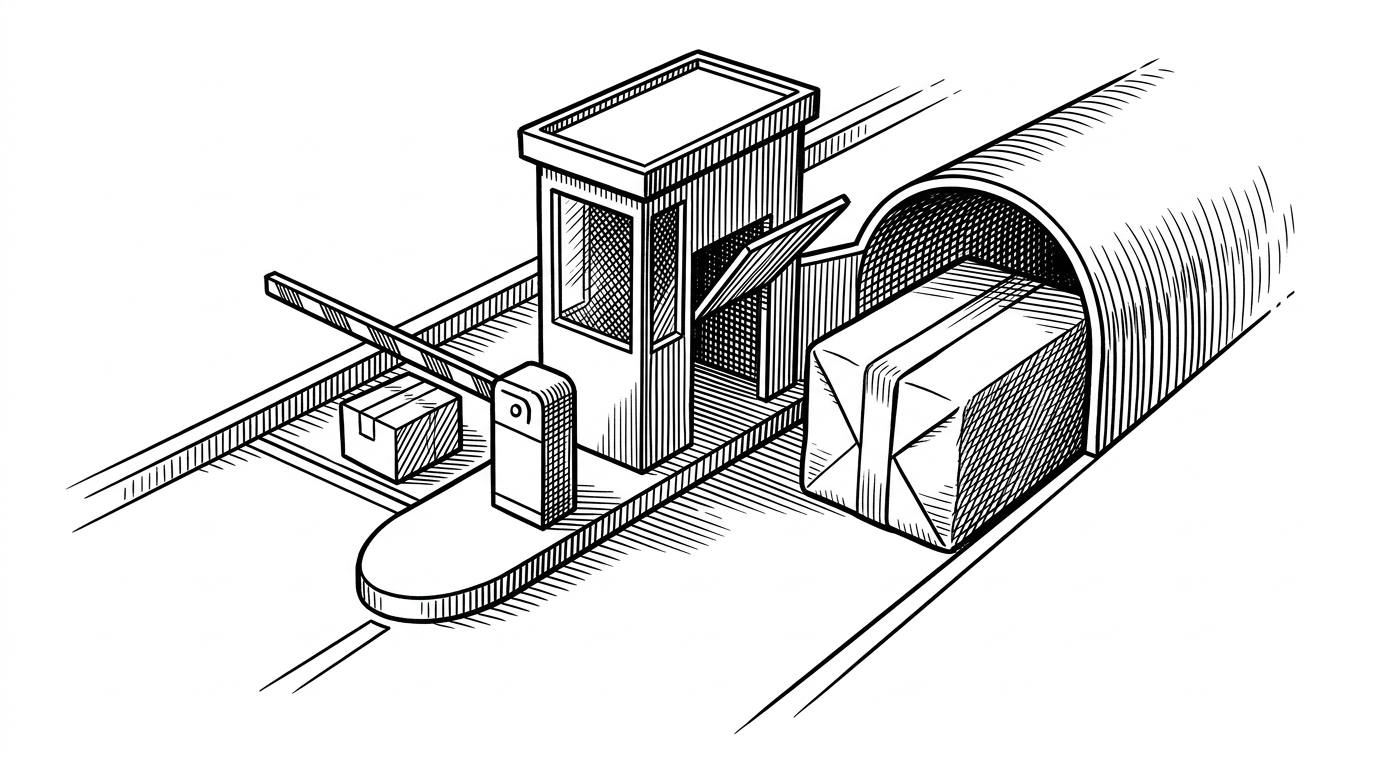
That extra hop is not cosmetic. It separates orchestration from delivery, which is exactly what you want when the first channel is optimized for commands and the second is optimized for larger payloads.
The same pattern shows up elsewhere in the repo. The bot keeps the conversation tidy, while the upload service and backup channel carry the heavy file traffic the bot API itself is not built to absorb.
How the stack fits the job
The polyglot stack looks messy until you trace each file to a constraint. TypeScript handles the chat orchestration. PHP does one metadata check. Python generates Telegram sessions. Shell glues the processes together. The decryption itself is still delegated to device-side tooling.
That is not accidental sprawl. It is a pragmatic division of labor around a workflow where each step lives in a different ecosystem.
src/bot/handlers.ts          Telegram intake and queue control
src/services/sshService.ts   Remote shell bridge to the iPhone
src/services/decryptService.ts Decrypt command and output discovery
src/services/uploadService.ts User-session file delivery
check-arcade.php             App Store metadata scrape
setup_telegram.py            Session-string generator
start-all.sh                 Process glue
What this repo is, and what it is not
Comparisons matter here because the project sits between categories. It is not just a bot, and it is not a general automation framework. It is a narrow tool built around hardware, file size limits, and a single fragile target device.
| Workflow | Execution location | Concurrency | Large files | Best fit |
|---|---|---|---|---|
| Manual jailbreak workflow | On the device, by hand | One at a time | Moved manually | Occasional one-off research |
| Generic cloud Telegram bot | Cloud server | Many at once | Often hits bot limits | Simple chat automation |
| tele-bot-ipa | SSH into a physical iPhone | Strict FIFO | User-session upload path | Hardware-bound decryption jobs |
If you need a neat cloud abstraction, this is the wrong shape. If you need a repeatable path from a Telegram request to a decrypted IPA on a real iPhone, the shape suddenly makes sense.
That is the appeal of the repo. It does not hide the awkward parts. It turns them into the design.