bale_tunnel: Bale Tunnel: Turning a Messenger App Into a Secret Internet Pipe
A deep look at the protocol tricks, buffering logic, and session plumbing behind a tunnel that rides on trusted domestic infrastructure.
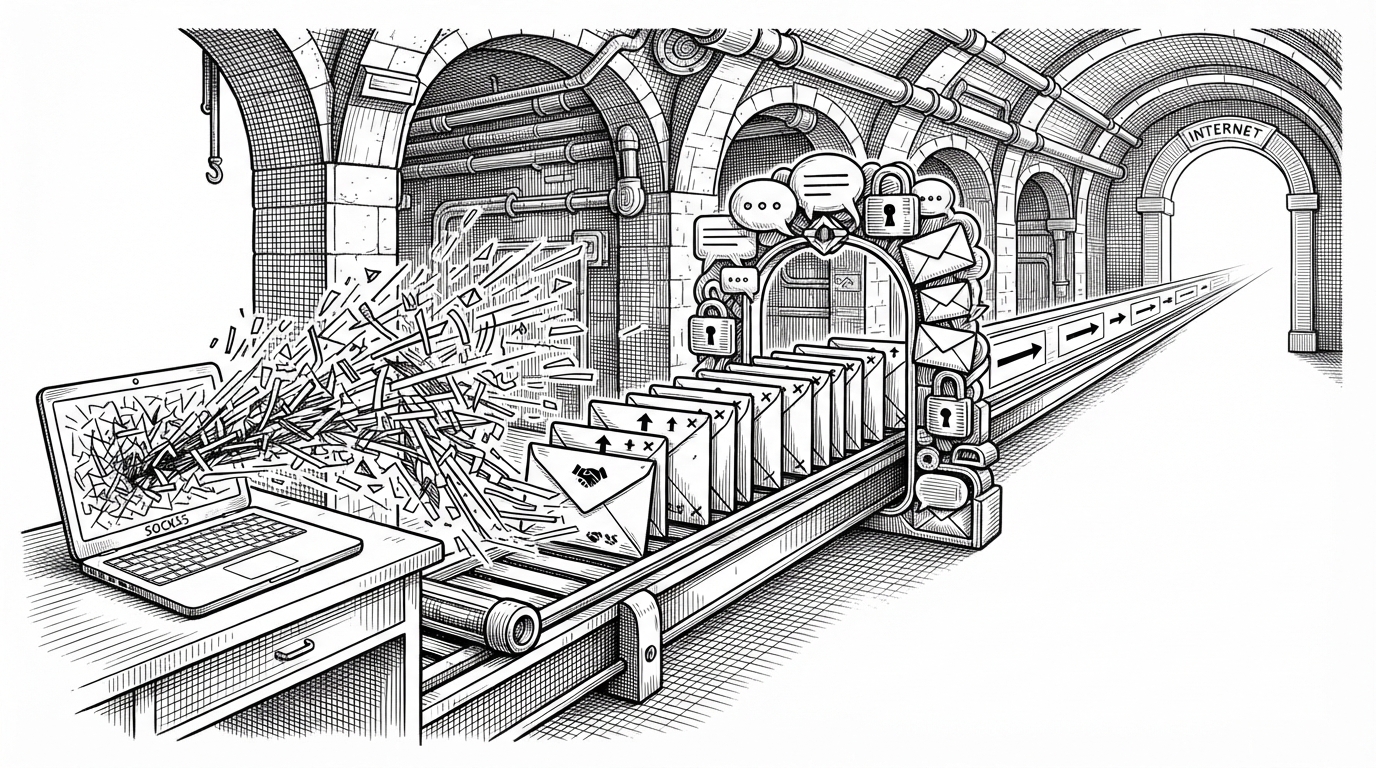

This project was developed in response to the severe internet restrictions imposed in Iran. It only functions when voice calls through Bale Messenger can be established via an overseas server. Hoping for better days for Iran.
- Bale Tunnel is interesting because it treats a domestic messenger as the transport layer itself, not just as a camouflage skin for a proxy.
- Its protocol design is built around framed chunks, sequence numbers, and session state so a slow store-and-forward medium can still carry a usable stream.
- Compression is selective and buffering is deliberate, which shows the project is tuned for hostile latency instead of theoretical elegance.
- The project’s niche is narrow but important: it is a censorship-circumvention tool for networks where trusted local infrastructure may outlast ordinary VPN paths.
Bale Tunnel solves a very specific problem. In some networks, the hard part is not encrypting traffic. It is finding a path that still looks normal enough to get through. Bale Tunnel answers that by using Bale Messenger as the transport, so a SOCKS5 connection can ride inside traffic a firewall is less likely to punish.
Why a Messenger App Becomes a Tunnel
Bale Tunnel sits in the same family as VPNs and obfuscation tools, but the more useful comparison is collateral freedom. The trick is to piggyback on infrastructure that already has local trust. If the network is hostile to generic tunnels but still lets a domestic messenger breathe, the messenger becomes the path.
That is the inversion at the center of the project. Traffic does not just hide inside encryption. It hides inside a service category that still has a reason to exist in a restricted environment: voice calls, chat, and their encrypted plumbing. In practice, that can matter more than raw throughput.
The Core Trick: Packets Disguised as Files
The repository’s protocol layer uses a file-as-packet model. Instead of pushing a continuous byte stream straight through the network, Bale Tunnel frames traffic into named units such as connection setup, acknowledgements, upstream data, downstream data, and teardown. The transport becomes store-and-forward, which is much easier to route through an API surface than a live socket.
#[repr(C)]
pub struct ChunkHeader {
    pub magic: u32,
    pub session_id: [u8; 16],
    pub seq: u32,
    pub flags: u8,
}

// Framed data moves as named packets, not as a raw socket stream.
// The header lets the receiver validate, order, and reassemble chunks.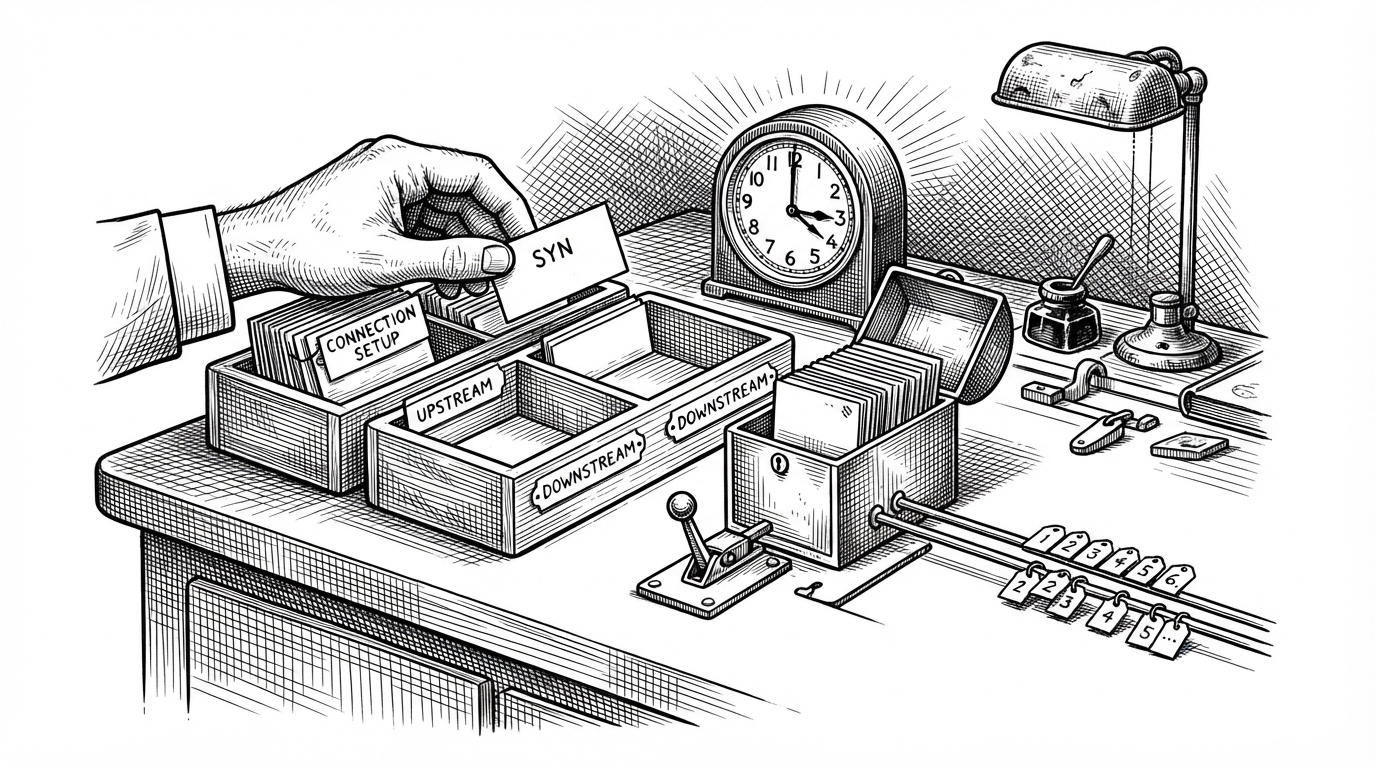
How the Client Keeps Two Worlds in Sync
The client has to bridge two systems that do not share a clock. One side is a SOCKS5 session that expects immediate reads and writes. The other side is a polling loop that waits for remote files to appear. That mismatch is why the session manager matters so much. It is the traffic cop between live sockets and delayed API delivery.
This is where Rust earns its keep. The codebase leans on async tasks, channels, and explicit buffering so the tunnel can keep multiple sessions straight without pretending the transport is synchronous. That design is less glamorous than a clever cipher, but it is the part that makes the tunnel usable.
| Task | What it does | Why it matters |
|---|---|---|
| SOCKS5 handler | Accepts local proxy traffic | Creates the user-facing connection |
| Session manager | Routes messages by session ID | Keeps multiple tunnels from colliding |
| Polling loop | Checks Bale API for new files | Bridges the delay between hops |
| Streamer | Buffers and frames bytes | Turns a stream into reassemblable chunks |
Why Compression Is Selective, Not Automatic
Bale Tunnel does not compress everything. That would waste cycles on small packets and fail to help payloads that are already compressed. The smarter move is selective compression: only pay the cost when the chunk is large enough and the savings are real.
That choice sounds minor, but it reveals the operating philosophy. This project is not trying to be elegant in the abstract. It is trying to survive a constrained path where every extra millisecond, every unnecessary byte, and every avoidable retry matters.
The Real Constraint Is Latency
The transport is inherently slow because it is not a direct socket. There is API polling, chunk framing, reassembly, and enough buffering to make short bursts tolerable. That means reliability has to be designed in from the start. Sequence numbers, session IDs, and inactivity timeouts are not polish. They are the protocol.
This is also where the project’s limits show. A messenger transport is not a high-bandwidth backbone. It is a constrained path that trades speed for survivability. Bale Tunnel accepts that trade and builds around it instead of fighting it.
What It Beats, and What It Does Not
| Tool type | Transport layer | Visibility to DPI | Latency tolerance | Operational niche | Main weakness |
|---|---|---|---|---|---|
| Bale Tunnel | Messenger API and framed file packets | Low when Bale traffic is trusted | Moderate to high | Domestic collateral freedom | Depends on Bale and API stability |
| Traditional VPN | Direct encrypted tunnel | Often obvious at scale | Moderate | General purpose privacy | Easy to block by policy or fingerprint |
| TLS obfuscation | Standard HTTPS-like wrapping | Medium | Moderate | Broad compatibility | Can still look like a tunnel under inspection |
| Domestic relay script | Ad hoc TCP relay | Variable | Low to moderate | Quick and simple bypass | Fragile, often easy to detect |
The table makes the niche clear. Bale Tunnel is not a universal answer. It is a very specific answer to a very specific censorship regime, where domestic infrastructure can outlive the obvious paths.
Why This Pattern Matters
The deeper lesson is bigger than one repository. Messaging apps, local cloud providers, and other trusted domestic services are becoming part of the censorship-resistance toolbox. That changes the design space. The question is no longer just how to hide traffic. It is how to borrow legitimacy from the network that is still allowed to exist.
Bale Tunnel shows what that looks like in code. The transport is the message platform. The proxy is just the payload. And the real innovation is not concealment alone. It is choosing a path that the network already wants to keep open.