AnyCoder: The Dual-Stack Blueprint for AI Code Generation
How a dual-citizen architecture bridges the gap between heavy Python orchestration and lightweight browser-native execution.
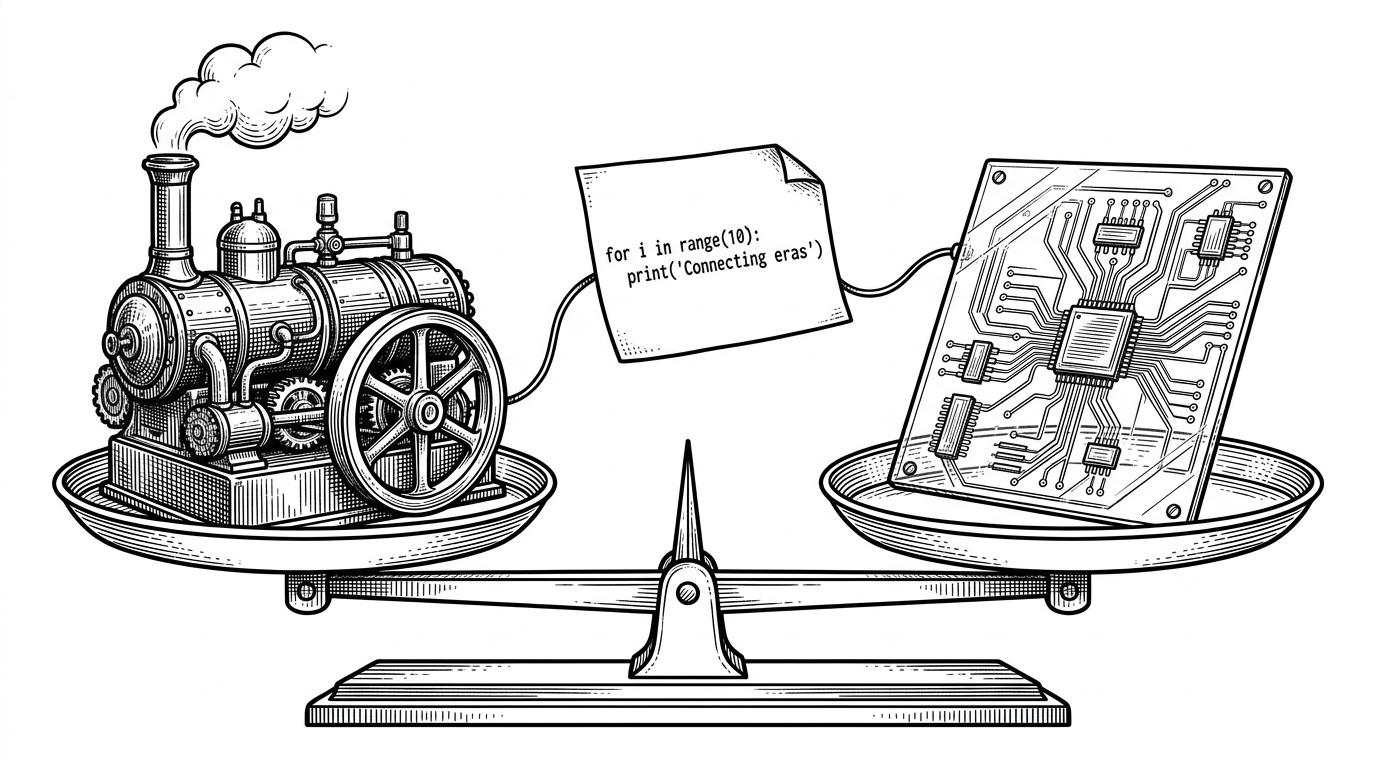
- AnyCoder maintains feature parity across a Python backend for heavy processing and a TypeScript frontend for browser-native execution.
- The Python implementation uses Tesseract and OpenCV to transform visual screenshots into structured code prompts.
- A zero-dependency TypeScript architecture enables the tool to function as a lightweight static application.
- The project utilizes a model-agnostic abstraction layer to swap between different LLM providers like Anthropic and OpenAI.
Building an AI-powered coding assistant forces a difficult architectural choice. Developers must decide whether to build a heavyweight, server-side Python application with access to every library imaginable, or a sleek, client-side TypeScript application that lives entirely in the browser. The former offers immense power. The latter offers portability and speed.
AnyCoder refuses to choose. Created by Hugging Face staff member Akhaliq, the repository is an exercise in architectural pragmatism. It is a dual-citizen project that maintains feature parity across two completely different stacks. By splitting its implementation, AnyCoder provides a blueprint for how modern AI tools can serve both power users and casual prototypers without compromising on capabilities.
From Pixels to Prototypes
The Python version of AnyCoder acts as a robust orchestration layer. Built around a Gradio interface, it handles the complex multi-modal inputs that browser-native applications struggle to process efficiently. The core differentiator is its image-to-code pipeline.
Instead of relying solely on text prompts, the Python stack leverages Tesseract for Optical Character Recognition (OCR) and OpenCV for image manipulation. A user can upload a screenshot of an old user interface. The backend parses the pixels, extracts the text and structural metadata, and injects this context directly into the LLM prompt. This transforms unstructured binary data into a highly specific set of instructions for generating a functional React or Svelte component.
The TypeScript Mirror
While the Python backend handles heavy lifting, the TypeScript implementation strips away these dependencies to create a browser-native experience. Located in the src directory, this lightweight version shifts the intelligence from a server-side script to a client-side state machine.
It relies on vanilla TypeScript and classical event delegation rather than a thick framework like React. The AnyCoder class manages the generation lifecycle and history state natively. This zero-dependency approach allows the tool to be served statically, relying entirely on cross-origin API calls to model providers for inference.
| Feature | Python (Gradio) | TypeScript (Browser) |
|---|---|---|
| Primary Use Case | Complex multi-modal parsing and OCR | Rapid prototyping and static hosting |
| Dependencies | Heavy (OpenCV, Tesseract, PyPDF2) | Zero (Vanilla TS, Vite build) |
| Execution Environment | Server-side (Hugging Face Spaces) | Client-side (Browser) |
| State Management | Gradio Session State | Custom TS Class instance |
Orchestrating the Inference
Both versions share a critical abstraction layer: the model provider interface. AnyCoder is model-agnostic. It wraps the generation logic so that users can swap seamlessly between Hugging Face, OpenAI, and Anthropic endpoints.
The system relies on heavily engineered system prompts to constrain the LLM output. Whether using the Python or TypeScript version, the application forces the model to return structured, preview-ready code. The resulting HTML, CSS, and JavaScript strings are then rendered in an isolated iframe, providing a live sandbox for immediate visual feedback.
The Hugging Face Pedigree
The repository is heavily optimized for the Hugging Face ecosystem. By utilizing specific environment variables, the project taps into free-tier model access, making it highly accessible for developers without paid API keys. This design choice reflects a broader trend of building tools that are native to open-weight model hubs.

AnyCoder demonstrates that developers do not have to choose between a powerful backend and a portable frontend. By maintaining a bifurcated architecture, the project provides a flexible template for the next generation of AI coding assistants.