InsForge: The Backend Built for Agents, Not Just Developers
How an open-source BaaS turns schema, SQL, storage, and deployments into something an AI coding agent can actually reason about.
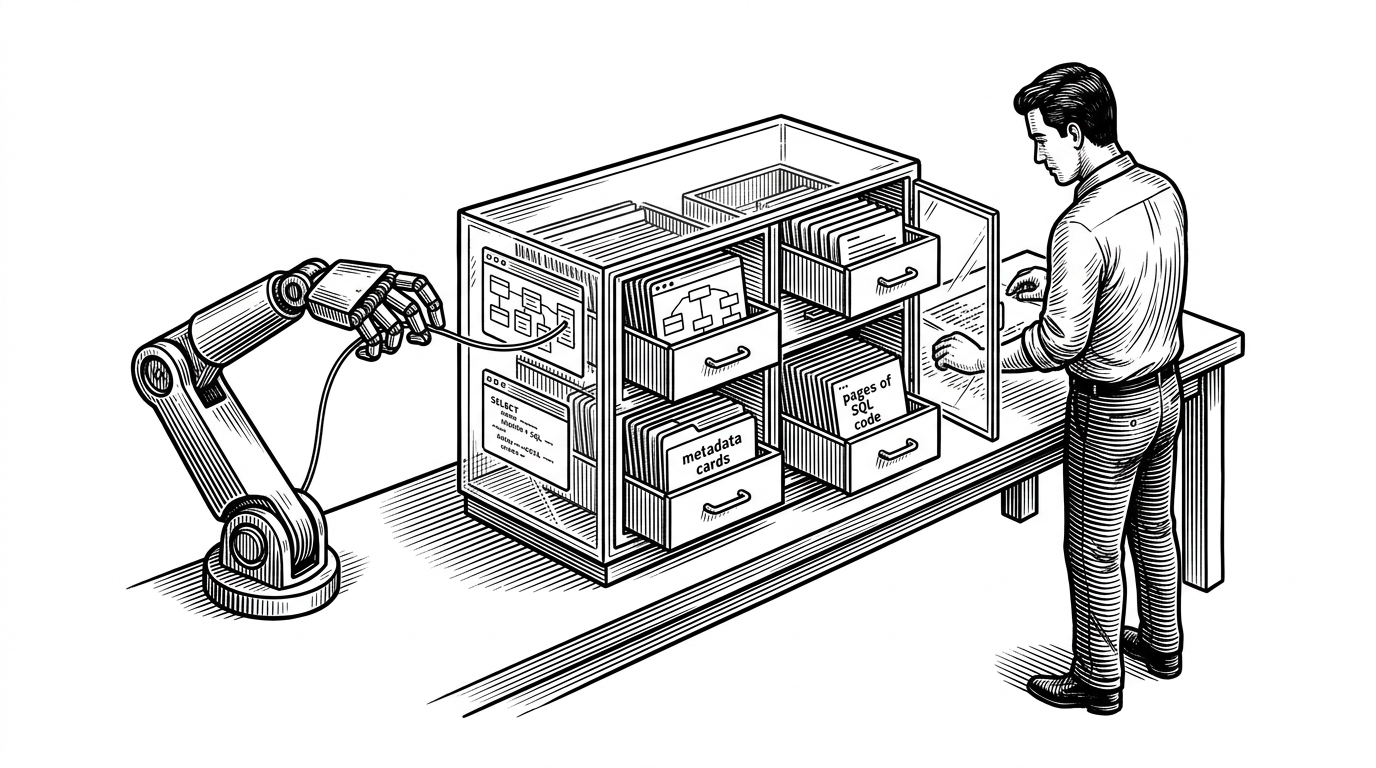
- InsForge’s real pitch is not a faster BaaS, but a backend that exposes enough structure for an agent to operate with confidence.
- Its semantic layer turns schema metadata, type maps, and cached inspection into machine-readable context instead of brittle prompt guesswork.
- The SQL parser, schema split, and validation gates show a safety model built for agent-written operations, not just human requests.
- Storage, edge functions, MCP, and deployment tooling all point to the same bet: software backends will need to become legible to machines.
Most backends still assume a person is in the loop. A developer reads docs, writes migrations, checks a dashboard, and patches mistakes by hand. InsForge flips that assumption. It is built around the idea that the first user of the backend may be an agent, not a human.
That matters because agents do not need prettier forms. They need structure. They need schema names, column types, relationships, allowed operations, and predictable surfaces they can inspect before they act. InsForge is trying to make those things first-class.
Why InsForge Exists
Traditional BaaS products optimize for developer convenience: clean dashboards, SDKs, and a fast path to CRUD. InsForge is optimizing for a different operator entirely. It treats Cursor, Windsurf, Claude Code, and custom LLM agents as the primary interface layer.
That changes the product surface. A human can tolerate some ambiguity and recover from a bad query. An agent needs guardrails and context up front. If it is going to generate SQL, deploy functions, or inspect auth state, the backend has to tell it what exists and what is safe to touch.
This is why the repo feels less like a normal app backend and more like an operating manual for machine reasoning. The `.agents` and `.claude` directories are not decoration. They are evidence that the system is being taught how to be used by a model.
The Semantic Layer Is the Product
The most revealing file in the repo is backend/src/infra/database/database.manager.ts. It does more than manage a connection pool. It exposes metadata, column type maps, and cached schema hints that help an agent understand the shape of the database before it writes anything.
That is the difference between access and legibility. A normal backend says, “Here is an endpoint.” InsForge says, “Here is what exists, how it relates, and what types live where.” For an LLM, that is the difference between guessing and reasoning.
The cache detail matters too. A TTL-based metadata cache is not flashy, but it is exactly the sort of engineering choice that makes repeated agent inspections cheap enough to be practical. Agents ask the same questions over and over. The backend has to answer quickly without turning every query into a full schema scan.
// Conceptual shape of the semantic layer
const metadata = await databaseManager.getMetadata();
const columnTypes = await databaseManager.getColumnTypeMap();

return {
  tables: metadata.tables,
  relations: metadata.relations,
  types: columnTypes,
  allowedOperations: metadata.allowedOperations,
};
The point is not just to document the database. It is to create a machine-readable model of the backend that can be surfaced through MCP and other agent tools. InsForge is not merely AI-friendly. It is agent-readable by design.
SQL That Can Be Read Before It Is Run
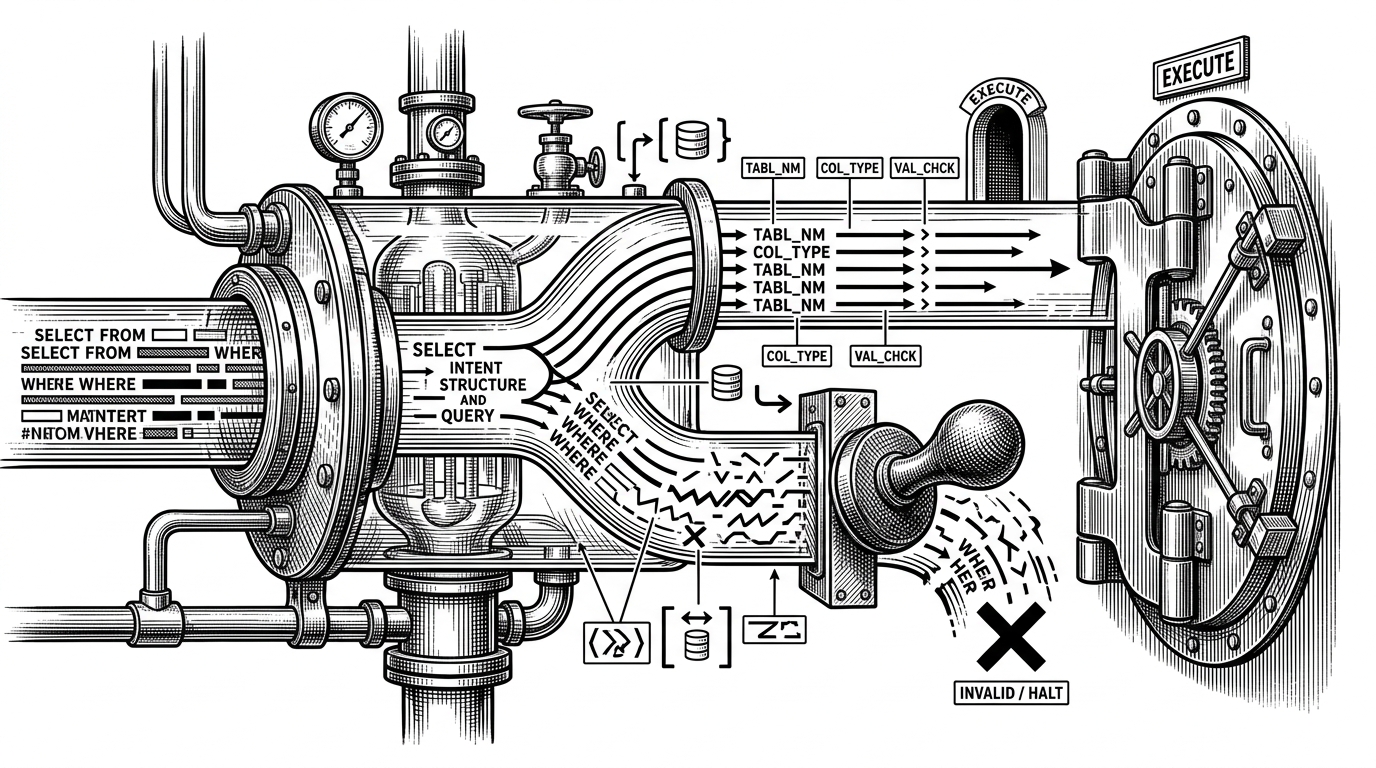
InsForge’s SQL story is more interesting than “it can run SQL.” The repository initializes a WASM-based parser during server startup, which points to a stronger claim: the system wants to understand SQL before it executes it.
That distinction is crucial in an agentic workflow. An LLM can produce syntactically valid SQL that is still unsafe, wasteful, or wrong for the current schema. A parser gives the platform a chance to validate intent, catch structural issues, and reject bad operations before they hit production data.
// Simplified idea of the validation path
initSqlParser();
const ast = parseSql(agentQuery);
const verdict = validateAgainstSchema(ast, metadata);

if (!verdict.ok) {
  throw new Error(verdict.reason);
}

await executeQuery(ast);
This is a safety model built for machines that can improvise. The platform does not trust raw text. It parses, checks, and then decides. That is the right order if the consumer is an agent that may be highly capable and occasionally overconfident.
A Backend Split Into Human and Machine Surfaces
One of the most important signs of maturity in the repo is the schema rework. InsForge is not leaving everything in one flat namespace. It separates public application data from internal system tables and auth data, which makes the platform easier for both humans and agents to reason about.
| Area | Human-first backend | Agent-first backend | Example in InsForge |
|---|---|---|---|
| Primary user | Developer clicking through docs and dashboards | LLM agent asking for structured context | MCP-backed agent workflow |
| Interface | Console, UI, SDK | Schemas, metadata, tools, policies | database.manager.ts and agent docs |
| Schema visibility | Often implied or buried in docs | Explicitly inspectable and typed | Column type maps and metadata cache |
| SQL handling | Write and run in one step | Parse, validate, then execute | WASM SQL parser before execution |
| Deployment model | Manual or dashboard-driven | Tool-driven and inspectable | Edge functions and deployment routes |
| Documentation style | Human README and API docs | Agent skills and structured instructions | .agents and .claude files |
| Safety model | Permissions plus human review | Validation gates plus structured context | Reject bad SQL before it runs |
That split is not just organizational. It changes how the backend behaves under pressure. When auth, system metadata, and app data are all mixed together, the agent has to infer boundaries. When they are separated, the backend can expose a cleaner mental model with less risk of accidental cross-contamination.
The rework also suggests a platform that has moved past prototype logic. Moving tables across schemas while preserving foreign keys is the kind of unglamorous work that usually appears only when a system starts behaving like infrastructure, not a demo.
Why S3, Edge Functions, and MCP Belong in the Same Story
InsForge’s storage, compute, and protocol layers all point in the same direction. The S3 gateway makes storage legible through a standard interface. Edge functions make deployment a machine-actionable task. MCP makes the whole thing available as structured context and tools.
That is why the platform feels broader than a database product. It is not only about records and queries. It is about making the rest of the backend stack available as a set of operations an agent can discover, invoke, and verify.
The S3 gateway is especially telling. Instead of treating storage as a hidden implementation detail, InsForge exposes an S3-compatible surface. That means the system is leaning into interoperability, which is exactly what agent-driven workflows need when they stitch together tools across environments.
Edge functions fit the same thesis. If an agent can inspect the function surface, deploy code, and understand what changed, then compute becomes another structured resource. The backend stops being a box and becomes a set of readable, composable capabilities.
Where InsForge Fits in the New Backend Stack
The easiest comparison is with Supabase or Firebase, but the useful comparison is about user model, not feature checklist. Human-first backends are optimized for dashboards, docs, and developer ergonomics. Agent-first backends are optimized for introspection, safe automation, and structured operations.
| Product model | Human-first backend | Agent-first backend | What InsForge is doing |
|---|---|---|---|
| User assumption | A person is reading and clicking | An agent is asking and acting | Designs the backend around machine readability |
| Source of truth | Docs plus UI state | Schema, metadata, and validated tools | Surfaces structured backend context |
| Failure mode | Developer confusion | Model hallucination or unsafe action | Parser and metadata reduce guesswork |
| Growth path | More features in the console | More legible surfaces for tools | MCP, skills, storage, deploy, SQL |
| Mental model | Backend as service | Backend as semantic layer | Infrastructure as something an agent can reason about |
That does not make InsForge a replacement for every existing BaaS. It makes it an explicit bet on a different future. If software is increasingly assembled by agents, then the backend has to stop assuming a human will translate between intent and infrastructure.
InsForge is betting that semantic context is the next platform layer. APIs are still necessary. But for agentic development, APIs alone are too thin. The machine needs structure, validation, and a readable model of what it is about to change.
The Bet
The wager here is simple. If agentic development becomes a normal way to build software, then backends will need to speak in schemas, metadata, and safe operations instead of only in endpoints and dashboards. InsForge is one of the clearest open-source attempts to build that future.
It is still an evolving platform, and that matters. The documentation may not yet be polished enough for every production team, and the ecosystem is still young. But the architecture tells a coherent story: this is infrastructure that wants to be legible to machines first.