AikidoSec/gcp-onboarding-terraform-module: how to onboard a cloud scanner without a shared secret
This Terraform module encodes least privilege, API enablement, and keyless trust into one repeatable GCP handoff.
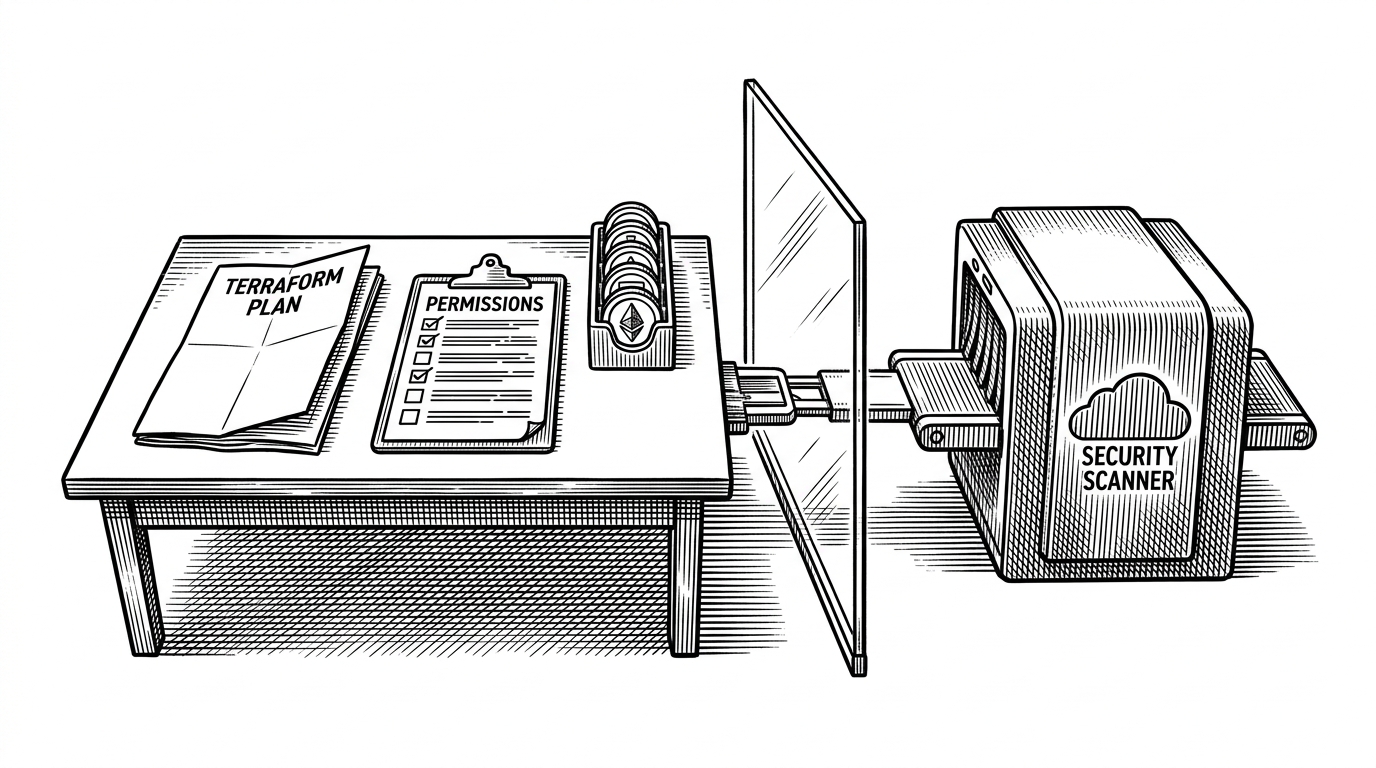
- The module matters because it turns cloud access into a declared trust relationship instead of a manual setup ritual.
- Terraform makes the onboarding legible, reviewable, and versioned, which is the real security gain.
- Its biggest win is not automation for its own sake, but removing long-lived shared secrets from the path.
- A small onboarding repo can still define the trust boundary for an entire security product.
The scanner does not start with scanning
The interesting part of this repo is not the scan. It is the moment before the scan, when a security tool asks for access to a cloud account and the team has to decide how much trust to grant. That decision is usually where setup gets messy: console clicks, copied keys, hidden permissions, and a future round of drift.
This module sets up the necessary IAM roles and Workload Identity Federation to allow Aikido to scan your GCP organization or project.
That sentence is the whole story in miniature. The module is not a convenience wrapper around setup, it is the mechanism that defines what Aikido can see, how it gets in, and how that access stays narrow enough to audit.
Why Terraform is the right handshake
Aikido is speaking to a team that already trusts infrastructure as code. If your cloud is managed through pull requests, then security onboarding belongs there too. Terraform turns a sensitive permission grant into something the team can review, diff, approve, and repeat across projects without recreating the setup from scratch.
That is the origin context here. The module exists because the fastest way to make a cloud scanner usable is not a wizard, it is a handoff that fits the operating model of the people who own the cloud.
What the module actually provisions
At a practical level, the module wires together the pieces that make a scanner legitimate inside GCP. Think service accounts, IAM bindings, and Workload Identity Federation, plus the supporting GCP services the scan depends on. The point is to let Aikido authenticate without turning identity into a static secret that can linger long after the onboarding PR is merged.
That flow is the technical center of gravity. The module is really a compact trust protocol: Terraform declares the resources, GCP enforces the permissions, and Aikido uses the resulting identity path to read the cloud without owning a long-lived key.
The real differentiator is keyless access
A lot of onboarding flows still collapse into one ugly sentence: here is a key, please keep it safe. This module points somewhere better. It makes the access relationship explicit, short-lived, and reviewable. That matters because the blast radius of a cloud security tool should be narrow by design, not narrow by habit.

That is the real difference between onboarding a vendor and handing over a password. One creates a permission contract. The other creates a liability.
How it compares to manual setup and generic IAM
The comparison is not really about features. It is about operational shape. Manual console setup is easy to start and hard to trust later. A generic IAM module gives you primitives, but you still have to design the trust model yourself. Aikido's module packages that decision for one specific use case.
| Approach | Setup effort | Auditability | Drift risk | Blast radius | Secretless? |
|---|---|---|---|---|---|
| Aikido Terraform module | Moderate | High | Low | Narrow | Yes |
| Manual GCP Console onboarding | Low at first | Low | High | Often broad | No |
| Generic IAM module | Moderate | Medium | Medium | Depends on design | Usually not |
| Vendor script or wizard | Low | Medium | Medium | Variable | Sometimes |
That makes the repo more specific, and more useful, than a general IAM toolkit. It is opinionated in the way a good security product should be. The module does not just connect a SaaS vendor to GCP. It preserves the shape of the trust decision so the customer can keep owning it.
What this says about modern security tooling
This repo is a small example of a larger shift. Security products are moving from vague integrations toward declared trust. The best onboarding experience is not the one that hides the permission model. It is the one that makes the permission model readable enough to sign off on.
That is why a tiny Terraform module can matter so much. It is not just setup code. It is the contract that decides how a scanner enters the room, what it can touch, and how easily a team can prove that the access stayed narrow.