Inside `safechain-internals`: The Release Channel That Keeps Aikido Device Protection Alive
A tiny repository for binaries, MDM profiles, and anti-tamper rules reveals how enterprise security software gets installed, trusted, and kept running across Windows, macOS, and Linux.
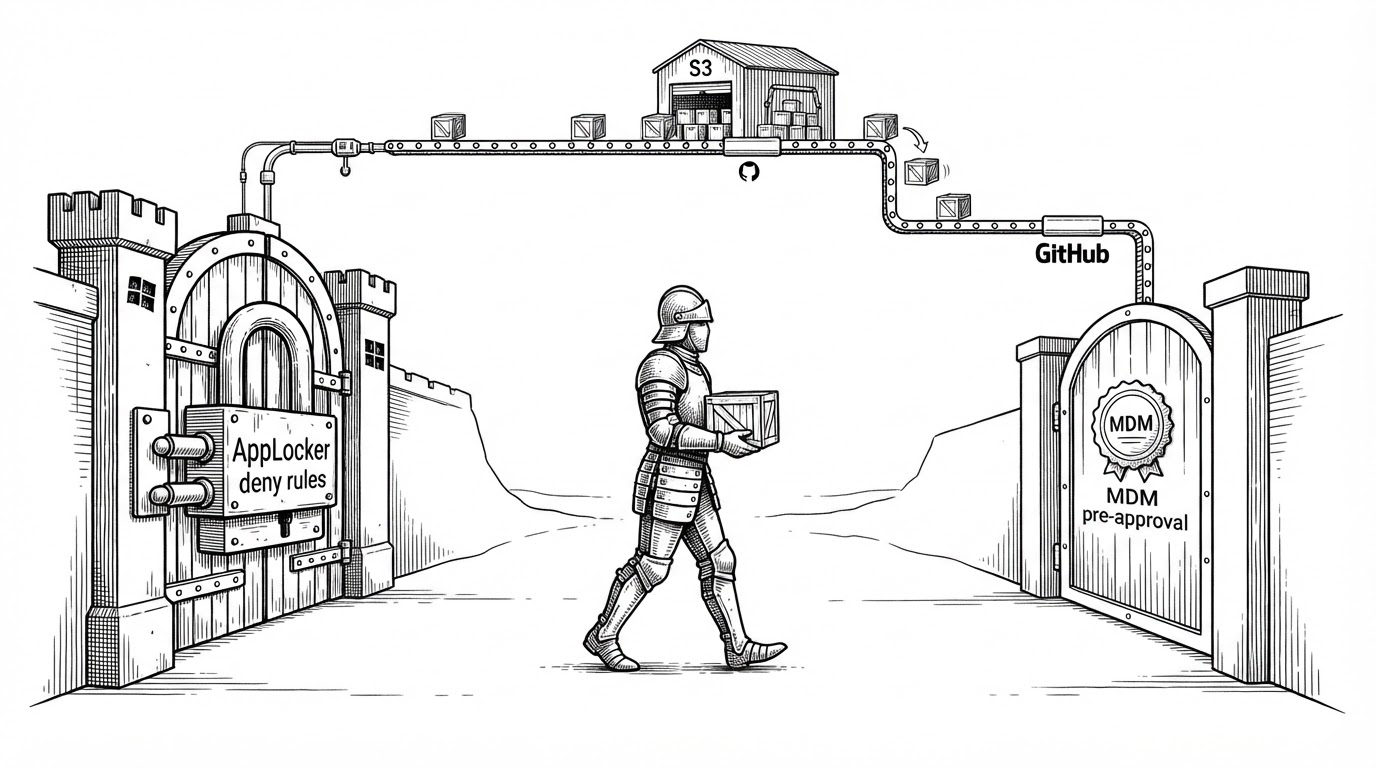
- `safechain-internals` is not an application repo. It is the control plane that distributes Aikido Device Protection and helps keep it hard to remove.
- The interesting layer is not just shipping binaries, but pairing them with OS policy so Windows uninstall paths and macOS friction points are neutralized before the agent lands.
- GitHub is the visible release surface, while S3 stays the source store for prebuilt artifacts across platforms and architectures.
- The repository shows a broader pattern in endpoint security: the product is only credible if its installer, permissions, and persistence all work together.
A repo that exists to keep a security agent standing
At first glance, `safechain-internals` looks almost too small to matter. There is no product UI, no service layer, no feature code. What it does have is more revealing: release automation, policy files, and the machinery that turns Aikido Device Protection into software that can be installed, trusted, and kept alive.
That makes this repository a transitional release channel, not a product repo. It bridges prebuilt binaries, OS-specific trust decisions, and auto-update migration for clients moving to a newer delivery path. In security software, that bridge is part of the product.
Safe Chain is the safe default for devs... blocks malicious packages before install. suppresses versions less than 24 hours old until verified. falls back to the last clean version automatically.
The real product is OS trust
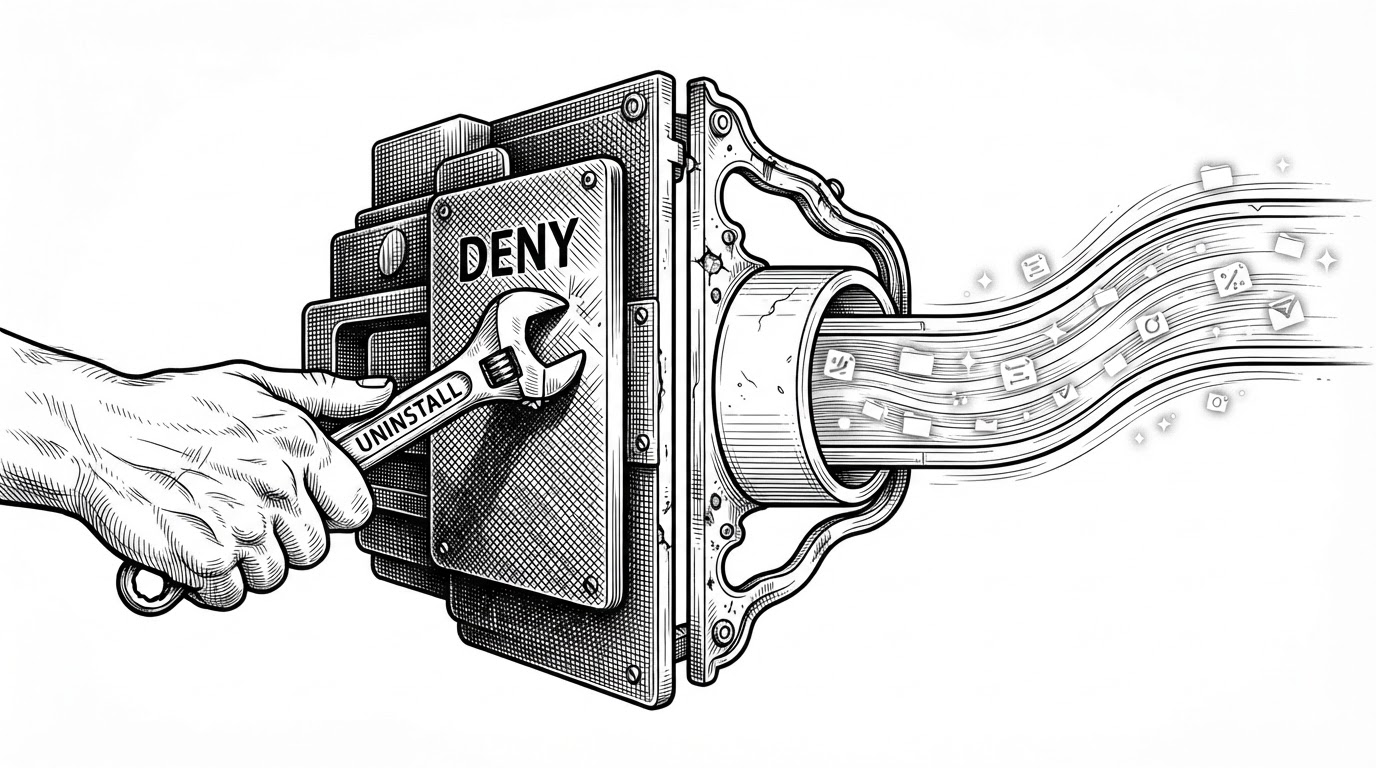
The surprise in this repo is that the hardest problem is not compilation. It is trust. On Windows, the repo ships AppLocker deny rules that block uninstall and repair paths tied to the vendor certificate. On macOS, it ships configuration profiles that pre-approve the system extension and keep the background service from being casually disabled.
That is the whole game. Endpoint protection is not just code that runs on a machine. It is code plus OS policy plus installation consent plus persistence. If any of those pieces fail, the security agent becomes a normal app, which is to say, easy to stop.
How the release channel moves binaries from S3 to GitHub
The workflow is straightforward, which is exactly why it matters. A tag triggers GitHub Actions. The workflow fetches binaries from an S3 bucket, then republishes them as GitHub Release assets so operators and installers have one visible place to pull from.
name: release-from-s3
on:
  push:
    tags:
      - 'v*'
jobs:
  release:
    steps:
      - name: Fetch binaries from S3
        run: curl -O https://aikido-endpoint-binaries.s3.eu-west-1.amazonaws.com/...
      - name: Publish GitHub release assets
        run: gh release upload "$TAG" *.msi *.pkg *.deb *.rpm
That split is more than convenience. S3 is the source store for prebuilt artifacts across platforms and architectures. GitHub is the public release surface. The repo turns one internal distribution system into another that is easier to audit, mirror, and consume during migrations.
| Distribution model | Primary goal | Artifact type | Trust mechanism | Failure mode |
|---|---|---|---|---|
| Typical app release repo | Ship features | Source and build outputs | Repo permissions and package signing | Users get a broken installer or stale release |
| `safechain-internals` | Keep a security agent deployable and hard to kill | MSI, PKG, DEB, RPM plus policy payloads | Signed binaries, OS policy, and release automation | The agent can be removed, blocked, or never approved |
| Ordinary MDM deployment | Push managed software | Configuration profiles | Device management enrollment | App installs, but runtime trust is incomplete |
| Self-defending endpoint deployment | Install and preserve the control plane | Installers plus anti-tamper policy | MDM, AppLocker, system extensions, service management | The protection layer survives local friction |
Aikido is also solving a migration problem here. Transitional infrastructure exists because real customers do not move in a single step. New auto-update behavior has to coexist with older clients until the fleet catches up. The repo is the bridge, and bridges are usually where the most important engineering hides.
What makes this different from ordinary package security tools
Safe Chain, the broader product family, is about stopping malicious packages before they enter a developer workflow. This repo is different. It is not the detector. It is the delivery and enforcement layer for the endpoint agent that supports that defense story.
That distinction matters because most security tools stop at visibility. This one continues into installation, permissions, persistence, and removal resistance. The comparison is not just with SCA vendors like Snyk or Socket. It is with ordinary release pipelines that assume shipping the binary is the end of the job.
| Question | Ordinary release pipeline | `safechain-internals` |
|---|---|---|
| What is being shipped? | An installer or package | An installer plus OS policy and release plumbing |
| What is the trust boundary? | Repository access and signing | Repository access, signing, MDM, and OS-level approvals |
| What happens after install? | The app runs if the user allows it | The agent is set up to keep running and resist easy removal |
| What is the hidden cost? | Operational drift | OS-specific policy management and migration coordination |
That is why the repository feels small but consequential. It reveals the difference between software that is merely distributed and software that is defended.
The pattern here: security software must defend itself
The cleanest reading of `safechain-internals` is this: endpoint security is not credible unless the agent can survive contact with the operating system. Users, admins, and malware all operate inside the same local reality. A security product that cannot survive that reality is not finished.
So this repository is not a sidecar to the product. It is the mechanism that lets the product cross the last mile. It moves binaries, encodes trust, and makes anti-tamper behavior part of the deployment story instead of an afterthought.