open-kimi-ppt-skill: The Ghost Repo That Turned AI Text Into Editable Slides
An unofficial Kimi Slides bridge promised a better last mile for presentations, with PPTD, PPTX, and a local editor. Then the code vanished, leaving behind a community that still wanted the workflow.
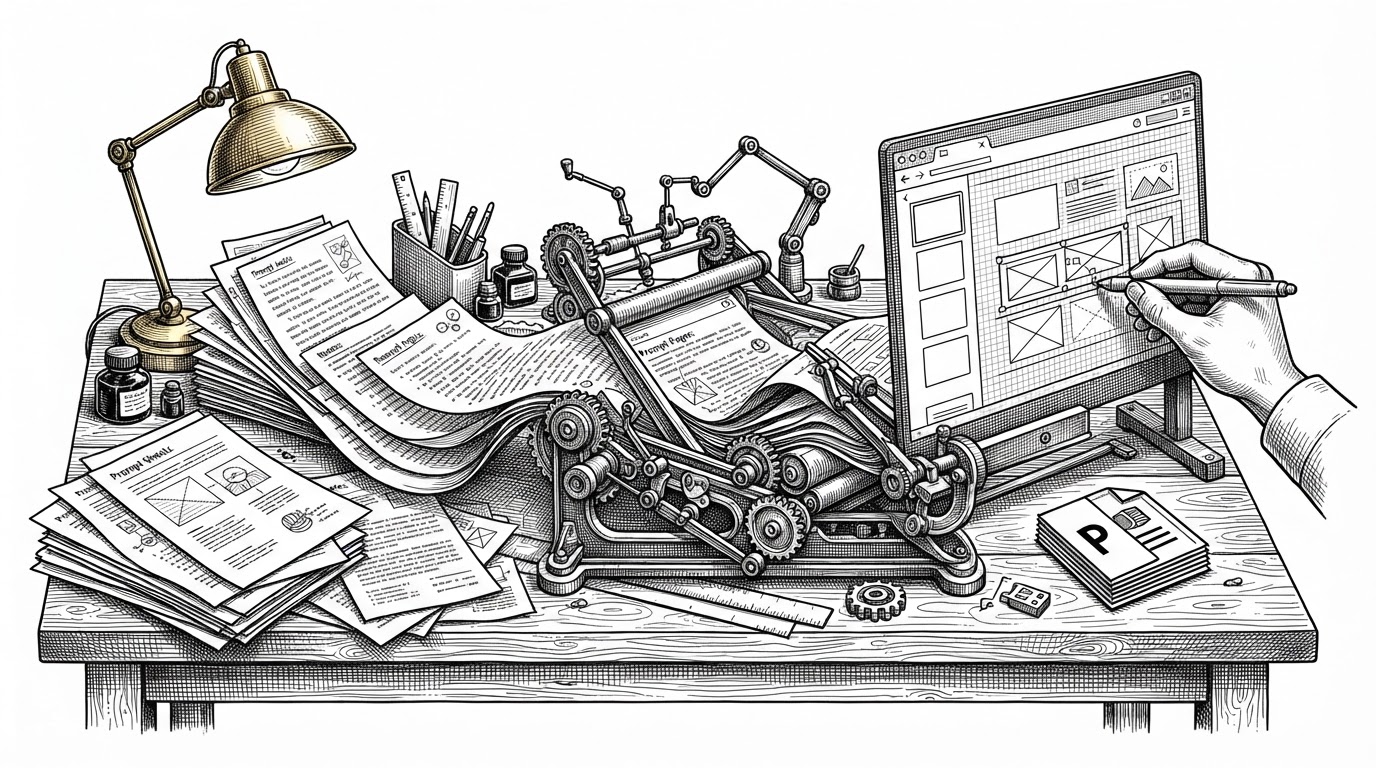
- The repo’s real product was a bridge from AI output to editable office files, not a novelty slide generator.
- Its local browser editor turned slide creation into a human-in-the-loop workflow that could be repaired instead of restarted.
- The repository became culturally useful even after the source disappeared, which is a strong sign that it solved a real problem.
- Its rise and wipeout show how powerful unofficial AI tooling can be when it depends on someone else’s platform stack.
The repo is gone, but the workflow is still the story
`open-kimi-ppt-skill` is interesting for what it left behind. The repository now reads like a tombstone: the source is gone, but the demand that formed around it is still visible in forks, reposts, and reactions. That makes it less a product story than a case study in how useful unofficial AI tooling can become before it gets shut down.
悲报 open kimi ppt skill 已经要求下线 https://t.co/KlmyiTvs0A
| Tool | Best for | Editability | Agent integration | Risk / constraint |
|---|---|---|---|---|
| open-kimi-ppt-skill | Editable AI slide workflows | High, because PPTD and PPTX were both part of the path | High, built as a skill for agents | Unofficial and fragile |
| Official Kimi Slides | Fast slide generation inside Kimi | Medium, but tied to the hosted product | Low, no developer bridge exposed | Platform-bound |
| Gamma | Polished SaaS decks | Medium, but exports can be flatter | Low to medium | Closed ecosystem |
| Microsoft Copilot for PowerPoint | Office-native corporate drafting | High inside Microsoft’s ecosystem | Low to medium | Requires Microsoft stack |
The comparison is simple. This repo won on workflow flexibility and human correction, not on institutional safety. That is exactly why it mattered, and exactly why it was vulnerable.
Why AI slide generation is still hard
Large models are good at language, but slides are spatial objects. They need hierarchy, alignment, spacing, image placement, and a consistent visual rhythm across pages. A decent outline is not enough, because the hard part is turning structure into something a human can skim in ten seconds.
What open-kimi-ppt-skill actually did
At a practical level, the tool treated presentation creation as a pipeline. An input such as a long document, outline, or URL was turned into structured presentation data. That structure then fed a local browser editor, where the user could fix layout and wording before exporting to both .pptd and .pptx.
Prompt / source
  -> LLM draft
  -> PPTD structure
  -> local browser editor
  -> export to PPTD and PPTX
That middle format matters. A deck that stays editable is not the same thing as a deck that only looks finished. Once the file becomes a real presentation object, a user can keep working without throwing away the generated draft.
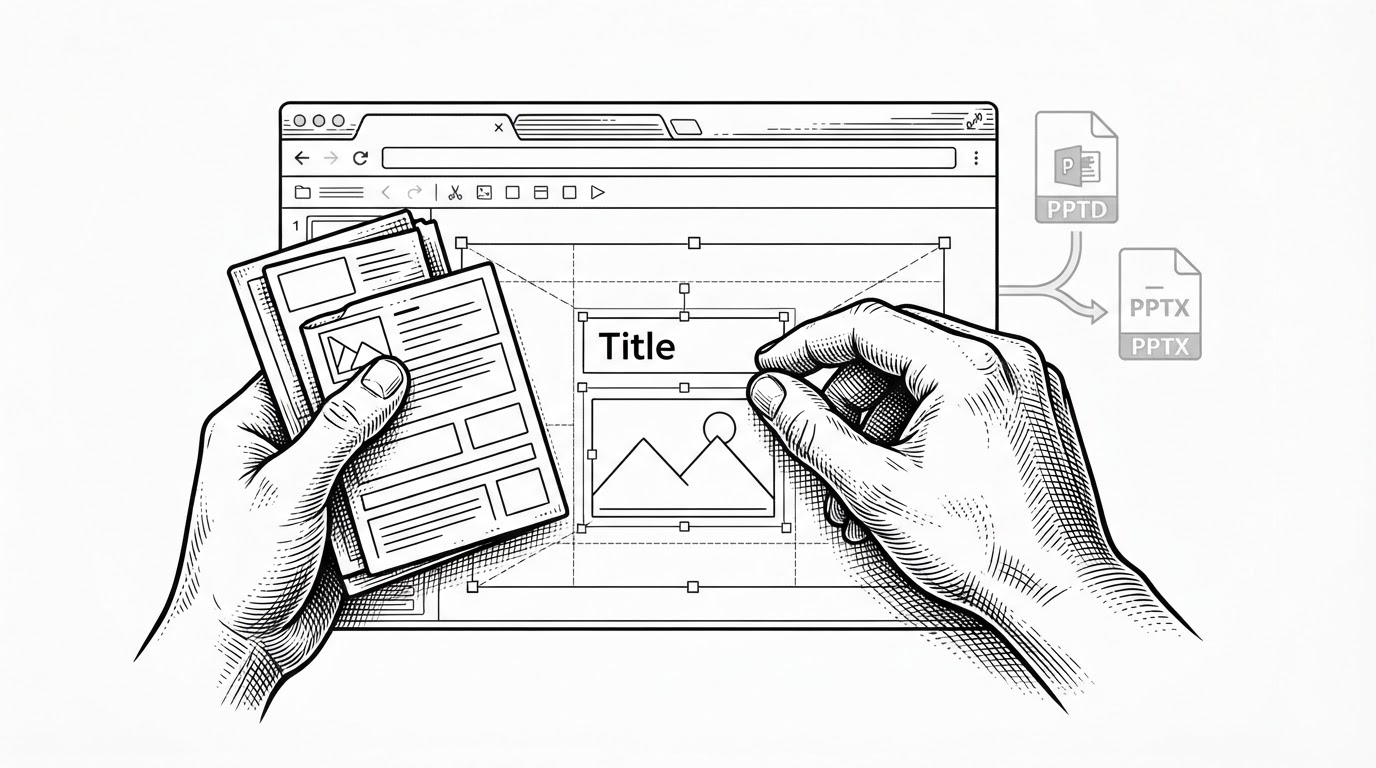

open-kimi-ppt-skill:逆向 Kimi Slides,让 AI Agent 自动生成可编辑 PPT 该项目通过逆向 Kimi Slides 和 PPTD 格式,为 Codex、Claude Code、Cursor 等兼容 SKILL.md 的 AI Coding Agent 提供创建、编辑、复刻、导出 PPT/PPTX 的能力。每次生成默认同时输出可继续编辑的 PPTD 项目和开箱即用的 PPTX
Why this repo became a ghost
The takedown is not a footnote. It explains the whole lifecycle. An unofficial bridge to a proprietary slide system can be incredibly useful, but it also sits close to platform risk, reverse-engineering risk, and branding risk. The more it works, the more visible it becomes, and the more likely it is to attract a shutdown.
谁还在花冤枉钱买官方 Kimi Slides 做 PPT?醒醒吧 有大神直接把 Kimi PPT 逆向成了一个 skill,@binaryify 出品。现在你用 deepseek 这种便宜模型,就能让 AI 给你整出能改、能导出 PPTX、还带翻页动画的高质量 PPT,成本直接打到脚脖子。 Codex、Claude Code、Cursor 都能装,npx https://t.co/hHeao9nDCs https://t.co/1Nt73LUcm9
That reaction tells you what users cared about. Not just the slides, but the ability to edit them, export them, and keep them inside their own workflow. The repo’s disappearance did not erase the use case. It only made the use case easier to recognize.
What this says about agent-native software
This project points to a durable pattern. Agents are best at drafting, structuring, and assembling first passes. Humans are still best at judgment, cleanup, and final polish. The best tools will not pretend that gap does not exist. They will build a narrow bridge across it.
That is why `open-kimi-ppt-skill` still matters. It was not trying to replace presentation work. It was trying to make presentation work editable again after the model had done its part.