OpenBot: The Governed Computer for AI Coworkers
OpenBot gives agents their own browser, files, and tools, but the real innovation is stricter than autonomy. It uses accessibility-tree control, path confinement, policy checks, audit logs, and human takeover to make agent behavior legible and containable.
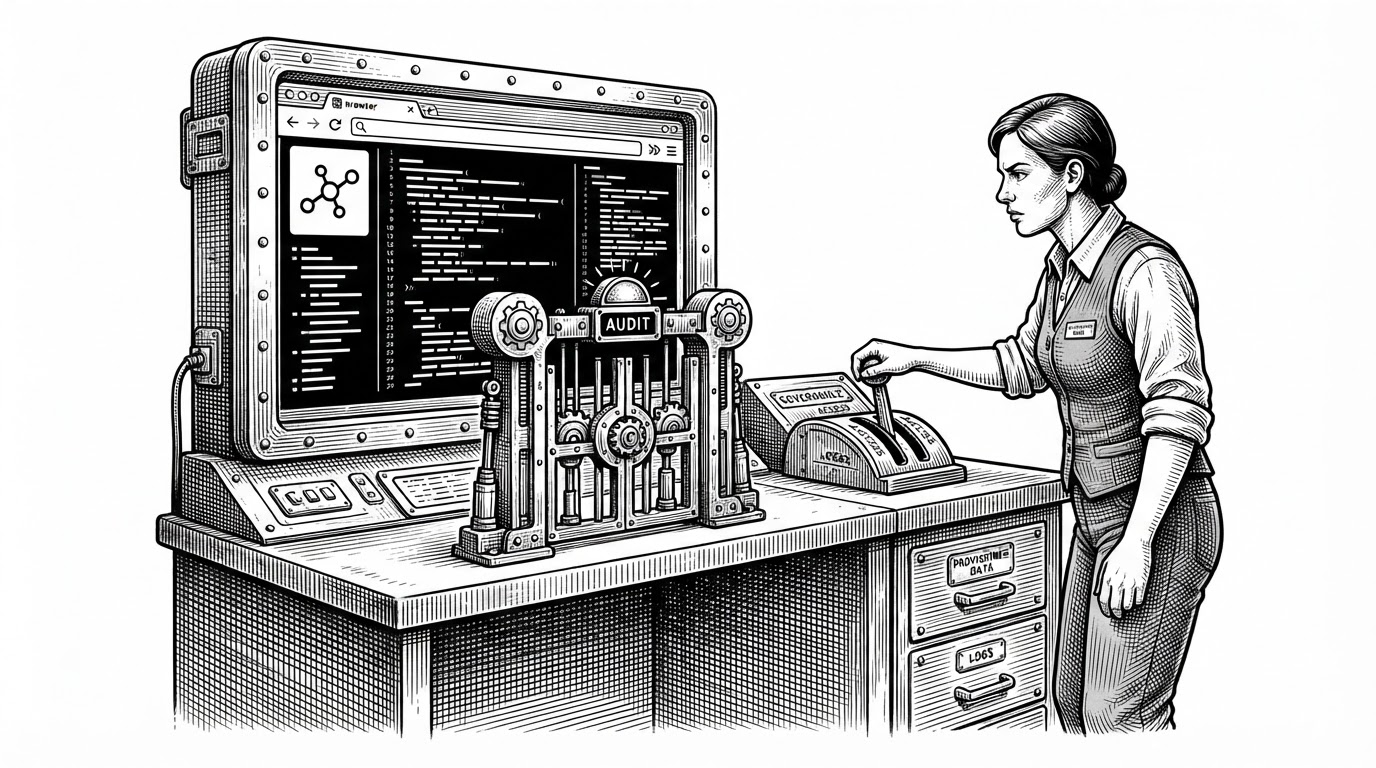
- OpenBot’s core idea is not browser automation, but governed execution with policy checks, audit logs, and human override built into the loop.
- Its strongest technical bet is accessibility-tree control, which turns page elements into stable refs instead of asking a vision model to guess clicks from pixels.
- The product behaves like a managed coworker because each agent gets its own persistent computer, filesystem, and login state.
- OpenBot’s market position is clearer as a host and governor for agents than as another workflow-specific browser bot.
OpenBot enters a crowded category, but it does not play the usual game. It does not start from screenshots, and it does not pretend autonomy is enough. Its premise is simpler and stricter: if you are going to let an agent touch real systems, then the computer itself has to be governed.
The browser is not the product. The control loop is.
Most agent demos treat the browser as a stage prop. OpenBot treats it as a controlled execution surface. The agent proposes an action, the system checks it, the browser executes it, and the result lands in an audit trail. That loop is the product, not the UI on top of it.
OpenBot’s real unit is the coworker
The repo frames each agent as a coworker with its own browser, files, and tools. That matters because persistence changes everything. Logins survive between turns, workspace state survives between tasks, and responsibility becomes legible because each worker has a bounded environment instead of a shared, messy session pool.
AI coworkers you can hand real work to, and actually trust with the access. Each gets a computer of its own: a real browser with its own logins, its own files, and only the tools you grant. Every action decided before it happens and recorded after.
That framing is also why the system feels enterprise-native. It is not only giving an agent tools. It is giving the agent a desk, a computer, and a supervisor.
Why the project distrusts vision
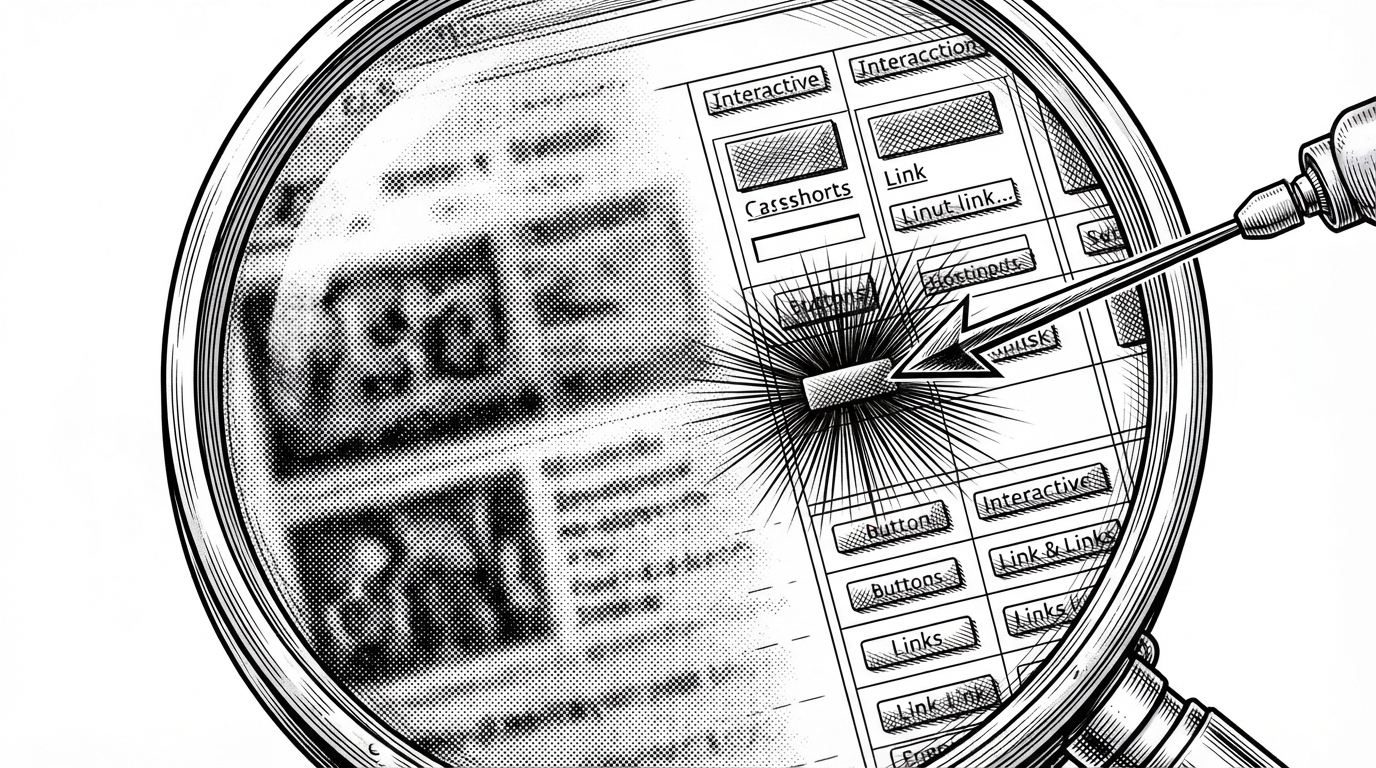
OpenBot’s most interesting technical move is its refusal to make pixel vision the primary interface. Instead, it snapshots the accessibility tree, stamps interactive elements with refs, and then talks to the page in those refs. A click becomes a stable reference, not a guessed coordinate.
// Conceptual shape of the loop
const snapshot = await page.accessibilitySnapshot();
const button = findInteractiveRef(snapshot, 'Submit');
await bot.click({ ref: button.ref });

// The agent acts on structure, not pixels.
That is a small idea with large consequences. Ref-based control is cheaper than repeated vision inference, easier to inspect, and much less brittle when layouts shift. It also makes the system easier to audit, because the action is grounded in named structure rather than a fuzzy interpretation of a screenshot.
The safety rails are part of the product
OpenBot does not hide its paranoia, and that is the point. Its gateway checks actions before they execute with CEL policies. Its workspace code rejects absolute paths, blocks `..`, and uses `realpath` to stop symlink tricks. Its token comparison is written in constant-time style to reduce timing leakage. None of this is decorative. It is the foundation of the trust story.
// Security shape, simplified
if (path.isAbsolute(input)) throw new Error('absolute paths rejected');
if (input.includes('..')) throw new Error('path traversal rejected');
const resolved = await fs.realpath(join(workspaceRoot, input));
if (!resolved.startsWith(workspaceRoot)) throw new Error('outside workspace');
That is the big difference between OpenBot and a demo harness. Demos optimize for a successful run. OpenBot optimizes for a bounded run.
The human override is the trust mechanism
OpenBot’s handoff model matters because real work often hits MFA, permission walls, or sensitive actions. The system can shift control from bot to human, let the person finish the hard step, then return the session to the agent without throwing away the task state. That is what makes the environment usable instead of merely autonomous.
Introducing Open Bot: An open source Grok Bot that works with ANY agent harness, designed for real companies.
The neat detail is that this is not a collapse into manual control. It is a state transition. The bot pauses, the human intervenes, and the same governed computer resumes the task when the sensitive part is done.
Where OpenBot fits in the market
OpenBot is easiest to understand by contrast. Some tools are browser infrastructure. Some are workflow-specific automators. Some are hosted model products. OpenBot is trying to be the governed host layer that sits underneath all of them.
| Project | Primary role | What it optimizes for | Where OpenBot differs |
|---|---|---|---|
| Browserbase | Managed browser infrastructure | Reliable sessions and stealth | OpenBot adds governance, coworker UX, and policy-first controls |
| Skyvern | Workflow automation agent | Task completion in specific web flows | OpenBot is broader and aimed at any agent harness |
| MultiOn | Proprietary web navigation API | Fast web task delegation | OpenBot is self-hostable and exposes the environment |
| LaVague | Navigation framework | Model-driven browser action | OpenBot focuses on the computer and the controls around it |
| Hosted computer-use systems | Managed agent execution | Convenience and polished access | OpenBot keeps the stack self-hosted and auditable |
That comparison changes the buying question. The question is not which product clicks buttons best. The question is which one lets a serious team put real credentials, real data, and real accountability behind an agent without losing control of the session.
What OpenBot suggests about the next phase of agents
The strongest systems may not be the freest ones. They may be the ones that are easiest to inspect, confine, and interrupt. OpenBot is interesting because it assumes production agents will need audit trails, path boundaries, policy enforcement, and human override as default features, not afterthoughts.
That is a more conservative vision of autonomy, but also a more credible one. If agents are going to do real work, they will need computers built for governance, not just clever prompts.