RAILEASE: The Flutter App That Turns Railway Concession Bureaucracy into a Workflow
From student registration to admin approval to generated PDF forms, this project shows how a narrow campus process can be automated end to end with Flutter and Firebase.
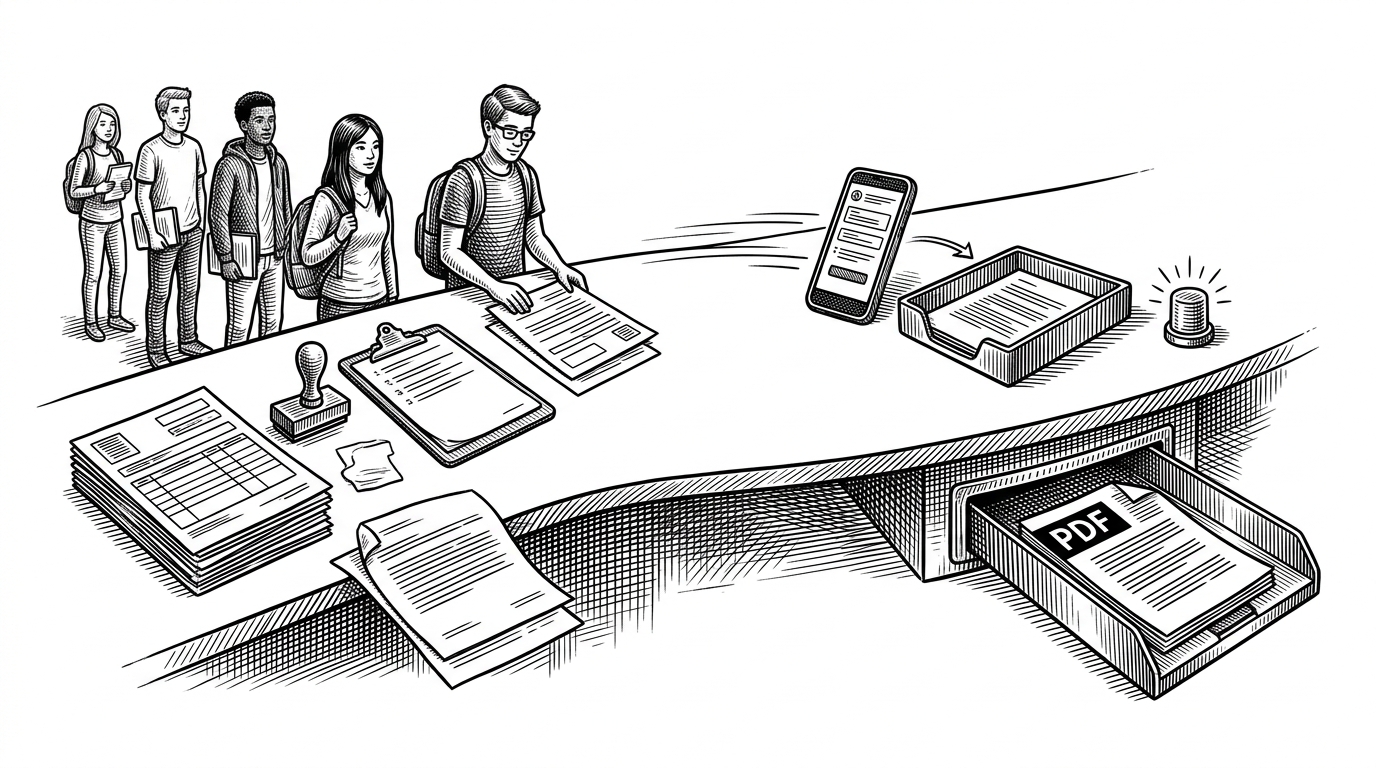
- RAILEASE matters because it automates the last mile of a concession process, not just the form fields at the front.
- Its real differentiator is policy encoding, with status routing, verification, renewal flows, and a fine reminder built into the UI.
- Flutter and Firebase make sense here because the team needed one codebase, fast state updates, and a low-friction backend.
- The project is narrow by design, which is why it can do more than a generic campus ERP module.
Most student apps stop at submission. RAILEASE keeps going until the institution can actually act on the request: verify documents, change status, generate output, and hand back a printable concession form. That is the difference between a demo and a workflow.
Why this app exists
RAILEASE is built for a very specific bottleneck: railway concession processing at VESIT. That narrowness is the point. A process that looks small from far away can still create queues, paperwork, and repeated handoffs for every student who needs a pass.
That framing matters. RAILEASE is not trying to become a campus super-app. It is solving one repetitive institutional ritual with enough depth to make the workflow actually complete.
The part that makes RAILEASE different
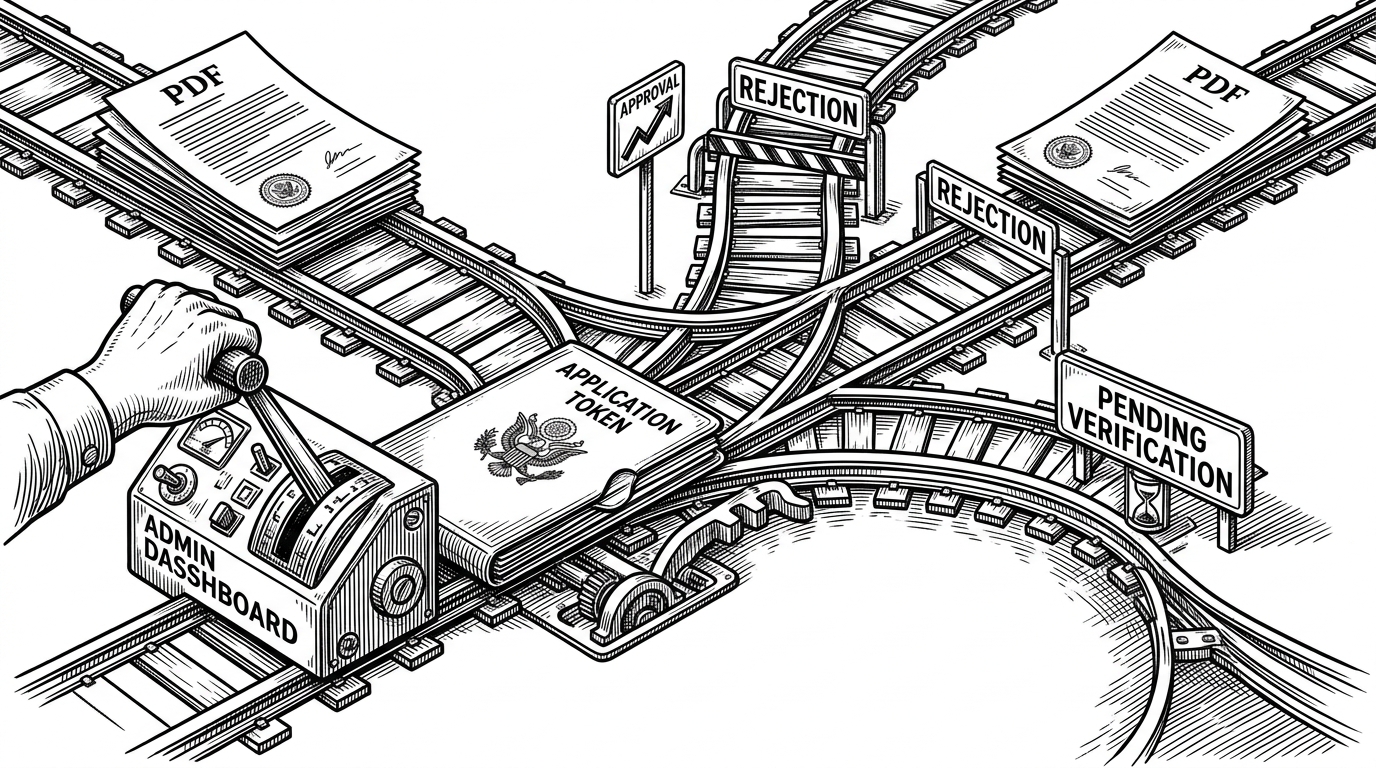
The app does more than collect student data. It encodes rules. That includes approved-user checks, registration, renewal choices, document uploads, admin review, status transitions, and a reminder about the ₹200 fine if a printed concession is not collected.
| Workflow step | Manual process | RAILEASE | Generic campus ERP |
|---|---|---|---|
| User input | Paper form and repeated typing | Mobile registration and renewal forms | Broad student portal forms |
| Document upload | Physical photocopies | File picker upload | Sometimes supported, often generic |
| Status tracking | In person or by phone | Live application status | Usually module-based and fragmented |
| Admin routing | Manual desk handoff | Request queue and decision states | Configured across wider workflows |
| Final form generation | Manual printing and filling | PDF generation for concession output | Possible, but rarely specialized |
| Policy enforcement | Staff memory and notices | Fine reminder and gated flow | Usually generic policy fields |
| Mobile-first experience | No | Yes | Varies by vendor |
That comparison makes the niche obvious. Manual workflows are fragile. Generic ERPs are broad. RAILEASE is narrow enough to capture the exact process, which is why it can feel complete instead of bloated.
How the workflow actually moves
The student path starts with identity check and registration, then moves into renewal or request submission. The app uses structured input, file uploads, and explicit choices for pass type and class type, which cuts down on malformed requests before they reach the admin side.
On the back end, the admin side becomes a queue of decisions. Requests can be approved, rejected, or blocked, and those state changes feed reports and printable output. The important part is not just that data is stored. It is that the data has a direction.
This app design project leverages the powerful design and development tools of Flutter to create an intuitive and visually appealing interface for users to seamlessly navigate through the concession application process. Database handling is managed using Firebase.
That is why the PDF output matters. It is the handoff that proves the workflow was finished, not merely tracked. Many student projects stop at status pages. RAILEASE turns the final state into something physically usable.
// The project structure points to two distinct worlds.
lib/
  Admins/
    AdminLogin.dart
    Concession_manage.dart
    MonthlyReportPage.dart
  LoginPage.dart
  Registration.dart
  RenewalPage.dart
  ApplyDetails.dart
  src/
    colors.dart
    strings.dart
    fonts.dart

// Student flow: register, upload, apply, print.
// Admin flow: review, approve, reject, report.
Why Flutter and Firebase are the right shortcut here
The stack choice is pragmatic. Flutter gives the team one UI codebase for mobile and other targets. Firebase handles realtime state, storage, and database-backed workflows without a heavy custom backend. For a student-built internal tool, that is a strong trade.
The codebase reflects that choice. Registration uses a stepper. Document upload uses file picking. Admin pages are split into their own module. The architecture is simple because the problem is specific, and that specificity is what keeps the app coherent.
Who built it
The project is credited to Deepak Kumbhar, Tejas Gadge, Ganesh Shelar, Vedant Mhatre, and Ummulkiram Mahuvawala, with the repository tied to VESIT. That context matters because RAILEASE is best understood as an academic system built to solve one institution's workflow, not as a general-purpose product hunt submission.
If you want the cleanest read on the team’s intent, look at the administrative logic. The app does not merely display records. It mirrors the institution’s decision process. That is a product choice, not just a technical one.

RAILEASE is a good example of what student-built internal tools can do when they stay narrow. It does not try to automate everything. It automates one bureaucratic path well enough that the process feels less like paperwork and more like software.