Executing Formal Verification in the Browser: Inside asupersync_website
How a React 19 visual laboratory replaces the static README to prove the safety of a cancel-correct Rust runtime.
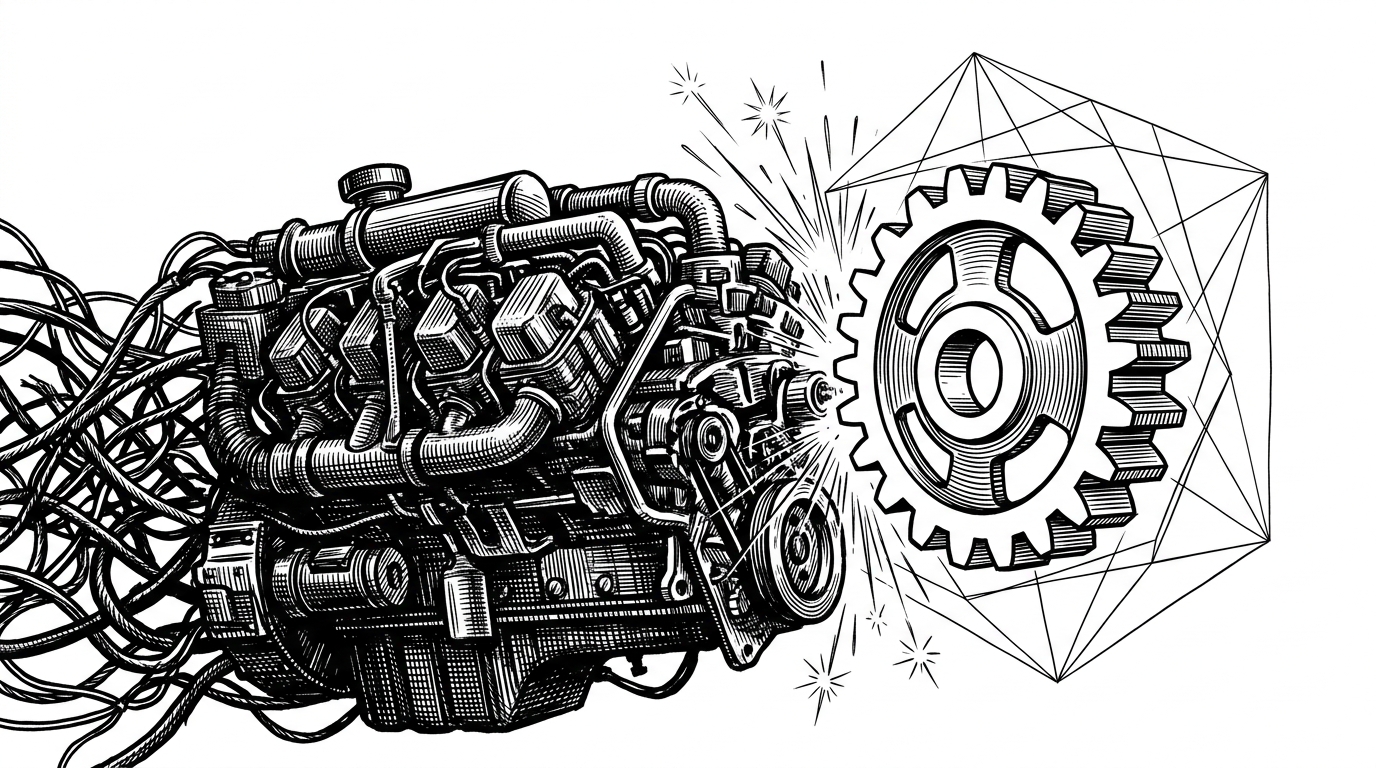
- The asupersync_website repository replaces traditional documentation with a Next.js 16 interactive laboratory that executes small-step semantics in the browser.
- It visualizes the runtime's core innovation: a 'Region Tree' architecture that enforces a strict three-phase protocol to solve Rust's async cancellation problems.
- By rendering mathematically complex states like spectral deadlock detection using React 19 and Framer Motion, it bridges the gap between academic formal methods and practical systems engineering.
The Death of the Static README
Building a formally verified Rust async runtime is difficult. Explaining it to developers without inducing immediate fatigue is often harder. The asupersync_website repository discards the traditional approach of demanding users read thousands of words on "spectral deadlock detection" and "cancel-correctness."
Instead, it operates as a live, browser-based laboratory. Built on Next.js 16 and React 19, the site uses data-driven UI components to execute actual logic for distributed systems concepts. It mathematically proves the runtime's safety guarantees through interactive simulations before a developer ever runs a cargo add command.
Rust's Cancellation Nightmare
The standard Rust async ecosystem, including dominant runtimes like Tokio, struggles significantly with graceful cancellation. Dropping a future mid-execution can lead to leaked resources, corrupted state, and unpredictable behavior in complex concurrent systems.

Asupersync introduces a strict formal verification approach to solve this. It ensures that when a task is cancelled, it unwinds predictably and cleanly, releasing all held resources without leaving behind orphaned processes.
The Three Phases of Graceful Death
The core of Asupersync's differentiator is its "Region Tree" architecture. This hierarchical structure dictates how cancellation propagates through the system, enforcing a strict "Three-Phase Cancel Protocol."
When a cancellation is triggered, it doesn't simply kill the task. It initiates a Request phase that signals children, a Drain phase where resources are systematically cleaned up, and finally a Finalize phase that severs the connection cleanly.
Small-Step Semantics in a UI Shell
To visualize these mechanics, the frontend stack employs Next.js 16 App Router and dynamic imports. This ensures that heavy mathematical visualizations—like rendering Laplacian eigenvalues for spectral deadlock detection—don't freeze the browser.
By directly mapping formal transition rules to UI state using Framer Motion, the repository bridges the gap between academic theory and practical engineering. It proves that complex formal methods can be communicated effectively without sacrificing technical rigor.