The Flight Recorder for JavaScript: Inside franken_node
While Node and Bun race for milliseconds, a trust-native Rust runtime brings aerospace-grade forensics, deterministic replay, and active isolation to the V8 ecosystem.


`franken_node` makes trust, migration, compatibility, and incident replay first-class runtime behavior.
- franken_node abandons the JavaScript performance wars to focus entirely on deterministic security and aerospace-grade incident forensics.
- The runtime captures exact event traces and seeds during execution, allowing developers to replay production crashes locally with bit-for-bit parity.
- An active multi-rail isolation mesh quarantines suspicious third-party extensions dynamically without killing the host process.
- A built-in Compatibility Oracle runs code simultaneously against Node, Bun, and franken_node to generate measurable divergence receipts.
The End of Flaky Bugs
JavaScript runtimes have spent the last decade fighting over milliseconds of startup time. franken_node completely ignores that race. Instead, it treats JavaScript as a hostile environment that requires aerospace-grade containment. Built in Rust, it acts as a flight recorder for adversarial code, AI agents, and third-party extensions.
The holy grail of debugging is deterministic incident replay. Under the hood, franken_node captures the exact seed, epoch ID, and event trace of a running process. When a high-severity incident occurs, it does not just spit out a stack trace. It signs a ReproBundle that allows a developer to replay the exact failure locally with bit-for-bit parity. Flaky production bugs become reproducible local events.
The Containment Strategy
A standard Node or Bun environment runs on implicit trust. A rogue NPM package can easily escalate privileges. franken_node introduces a multi-rail isolation strategy to actively manage third-party extensions. Workloads are dynamically routed onto different security rails based on their behavior.
This hot-elevation mechanism allows the runtime to tighten isolation dynamically. If an extension behaves suspiciously, it triggers an ISOLATION_ELEVATION_START event. The system also employs rigorous Obligation Tracking. If a plugin requests a resource but fails to release it, the runtime triggers a critical alert rather than waiting for garbage collection.
Proof-Carrying Code
The repository itself reflects this obsession with rigor. It is heavily artifact-driven, containing thousands of lines of JSON evidence. Every major architectural shift is governed by a Contract gate policy. No pull request is merged without machine-readable proof of correctness and a pre-tested, idempotent CLI rollback command.
The Compatibility Oracle
A highly secure runtime is useless if it breaks your existing codebase. Recognizing the fragmentation between Node and Bun, the creators built the Compatibility Oracle. The verify lockstep command runs your code against Node, Bun, and franken_node simultaneously.
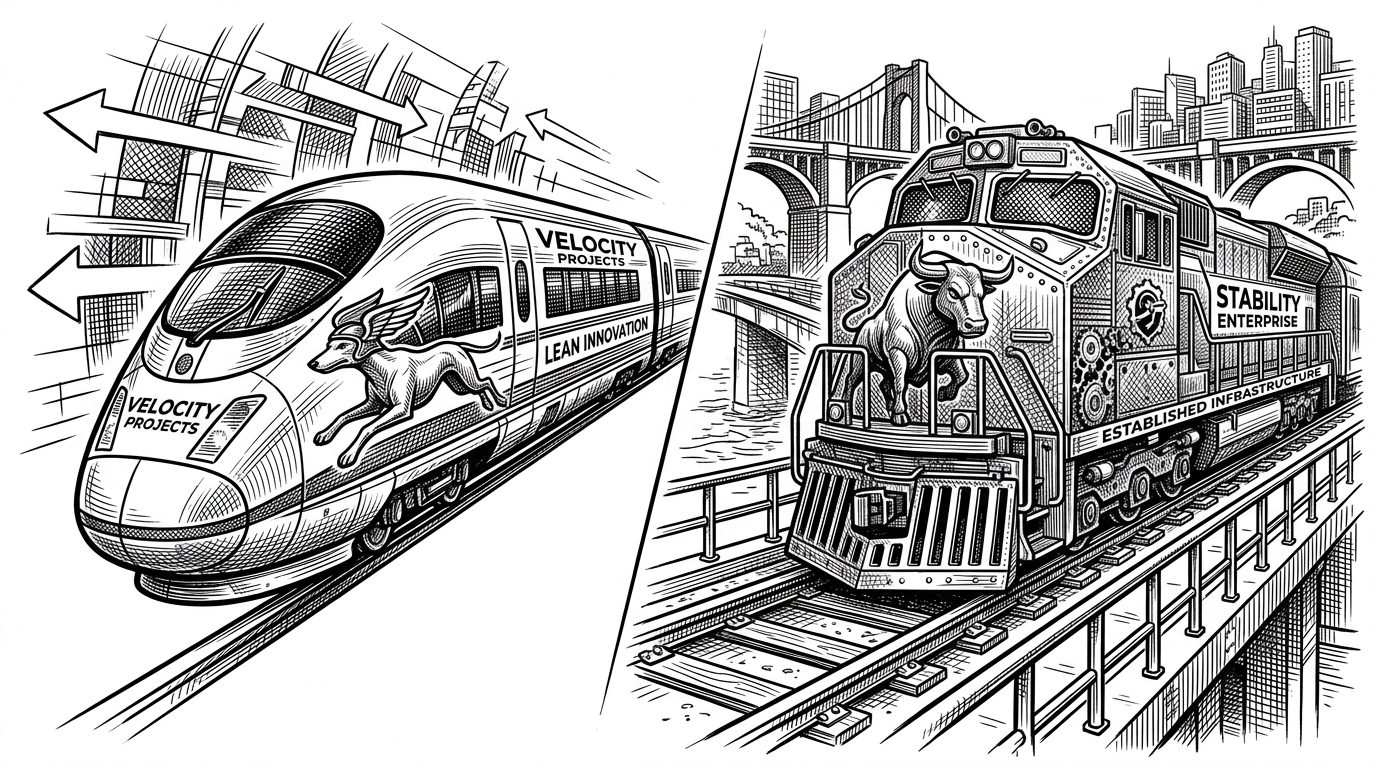
| Runtime | Primary Optimization | Failure Mode | Security Model |
|---|---|---|---|
| Node.js / Bun | Speed & Ecosystem | Log & Crash | External Sandbox / OS |
| franken_node | Deterministic Security | Cryptographic ReproBundle | Active Multi-Rail Containment |
This oracle generates divergence receipts, treating compatibility as a measurable metric rather than a best-effort goal. It is the disciplined, Rust-based adult in the room for the V8 ecosystem, providing a safe harbor for enterprise applications that cannot afford to fail silently.