The Stealth Proxy for AI Agents: Inside remote_compilation_helper
How a Rust-based interceptor tricks local AI models into building on remote clusters, saving your laptop battery without changing a single prompt.

- The remote_compilation_helper intercepts standard build commands to offload heavy processing to remote clusters without altering the AI agent's behavior.
- A deterministic closure engine automatically identifies and syncs local path dependencies to ensure remote builds have the necessary context.
- The system uses a fail-open architecture that routes tasks back to the local CPU if the remote network or daemon becomes unavailable.
- Blake3 hashing and security checks prevent directory traversal attacks when returning compiled artifacts from remote workers.
The AI Workstation Meltdown
AI models are excellent at writing code. They are terrible at managing local infrastructure. When an agent like Claude Code or OpenCode decides to run a build on a massive Rust project, it operates blindly. It will happily pin your local CPU at 100 percent and drain your laptop battery to zero.
Running parallel agentic loops saturates hardware quickly. The traditional fix is to instruct the AI to use a remote server. You write a custom prompt telling the model to use ssh or a wrapper script. The model inevitably forgets, reverts to standard local commands, and the fan noise returns.
The remote_compilation_helper (RCH) solves this by acting as a stealth proxy. It intercepts standard build commands and offloads them to a remote server cluster. The genius is in the transparency. The AI agent never knows the build happened a thousand miles away. It requires zero prompt engineering and zero behavior changes from the LLM.
The Transparent Intercept
Wrappers fail because they require active participation from the user or the agent. RCH succeeds because it is invisible. It operates as a PreToolUse hook. It intercepts shell commands before they execute.
When the agent calls a standard build command, the high-performance Rust binary evaluates the request against a five-tier classification pipeline. It decides if the task is a pure compilation job or a local mutation that needs to stay on the host machine.
If the task is clear for remote execution, the central orchestrator takes over. The daemon manages worker state, queues the job, and accounts for available CPU slots on the remote fleet.
Mapping the Dependency Closure
Moving a command to a remote server is easy. Moving the exact context required to execute that command is notoriously difficult. Rust projects often rely on local path dependencies. If you only send the root project to a remote worker, the build will fail because the worker lacks the adjacent library code.
RCH solves the partial workspace problem through deterministic closure planning. The engine scans local configuration files to find and sync local path dependencies. It ensures the remote worker has the exact file tree needed to complete the job.

The system categorizes dependencies by risk class. It evaluates how likely a dependency is to break the build or leak sensitive data. This provides a security-first view of the project structure before any code leaves the local machine.
Trust But Verify: Artifact Integrity
Networked compilation is only useful if the resulting binary is identical to one built locally. The system requires a robust trust layer to verify artifacts returning from the remote worker.
RCH uses a Blake3 hashing system to verify that files have not been corrupted during transit. It includes critical security checks to prevent directory traversal attacks. A compromised remote worker cannot return a malicious file path designed to overwrite sensitive local files.
"<p><em>Installs rch + rchd, bootstraps config, and can install/start the background daemon. If remote execution cannot proceed, RCH fails open to local execution.</em></p> </div>"
The Fail-Open Philosophy
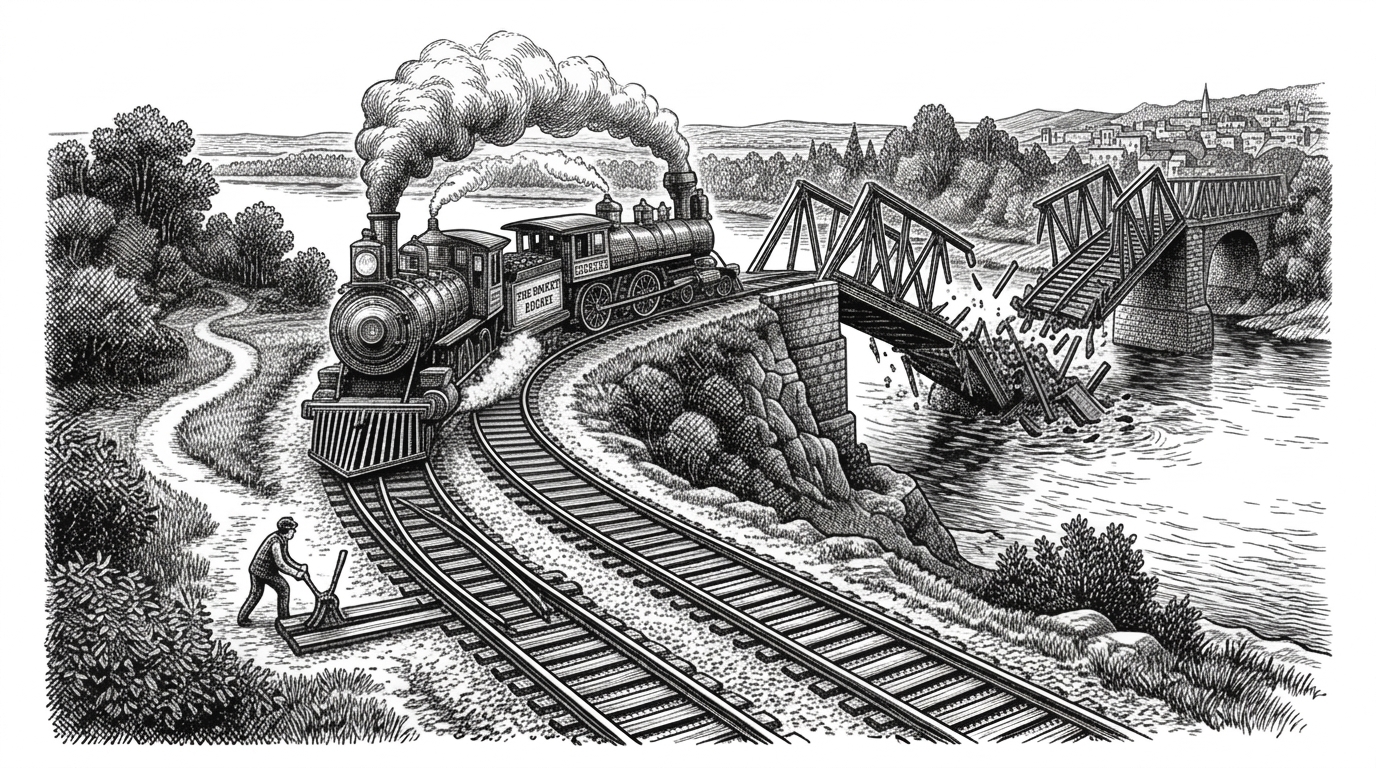
Infrastructure fails. Networks drop packets. Remote workers go offline. If a remote build tool crashes when the network blinks, it breaks the developer's flow. RCH is built around a strict fail-open philosophy.
If the daemon cannot deterministically map dependencies, or if the remote fleet is unreachable, the system does not block the workflow. It immediately routes the job back to the local CPU. The AI agent experiences a slight delay, but the command still succeeds.
Wrappers vs. Proxies
Remote build tools have existed for decades. The distinction lies in how they integrate with the caller. Legacy tools operate as wrappers. They require explicit invocation and manual dependency synchronization.
RCH operates as a transparent proxy. It intercepts standard commands and handles state synchronization automatically. This architectural shift is what makes it uniquely suited for AI coding agents.
| Feature | The Wrapper Approach (e.g., cargo-remote) | The Interceptor Approach (RCH) |
|---|---|---|
| Invocation | Requires explicit wrapper command (cargo remote build) | Intercepts standard command (cargo build) |
| AI Agent Awareness | Requires explicit prompt instruction | Completely transparent to the agent |
| Dependency Sync | Manual or simple rsync | Deterministic closure planning |
| Failure Mode | Fails the agent loop | Fails open to local CPU |
By abstracting the remote infrastructure entirely, the tool turns a lightweight laptop into a high-end workstation. It allows AI agents to operate at maximum velocity without melting the hardware they run on.
Sources: Dicklesworthstone/remote_compilation_helper repository and architectural decision records.