Aozora_SDXL_Training: Aozora: The 12GB VRAM Miracle for SDXL
How custom optimizers and "sliding window" memory management brought professional-grade diffusion fine-tuning to the consumer desktop.
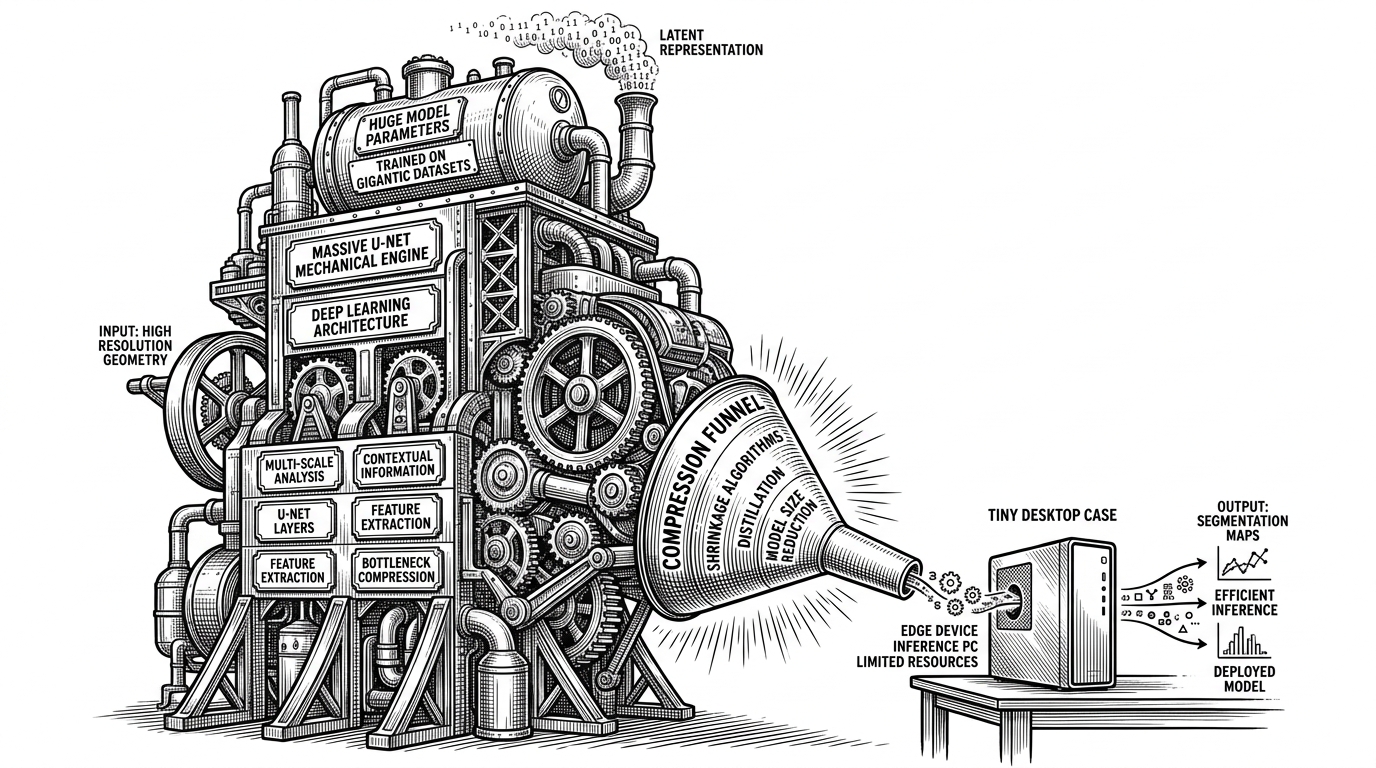
- The TitanAdamW optimizer enables full 32-bit SDXL fine-tuning on 12GB consumer GPUs by offloading gradients to CPU RAM.
- A sliding window orchestrator maintains constant VRAM usage by processing model parameters in small, sequential buckets.
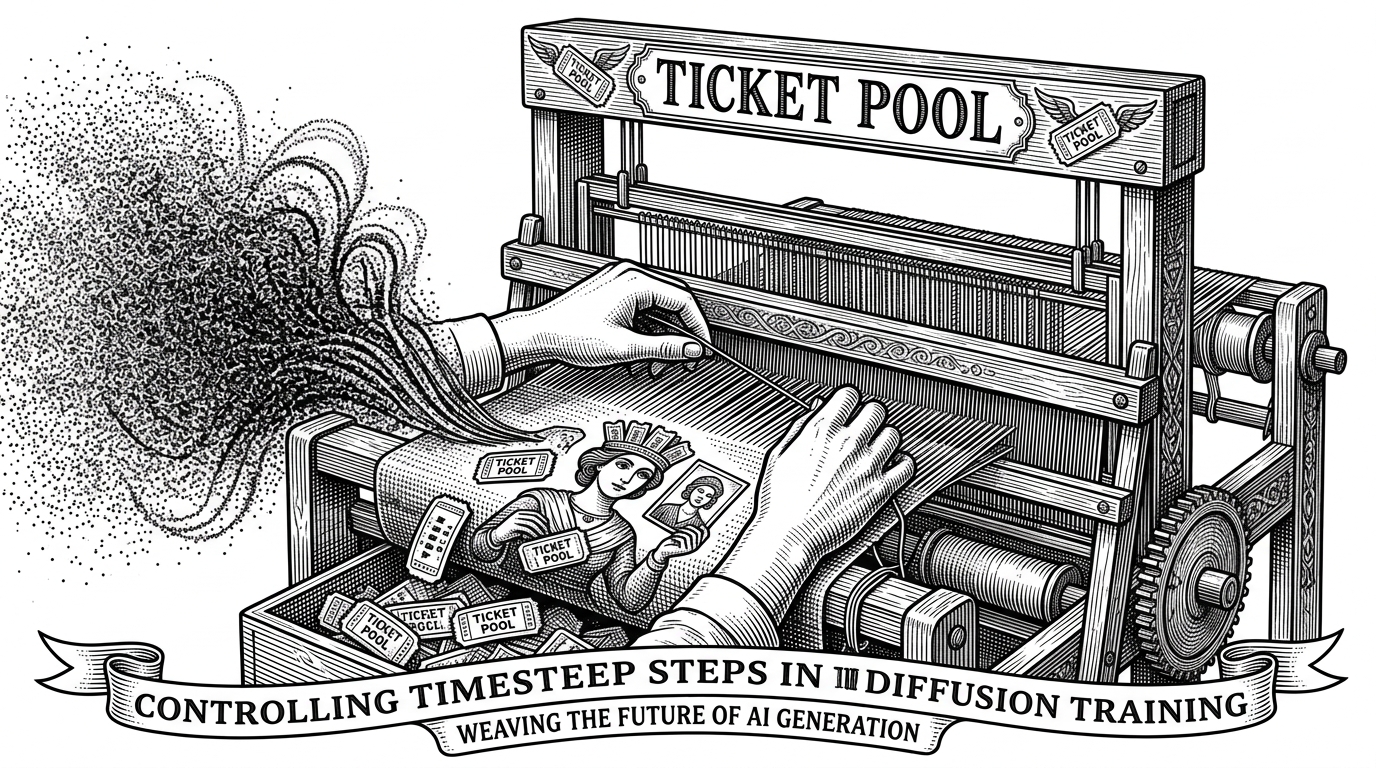
- The Ticket Pool system replaces numerical configuration files with a visual probability distribution for shaping noise schedules.
- Aozora implements resolution-scaled flow matching to preserve high-frequency details in modern Diffusion Transformer architectures.
The VRAM Wall
The artificial intelligence industry operates on an unspoken assumption. If you want to fine-tune a massive diffusion model like Stable Diffusion XL, you need enterprise hardware. The SDXL architecture contains 2.6 billion parameters. Simply loading those parameters, calculating their gradients, and maintaining optimizer states for a standard AdamW update consumes north of 30GB of Video RAM. For the average developer or artist with a 12GB consumer graphics card, the process crashes before the first epoch finishes.
This is the out-of-memory wall. The standard solution is compromise. Users drop down to 8-bit approximations or freeze large portions of the network. Aozora ignores these compromises. It proves that with extreme memory engineering, you can achieve full 32-bit precision fine-tuning on a $300 GPU.
The Sliding Window: Inside TitanAdamW
The secret lies in the optimizer/titan.py file. Aozora implements a custom optimizer called TitanAdamW. Instead of treating the GPU as a massive bucket that must hold everything at once, Titan treats it as a precious, finite workspace. It implements a sliding window memory orchestrator.
During the backward pass of training, standard frameworks calculate gradients and let them pile up in VRAM. Titan intercepts this process. It uses a post-accumulate hook to immediately eject calculated gradients from the GPU into the system's CPU RAM. This prevents the catastrophic memory spike that normally kills consumer training runs.
When it is time to update the model weights, Titan uses a reusable GPU buffer. It allocates just enough space for the largest single parameter block. It pulls a "bucket" of data from the CPU, performs the mathematical update on the GPU, and ships the result back. The VRAM overhead remains constant regardless of the total model size.

Beyond Strings: Visualizing the Hyperparameters
Memory efficiency is only half the architecture. Aozora replaces abstract configuration strings with a highly visual graphical interface. In standard scripts, users define learning rates and noise schedules by guessing numerical ranges. Aozora introduces the "Ticket Pool."
The Ticket Pool treats timesteps as a visual probability distribution. Users allocate blocks of computational time to specific noise levels, shaping the exact curve of how the model learns to denoise an image. It moves the user experience from editing JSON files to physically shaping learning curves.
The Flow Matching Frontier
The repository includes specialized entry points like train_dit.py. This signals support for Rectified Flow and Diffusion Transformers. Modern SDXL derivatives, such as NoobAI and Illustrious, rely on Flow Matching to achieve their aesthetic stability.
Standard diffusion training follows a curved, erratic path from noise to image. Flow Matching forces the model to learn a straight line. Aozora dynamically scales flow-shift factors based on image resolution, preserving high-frequency details and preventing the color shifts common in lesser training setups.
The Laboratory vs. The Factory
The generative AI community relies heavily on general-purpose trainers like Kohya_ss. Kohya is the factory. It is built for mass adoption, offering robust presets and a gentle learning curve for standard LoRA creation. Aozora is the laboratory.
| Feature | Kohya_ss (The Factory) | Aozora (The Laboratory) |
|---|---|---|
| Memory Strategy | 8-bit Adam, BitsAndBytes | Custom TitanAdamW, CPU Offloading |
| Optimizer Precision | 8-bit approximations | FP32 Master Weights on CPU |
| Learning Curve | Moderate (Presets available) | Steep (Manual GUI configuration) |
| Primary Use Case | General LoRA creation | High-fidelity SDXL and DiT research |
Aozora sacrifices mainstream accessibility for absolute control. By rewriting the optimizer from scratch and treating VRAM as a sliding window, it allows single-GPU researchers to push the boundaries of the SDXL architecture. It proves that the barrier to high-fidelity AI is not always the hardware. Sometimes, it is just the math.
Sources