Shannon: The AI Pentest Agent That Refuses to File a Report Without a Proof
Inside the source-aware, browser-driven workflow that turns security testing into a durable, exploit-or-bust pipeline.
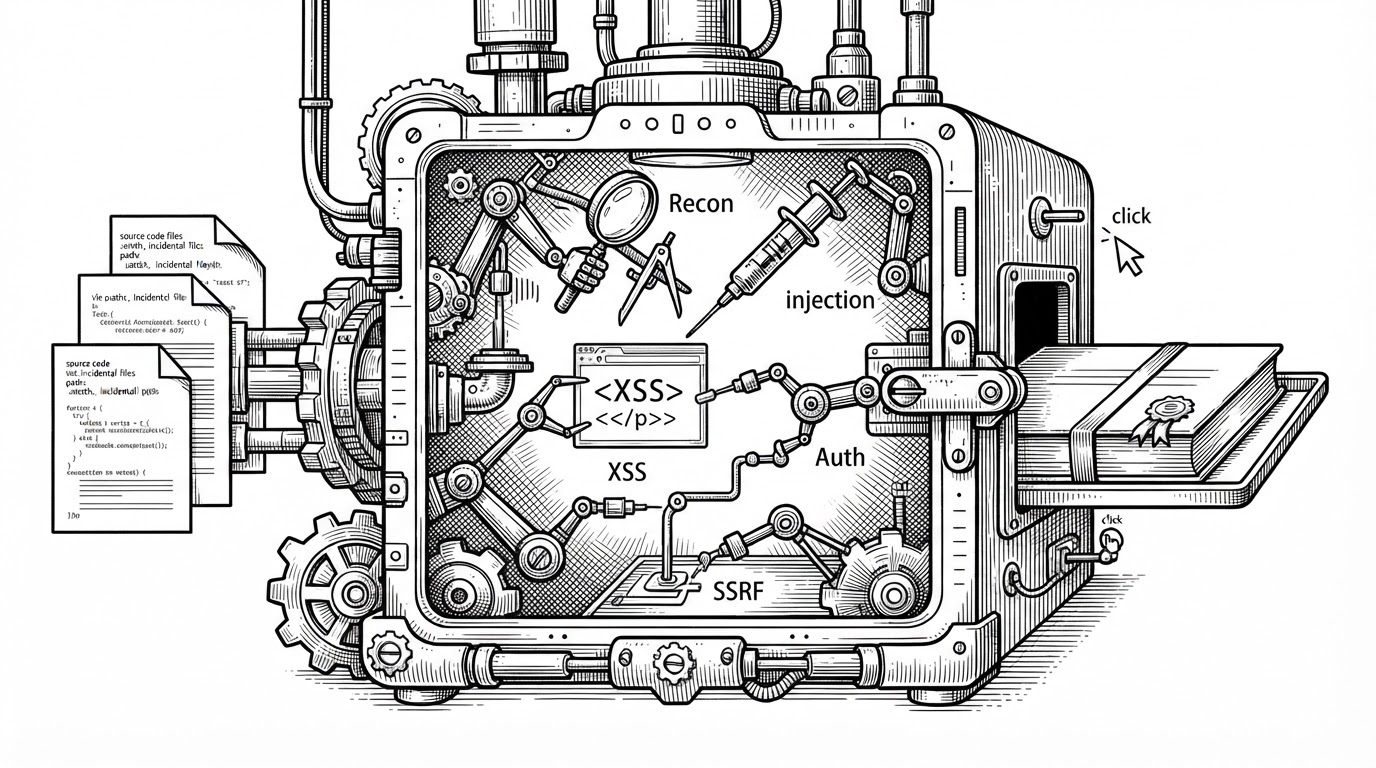
- Shannon is built around a stricter contract than most security tools: it only reports vulnerabilities it can drive to a real exploit.
- Its core advantage is white-box awareness, which lets it turn source code into targeted attack paths instead of generic guesses.
- Temporal makes the agent durable enough for long, failure-prone pentest sessions that need retries and recovery.
- The project trades simplicity for control, precision, and fewer false positives.
Shannon exists because software ships faster than security reviews. Teams can push code every day, but a human pentest still arrives on a calendar. Shannon is an attempt to close that gap with something harsher than an alert stream: a machine that refuses to speak until it can prove a weakness end to end.
Shannon is an AI pentester for web applications and APIs. It analyzes your source code, identifies attack vectors, and executes real exploits to prove vulnerabilities before they reach production. No exploit, no report.
Why Shannon Exists
Traditional scanners are good at generating possibilities. They are less useful at answering the question that matters in production: can this actually be exploited? Shannon is designed to make that second question the only one that counts. That makes it feel closer to a proof engine than a dashboard.
The repo’s thesis is blunt. It analyzes source code, maps the likely attack surface, and then uses browser automation and agentic workflows to attempt real exploitation. If the path dies in speculation, it does not become a finding.
No Exploit, No Report
That rule changes the economics of pentesting. It cuts down on false positives, but it also raises the bar for what qualifies as evidence. A weak hunch is not enough. A path through the app, a browser action, and a confirmable outcome are the minimum.
| Approach | What it emits | How it decides | What you get |
|---|---|---|---|
| Shannon | Only proven findings | Tries to exploit before reporting | Fewer false positives, stronger evidence |
| Classic DAST | Alerts and suspected issues | Observes behavior from the outside | Broad coverage, noisy output |
| SAST | Potential code issues | Matches patterns in source | Fast feedback, lots of inference |
| Manual pentest | Human write-up | Analyst judgment plus testing | Deep context, slower cycle |
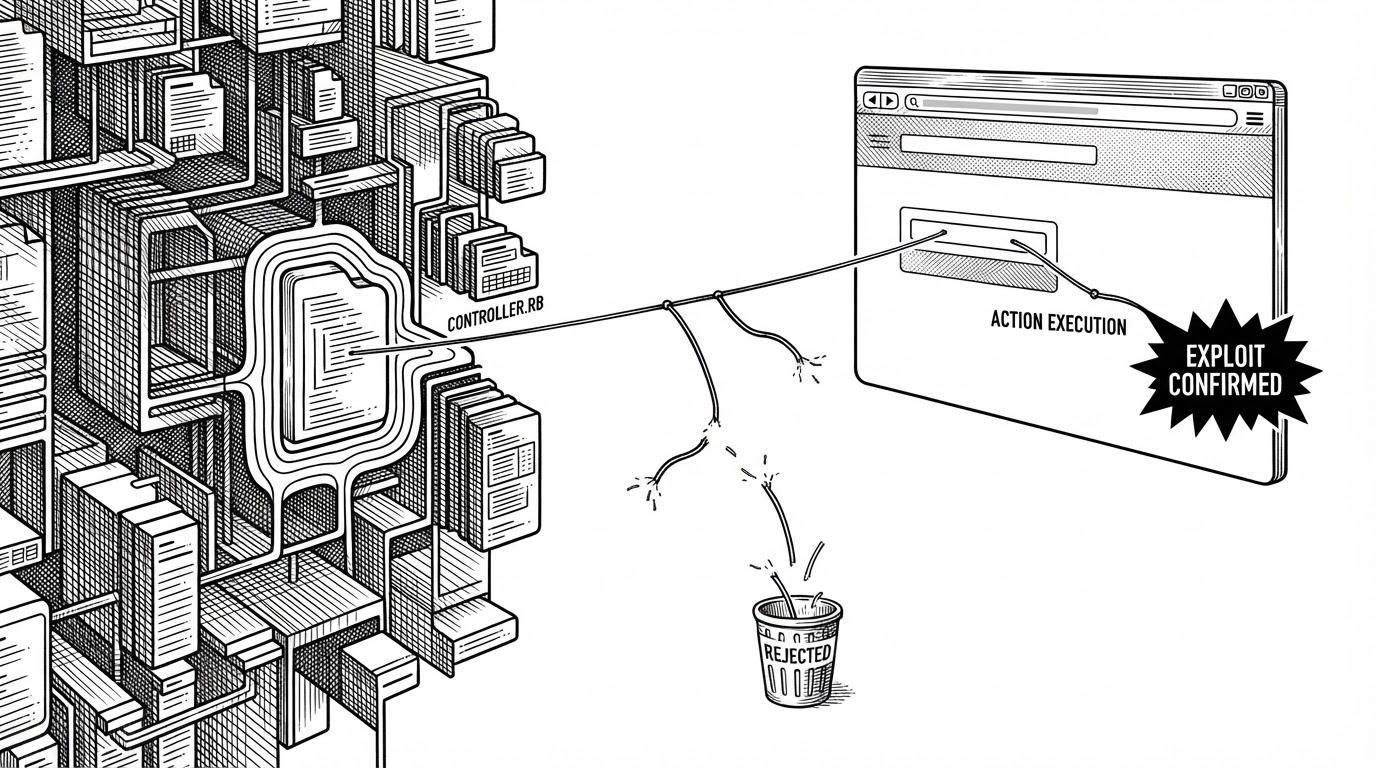
How Shannon Turns Source Code Into an Attack Plan
Shannon’s first move is not to spray payloads. It reads the repository, identifies routes, controllers, configs, and likely data flows, then narrows the problem into smaller tasks. That source-aware step is the white-box advantage. It lets the agent see routes and assumptions that black-box tools can only guess at.
The Durable Workflow Behind the Agent
The interesting technical choice is Temporal. Plenty of agent demos can start a task. Very few can survive a long test session, a worker crash, or a network hiccup without losing their place. Temporal turns Shannon into a durable workflow instead of a fragile prompt chain.
// Simplified scan lifecycle
await startWorkflow('scan', {
  phases: [
    'auth-validation',
    'pre-recon',
    'recon',
    'vulnerability-analysis',
    'exploitation',
    'reporting'
  ],
  parallel: ['injection', 'xss', 'auth', 'ssrf']
});
That matters because exploit attempts are messy. They can take time. They can fail halfway through. They can need retries. A durable orchestrator is what keeps the whole thing from collapsing into a one-shot demo.
Specialists, Not a Single Prompt
Shannon splits the job into specialist phases instead of asking one model to do everything. Recon, injection, XSS, auth, SSRF, exploitation, and reporting each get their own lane. That division of labor is the real architecture. It is closer to a security pipeline than a chatbot.
| Lane | Role | Why it exists |
|---|---|---|
| Recon | Maps the target | Finds routes and surfaces before testing |
| Injection | Looks for input abuse | Focuses on common server-side flaw paths |
| XSS | Tests browser-context breaks | Targets client-side execution paths |
| Auth | Checks access control | Looks for bypass and privilege drift |
| SSRF | Probes server-side fetches | Targets internal reachability assumptions |
| Reporting | Collects only verified findings | Keeps the no-exploit contract intact |
How It Compares
Compared with PentestGPT, Shannon is less of an assistant and more of an operator. Compared with PentAGI, it is narrower but more opinionated about proof. Compared with HexStrike AI, it is not just a tool rack. It is a workflow that decides which tools matter, when, and why.
| Project | Autonomy | Source awareness | Proof required | Setup burden |
|---|---|---|---|---|
| Shannon | High | Yes | Yes | High |
| PentestGPT | Medium | Limited | No | Medium |
| PentAGI | High | Varies | Sometimes | High |
| Strix | High | Limited | Usually | Medium |
| HexStrike AI | Tool-based | Depends on the agent | No | Medium |
| Burp or Snyk | Low to medium | Partial | No | Low |
The trade-off is obvious. Shannon asks for more setup and more trust in orchestration. In return, it promises fewer false positives and a tighter link between source code, execution, and evidence.
What Shannon Changes
The deeper shift is not just technical. Shannon points toward a security model where proof becomes the gatekeeper and workflows become the unit of reliability. That is a meaningful step beyond alerting. It is security behavior that looks more like CI.
That also explains why the repo feels unusually serious for an AI project. It is not selling a prompt. It is selling an operating model: source-aware, durable, and skeptical enough to stay silent until it wins.