loan-default-risk-analyzer: The Small Script That Tries to Decide Who Gets a Loan
A one-file Python pipeline turns raw applicant data into a credit-risk prediction, exposing the tradeoffs between speed, interpretability, and production readiness.
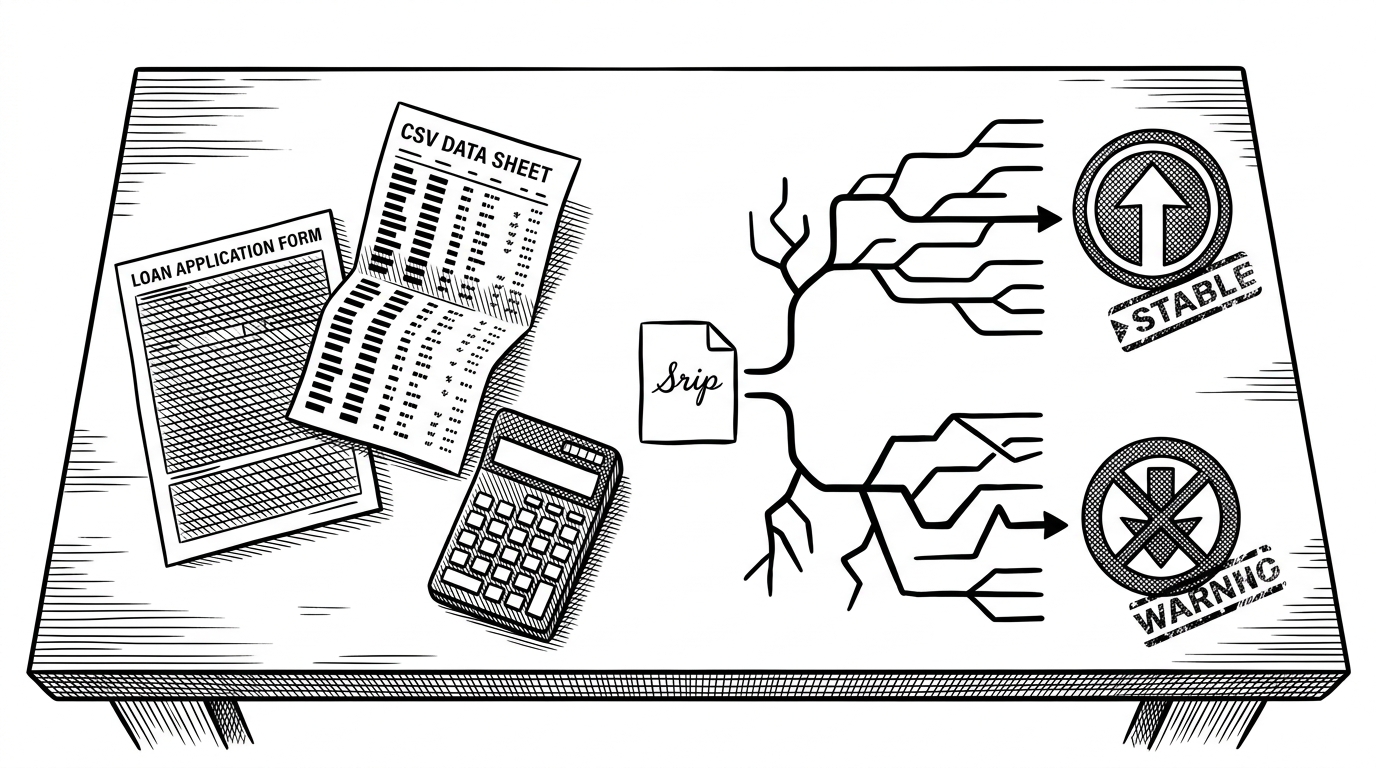
- The repo is less a finished credit product than a working prototype that already spans ingestion, cleaning, encoding, training, and a new-applicant prediction.
- Its most interesting trick is dtype-aware imputation, which makes the pipeline feel smart while also exposing how quickly convenience can shape model behavior.
- The choice between Logistic Regression and Random Forest is really a choice between transparency and power, which matters a lot in lending.
- What looks like a simple script is actually a snapshot of ML maturity, where hardcoded paths and print-only outputs mark the gap between model and system.
A Loan Model in Its Rawest Form
This repo is tiny, but it is not trivial. In one Python file, it loads applicant data, cleans missing values, encodes categories, trains two models, and makes a fresh loan decision for a new customer. That is the whole arc of a credit-risk product, compressed into a script that still feels like day one.
That is why it is interesting. The project is not pretending to be a bank platform. It is showing the exact shape of a prototype before it has been wrapped in APIs, orchestration, or governance.
What the Script Actually Does
The flow is straightforward. The script checks that the dataset exists, loads train.csv, inspects the columns, fills missing values, turns categories into numbers, and then trains Logistic Regression and Random Forest. After that, it prints evaluation metrics and runs a test prediction for a new applicant.
for col in df.columns:
    if df[col].dtype == 'object':
        df[col] = df[col].fillna(df[col].mode()[0])
    else:
        df[col] = df[col].fillna(df[col].mean())
The Clever Part: It Cleans by Column Type
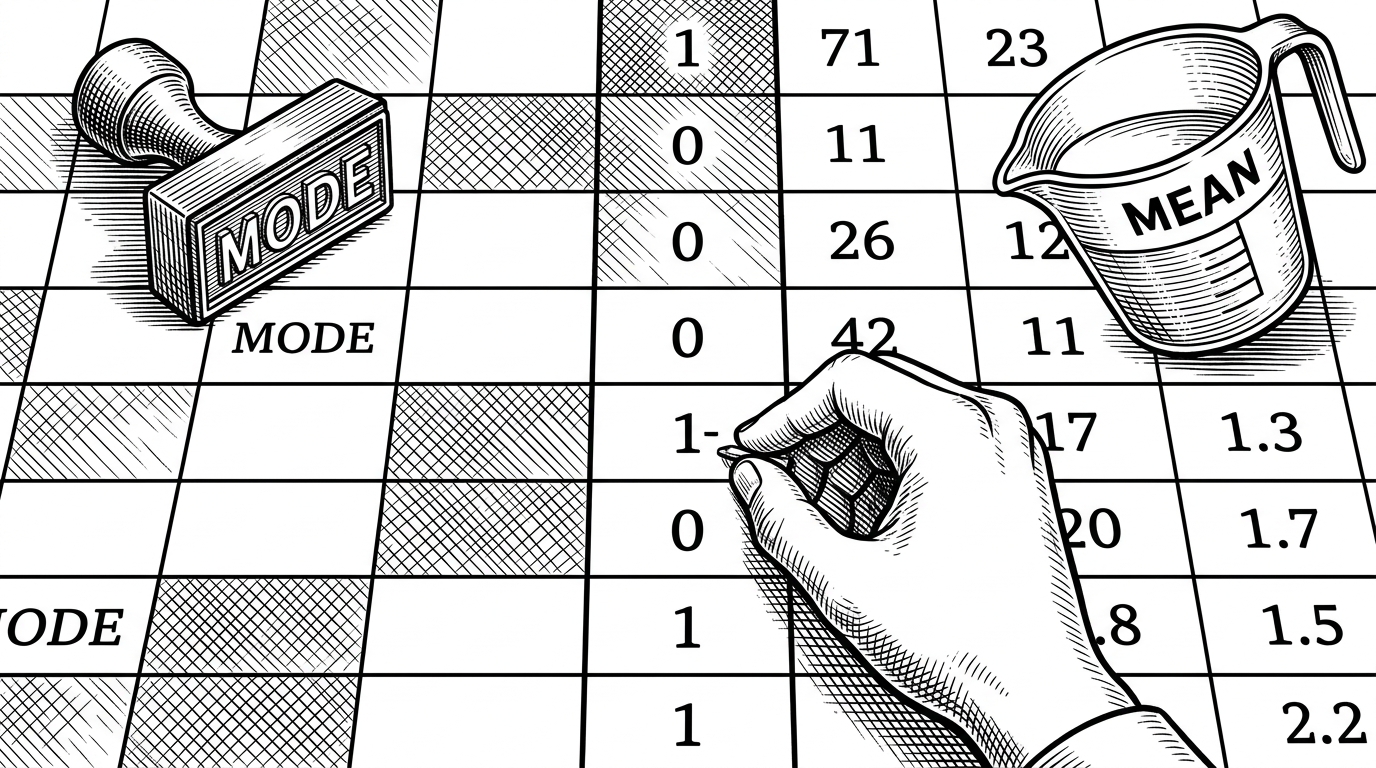
This is the nicest piece of the repo. Categorical columns get filled with the mode. Numeric columns get filled with the mean. The code is short, but the idea is strong: route missingness based on the kind of data you are holding, not on a one-size-fits-all rule.
For a prototype, that is elegant. It removes a lot of manual cleanup and makes the pipeline self-running. But it also hides risk. Mean imputation can flatten outliers, and mode imputation can quietly reinforce whatever category already dominates the column.
from sklearn.preprocessing import LabelEncoder
le = LabelEncoder()
for col in categorical_cols:
    df[col] = le.fit_transform(df[col])

df['Loan_Status'] = df['Loan_Status'].map({'N': 0, 'Y': 1})
Two Models, Two Kinds of Trust
The model comparison is not decoration. It is the heart of the decision logic. Logistic Regression is the cleaner story, because it is easier to explain why a feature moved the score. Random Forest is the stronger story when the data has nonlinear interactions that a line cannot catch.
| Prototype workflow | Production credit system |
|---|---|
| One script | Modular service with clear boundaries |
| Hardcoded local path | Portable ingestion and configuration |
| Ad hoc preprocessing | Reusable pipeline and validation |
| Print-only metrics | Tracked metrics and monitoring |
| Manual test block | API endpoint or UI |
| No persistence | Saved model and versioning |
In lending, that tradeoff is not academic. A simpler model may lose some predictive power, but it can win on explainability, reviewability, and regulatory comfort. A stronger ensemble may score better, but it raises harder questions about how a decision was made.
Why This Is Not Yet a Production Tool
The script is clear about its stage. The path is hardcoded to a local Windows environment. The logic lives in one file. There is no model saving, no API, no tests, and no deployment story. That is not a flaw so much as a signal.
It tells you exactly where the project lives: in the space between a notebook and a product. That is a useful place to be if you are learning. It is also where many ML projects stop if nobody turns the prototype into software.
What It Teaches About Credit Risk
Under the hood, lending is a feature-ranking problem wrapped in policy. Income, credit history, loan amount, and a few demographic fields become proxies for a decision that has legal, financial, and human consequences. This repo makes that machinery visible without hiding behind a UI.
That is the real value here. Not that the model is finished. It is that the repo reveals the basic shape of a real underwriting system before all the production layers are added. The prototype is small, but the question it asks is large.
The Repo in One Sentence
This is a compact Python prototype that turns messy loan records into a binary risk call, and in doing so it shows how quickly a credit model can become both useful and incomplete.