Tkd-Drawsheet-App: The bracket engine that speaks Taekwondo
A close look at the rules logic, local-first state, and tournament-specific workflows behind an open-source draw sheet system built for real competition mats.
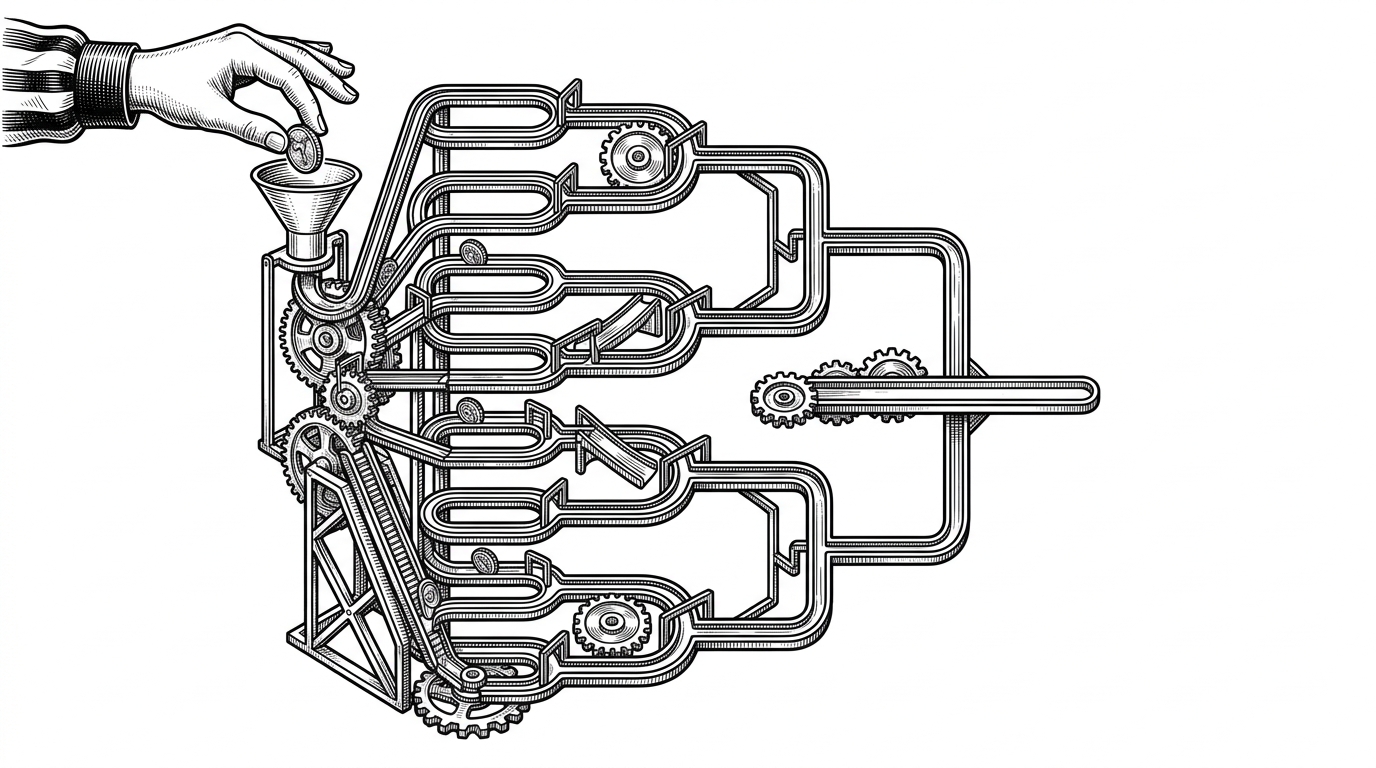

A Taekwondo drawsheet application for creating and managing Taekwondo drawsheets for tournaments.
- This project treats tournament logic as executable sport rules, not as a decorative bracket UI.
- Its most interesting work is the bracket engine that handles byes, seeding, and Taekwondo-specific win methods.
- The state layer matters as much as the draw logic because live tournament use has to survive refreshes, multi-tab edits, and spotty venue connectivity.
- Its narrow focus is the feature, because general bracket tools do not model Taekwondo operations this completely.
Why a bracket is harder than it looks. Most bracket tools draw a tree. This one has to decide how a Taekwondo competition should behave when the number of entrants is awkward, the seeding matters, and a match ends by PTG, PUN, RSC, or DSQ. That shifts the project from a UI problem to a rules problem.
The rules engine inside bracketUtils.ts
The technical center of gravity is the bracket generator. Instead of treating every event as the same elimination tree, it handles the annoying edge cases that make real tournaments messy: odd entrant counts, seeded pairings, and small brackets that need special treatment to stay fair.
// Conceptual shape of the bracket logic
function generateBrackets(players: Player[], seedMode: 'random' | 'ordered' | 'as-entered') {
  const pairs = buildSeededPairs(players, seedMode)
  return distributeByesRecursively(pairs)
}

function resolveMatch(match: MatchResult) {
  switch (match.winMethod) {
    case 'PTG': return applyPointGap(match)
    case 'PUN': return applyPunitiveDeclaration(match)
    case 'RSC': return applyRefereeStopContest(match)
    case 'DSQ': return applyDisqualification(match)
  }
}

// Each match knows where the winner goes next.
// That is the part most generic bracket tools gloss over.
Taekwondo logic, not generic bracket logic
| Capability | Tkd-Drawsheet-App | Generic bracket tools |
|---|---|---|
| Taekwondo win methods | PTG, PUN, RSC, DSQ are first-class | Usually reduced to winner and loser |
| Bye handling | Built around competition edge cases | Often generic and manual |
| Live tournament flow | Tracks dependent matches and results | Focuses on the bracket display |
| Offline resilience | State can persist locally during venue use | Depends on the platform and connection |
| Domain fit | Narrow, sport-specific, operational | Broad, but less exact |
That specificity is the point. A general bracket generator can tell you who plays next. It usually cannot speak the language of a Taekwondo table judge, a referee’s stoppage, or a disqualification that has to be reflected cleanly in the draw sheet.
A tournament that survives bad Wi-Fi
The other interesting layer is resilience. The store persists state locally, which means a live tournament can keep moving even if the network is unreliable or the page is refreshed. In a gym or event hall, that is not a convenience. It is the difference between keeping the bout flow intact and rebuilding it by hand.
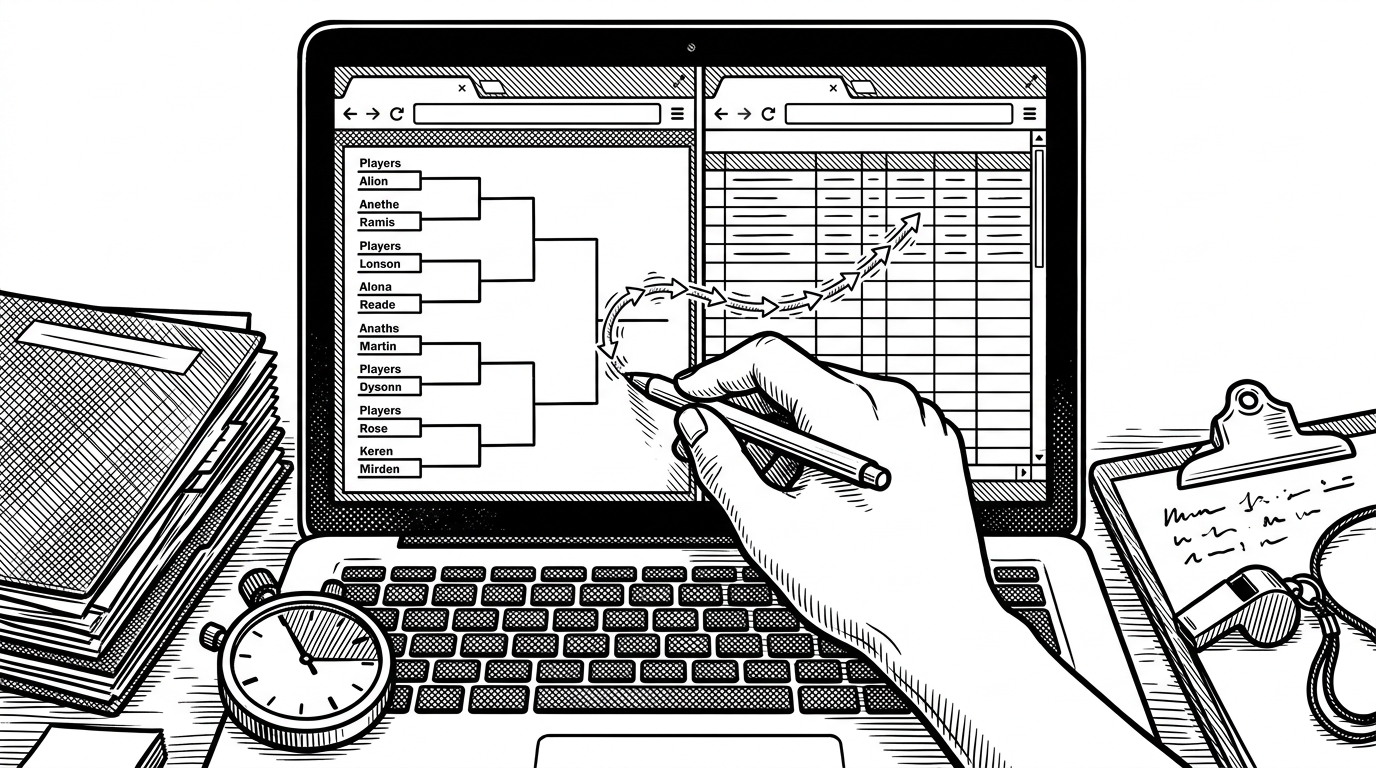
// Why the store matters
// - Persist tournament state in localStorage
// - Keep multiple tabs in sync
// - Preserve match progress during refreshes
// - Tie results to specific match records

const useTournamentStore = create(
  persist(
    (set, get) => ({ /* tournament state */ }),
    { name: 'tkd-drawsheet-state' }
  )
)
Why the data model matters
The schema is doing editorial work. A BracketMatch is not just a database row. Its nextMatchId encodes the flow of the tournament itself, which is why result updates can propagate cleanly instead of being stitched together after the fact.
What this replaces in the market
| Option | Strength | Trade-off |
|---|---|---|
| Tkd-Drawsheet-App | Taekwondo-specific logic and lightweight control | Smaller scope than full tournament platforms |
| Proprietary tournament suites | Registration, scoring, reporting, and live operations | Higher cost and more vendor lock-in |
| Generic bracket services | Fast setup for basic elimination trees | Weaker fit for Taekwondo rules and live workflow |
This is not trying to outspend a commercial tournament suite. It is trying to out-specialize it. For organizers who need a focused draw sheet system, especially one that understands the sport instead of treating it as generic bracket math, that narrowness is a real advantage.
The narrowness is the point
The best open-source tools usually win by being annoyingly specific. Tkd-Drawsheet-App does not want to be everything for every sport. It wants to be the thing that gets Taekwondo brackets, results, and tournament flow right when the venue is live and the pressure is real.