ReverseSnake: The Snake Game Where You Are the Food
A tiny browser game flips a familiar arcade loop, then makes the hunt feel intelligent with predictive AI, slippery movement, and a revive-by-teleport trick.
A twist on the classic snake game where the snake moves backwards.
- ReverseSnake wins by inverting Snake’s power fantasy, so the player becomes prey instead of predator.
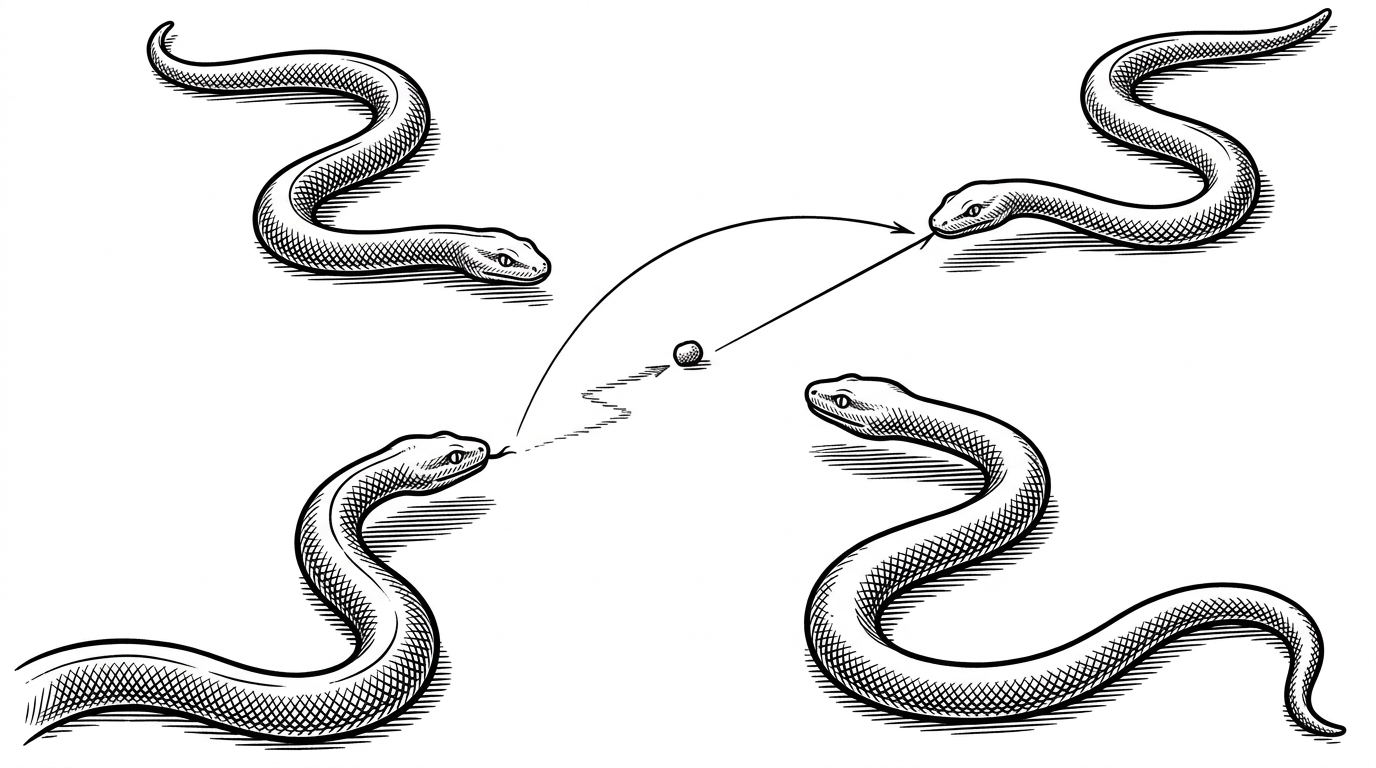
- Its smartest trick is predictive pursuit, which makes the snakes aim where you are going rather than where you stand.
- The project stays lean by keeping the game logic close to the metal with Python and Pygame instead of layering on framework complexity.
- A single reversal in incentives changes the whole feel of a familiar arcade loop without needing a bigger content budget.
ReverseSnake is not interesting because it adds more stuff to Snake. It is interesting because it swaps the roles and then commits to the joke: you are the food, and the snake is the one doing the hunting.
You Are Not the Snake
The cleanest way to describe ReverseSnake is to start with the emotional reversal. Classic Snake is a power curve. You grow, you get harder to stop, and the screen slowly belongs to you.
ReverseSnake flips that logic. Growth belongs to the threat, not the player. The longer the game runs, the more pressure the snakes bring, which makes survival feel less like control and more like managing a widening emergency.
The Hunt Is Smarter Than It Looks
The other reason ReverseSnake works is that the snakes do not behave like dumb chasers. The repo’s core idea is predictive pursuit. Instead of aiming at the player’s current position, the snake aims ahead using player velocity.
That one line of logic changes the whole game. If the enemy only follows you, you can smooth out your movement and live on reflex. If the enemy predicts you, you have to break patterns, change cadence, and stop moving like a straight line.
// Core idea from the snake logic
const targetX = player.x + player.vx * predictT;
const targetY = player.y + player.vy * predictT;

snake.x += Math.sign(targetX - snake.x) * snakeSpeed * dt;
snake.y += Math.sign(targetY - snake.y) * snakeSpeed * dt;
Teleport Is Not Just an Escape Button
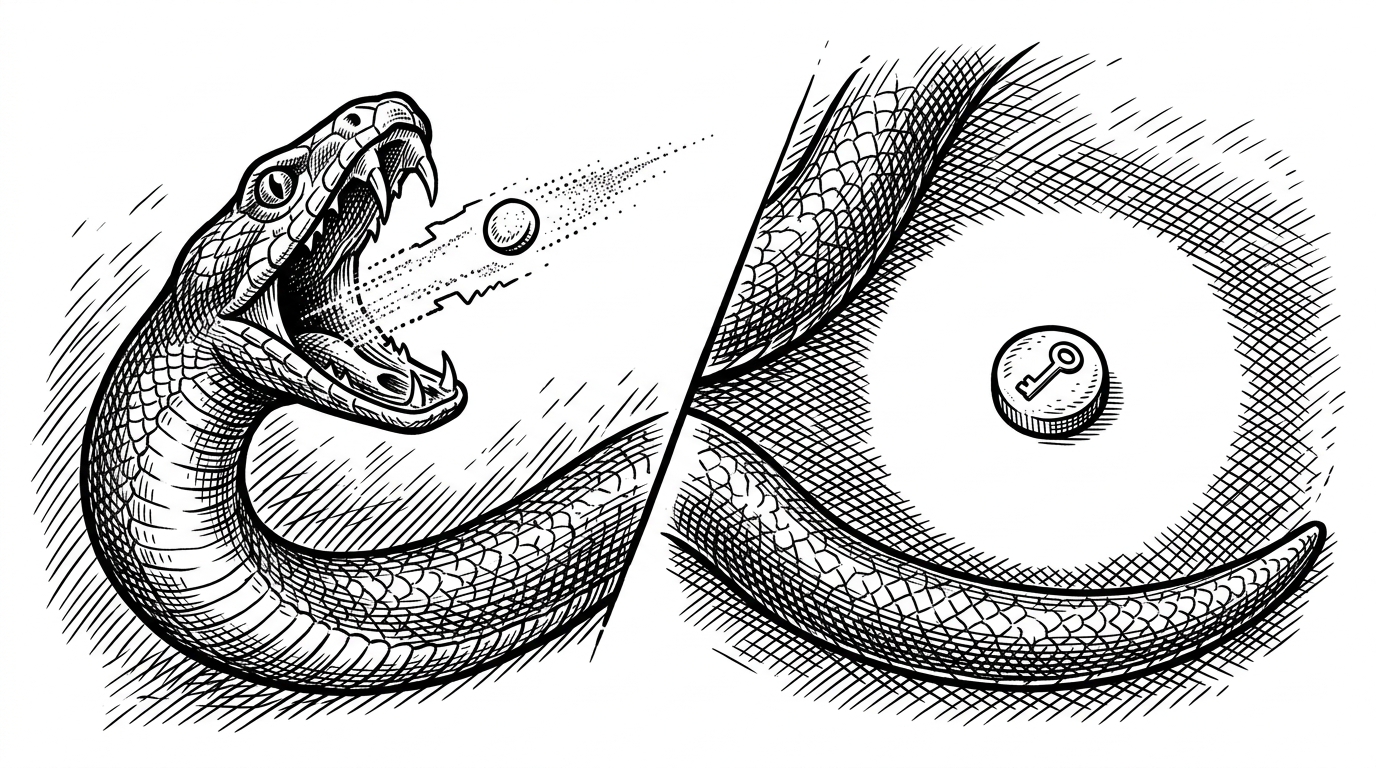
The nicest design trick in the project is the teleport system. During play, it is a blink away from danger. After defeat, it becomes a revive action that spends the same resource.
That reuse is elegant because it gives one mechanic two emotional meanings. In the moment, teleport is tactical. After failure, it is a second chance. The player learns one system and gets two kinds of payoff from it.
A Lean Core, a Thin Shell
The repository’s structure matters because it resists the usual temptation to over-framework a small game. The game loop lives in plain JavaScript and Pygame style logic, while the surrounding UI stays light. That keeps the real-time parts close to the metal, which is where they belong.
| Classic Snake | ReverseSnake |
|---|---|
| You are the predator. | You are the prey. |
| Tension comes from growing longer. | Tension comes from being hunted by a smarter enemy. |
| Enemies are implicit or absent. | The snake is the primary actor. |
| Movement is mostly about route planning. | Movement is about breaking prediction. |
| Failure is usually self-collision or wall impact. | Failure is pressure from an active hunter plus your own mistakes. |
| The core loop rewards accumulation. | The core loop rewards evasion and timing. |
That is the larger lesson here. A game does not need more systems to feel new. Sometimes it only needs a different incentive structure and a mechanic that follows through.
Why This Sticks
ReverseSnake is small, but it is not accidental. The role reversal is legible in one sentence, the chase logic gives that reversal teeth, and the teleport system adds a second layer of drama without bloating the rules.
That is why the project stands out from the average clone. It takes a solved genre and changes the question from “How do I win?” to “How long can I stay one step ahead?”