ThreeUI Community: The Open-Core Machine Turning 3D UI into a Real Component System
A look at how Meng To’s catalog combines ready-made Three.js visuals, lazy-loaded browsing, and a private-to-public sync pipeline to make spatial interfaces shippable.
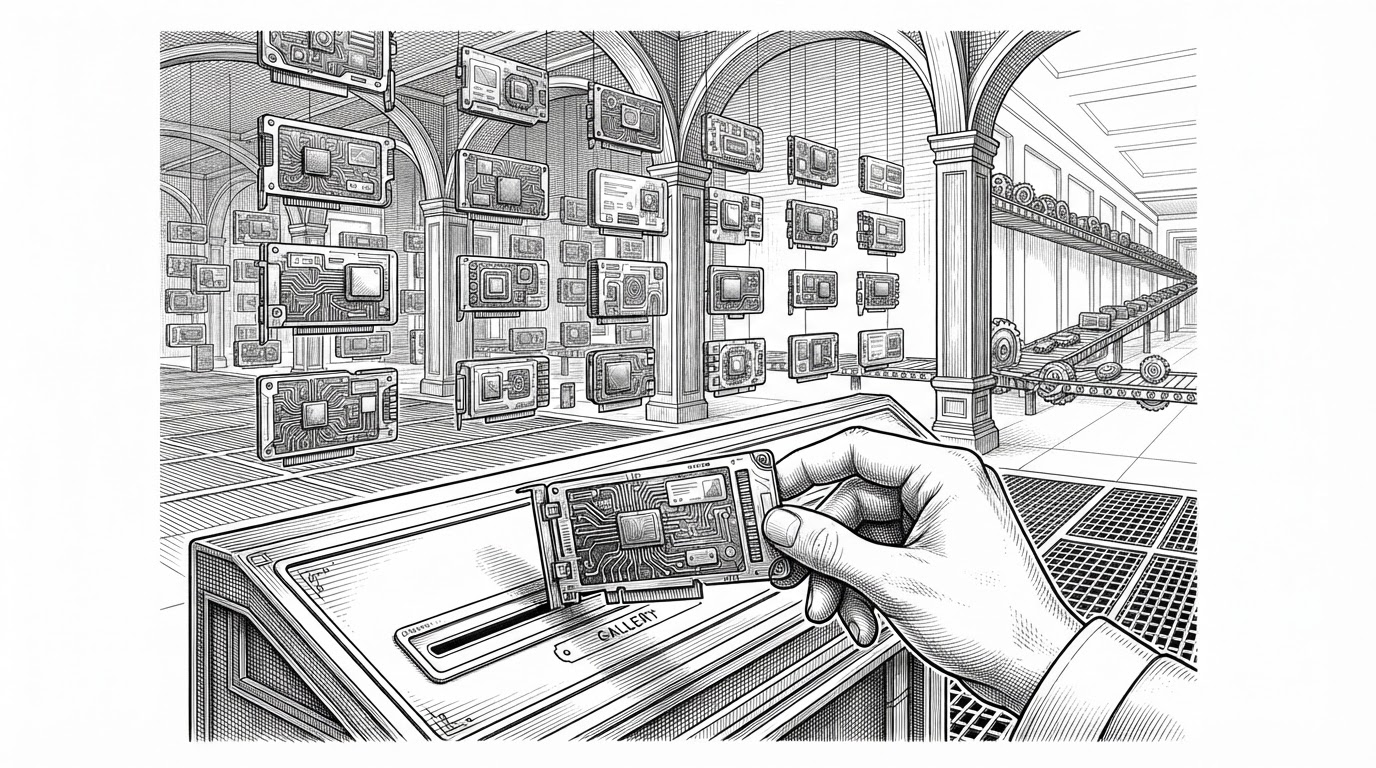
- ThreeUI Community is built like a product pipeline, not a static open-source dump.
- Its catalog, routing, and metadata make 3D components feel browsable before they feel installable.
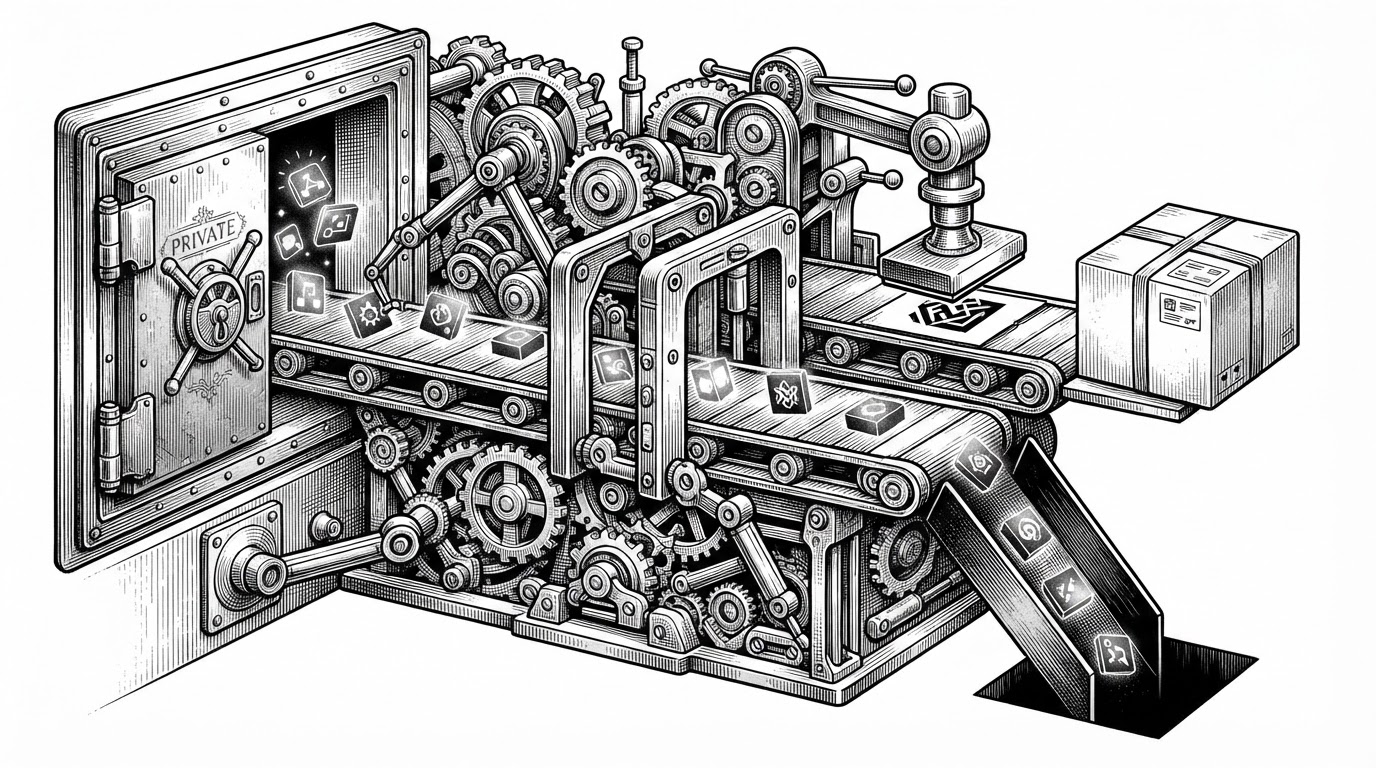
- The sync system keeps a private Pro codebase and a public community surface aligned without exposing premium assets.
- Its real niche is finished visual output in source form, which sits between low-level Three.js utilities and closed no-code tools.
The surprising thing about ThreeUI Community is not the shaders. It is the machinery around them. The public repo behaves like a storefront, but the source of truth lives behind the curtain, and a sync pipeline decides what becomes visible, routable, and installable.
The real product is the pipeline
This is an open-core setup with discipline. A private Pro codebase feeds a public community edition, and the community repo is continuously derived from it. That means the project is not just publishing components. It is manufacturing a public surface from a governed source tree.
MengTo/threeui is interesting because it does not just dump components into a repo. It ships a polished community catalog, a React package, and a clean product boundary between free and paid tiers that builders can actually learn from.
That matters because the repo has to solve two jobs at once. It has to be useful to developers who want 3D UI components now, and it has to protect the boundary between public and paid assets. The sync script handles that tension by filtering restricted files, stripping premium fonts, and emitting a public source manifest.
Why this is a different kind of 3D library
ThreeUI is not trying to be another low-level helper layer for React Three Fiber. It is closer to a finished visual vocabulary. The components are the point, not just the primitives underneath them.
| Tool | Primary goal | Output type | Source access | Best for | What it is missing |
|---|---|---|---|---|---|
| ThreeUI Community | Ready-made 3D UI components | Source code and npm package | Open community repo, with Pro tier above it | Shipping polished spatial UI fast | Deep scene authoring and endless low-level flexibility |
| R3F / Drei | 3D utilities and helpers | Building blocks | Fully open source | Engineers who want control over everything | Finished visual patterns and productized compositions |
| Spline | No-code 3D design | Proprietary editor and exports | Closed editor, export focused | Designers who prefer a visual workspace | Full source-level ownership and code-first remixing |
The distinction is simple. Drei gives you the bridge. Spline gives you the studio. ThreeUI gives you the finished room, plus the code that built it.
The catalog behaves like a product, not a docs page
The browsing experience is not decorative. The app uses custom route resolution, legacy slug mapping, lazy-loaded components, and metadata-driven catalog results so the site behaves like a searchable product surface. That is why the public repo feels alive instead of archival.

The routing layer matters more than it first appears. Legacy IDs still resolve. Renamed shaders still preserve discovery. That kind of continuity turns a fast-moving design catalog into something indexable, bookmarkable, and safe to evolve.
// The shape of the catalog tells the story.
// Components are lazy-loaded, then flattened into browseable results.

export const routes = {
  "thinking-button": lazy(() => import('./ThinkingButton')),
  "uploading-button": 'redirect-to-thinking-button',
};

const results = createCatalogResults(shaders, categories, tags);
The important part is not the syntax. It is the contract. Source, metadata, routes, and search results are all tied together, so documentation behavior is not bolted on after the fact.
The component system is built to survive Three.js churn
There are two durability tricks here. First, the package uses explicit subpath exports, so consumers can import one component without dragging in the entire catalog. Second, the repository pins different Three.js versions through aliases, which reduces breakage when scenes depend on a specific renderer era.
That is a serious choice for a visual library. 3D UI tends to rot when its dependencies drift. ThreeUI treats versioning like an asset, not an afterthought.
What it beats, and what it is not
ThreeUI is best understood by what it replaces in the workflow. Compared with low-level tooling, it gives you much more finished output. Compared with closed visual tools, it gives you source code, exports, and direct ownership.
| Category | ThreeUI | R3F / Drei | Spline | Theatre.js |
|---|---|---|---|---|
| Primary value | Finished 3D UI patterns | Utilities and helpers | No-code design and export | Animation orchestration |
| Best workflow | Copy, retheme, ship | Build everything yourself | Design visually, export later | Animate custom scenes |
| Source-level control | High | Very high | Limited by export path | High |
| What it lacks | Deep scene authoring tools | Pre-built visual outcomes | Full code ownership | Ready-made UI components |
That makes its niche unusually clear. It is not a general 3D engine, and it is not a visual toy. It is a component system for teams that want spatial interfaces to behave like ordinary product code.
The agent angle follows naturally. If a component ships as source, props, metadata, and a clean manifest, then a coding agent can retheme it, search it, and reuse it with far less guesswork than a screenshot-based workflow would allow.