temp: The Kubernetes Containment Grid for Autonomous Agents: Unpacking spectra
How a modular microservices architecture uses Kubernetes, Kali Linux, and the Model Context Protocol to give AI swarms a safe place to execute complex tasks.
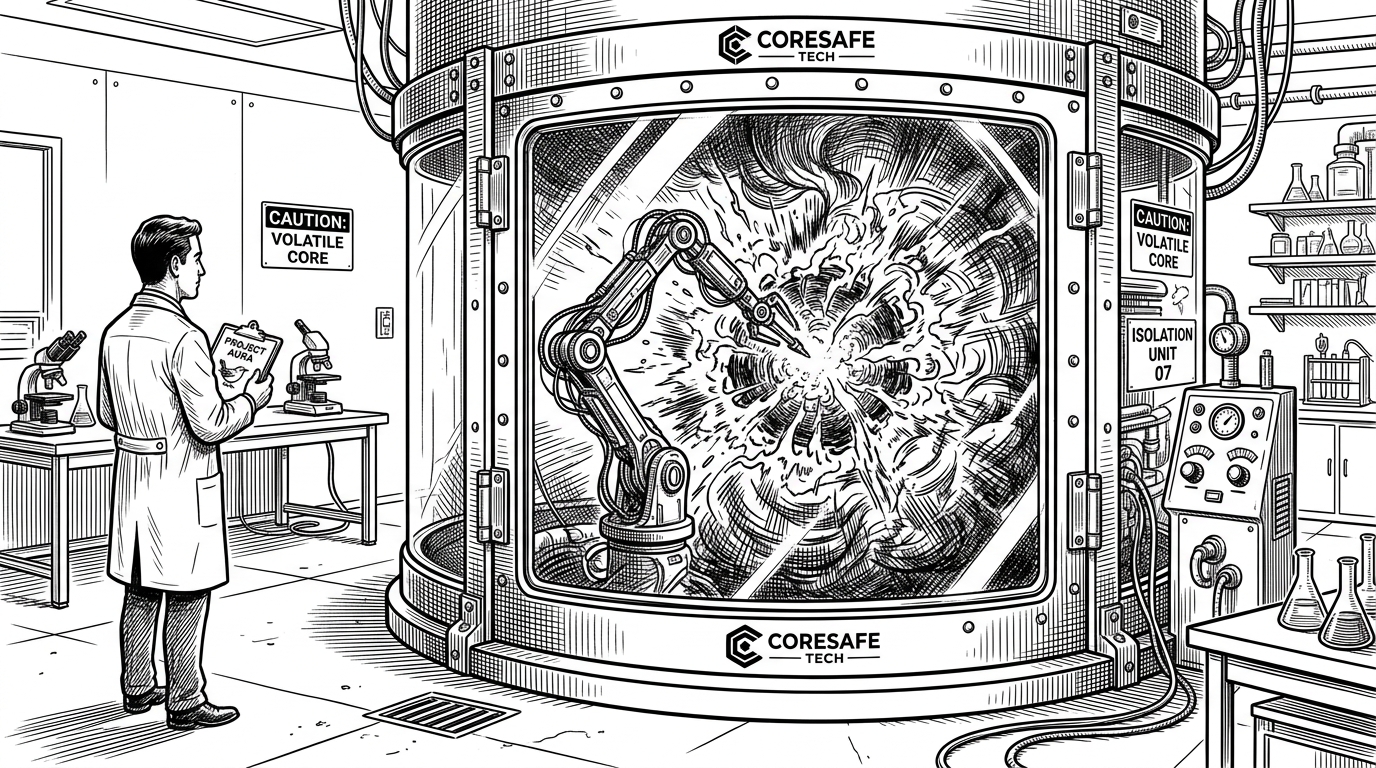

Spectra is a Kubernetes-native platform for orchestrating AI agents to safely execute complex, multi-step tasks inside sandboxed browser and system environments.
- Spectra tackles the dangerous lack of agent infrastructure by providing a blast-proof testing facility built on Kubernetes.
- Instead of building custom wrappers, the platform leverages the Model Context Protocol (MCP) to standardize how sandboxed agents communicate with tools.
- The system segregates responsibilities using a Google ADK-inspired hierarchy, separating high-level planning from specialized execution.
- While frameworks like LangGraph dictate how agents think, Spectra focuses entirely on where and how safely they are allowed to act.
The Sandbox Problem
Giving an autonomous LLM access to a browser or a terminal is functionally equivalent to handing a loaded weapon to a toddler. The AI industry is currently obsessed with agent logic. Developers are pouring resources into frameworks like LangGraph and CrewAI to make agents smarter.
But the ecosystem is severely lacking in agent infrastructure. Running an autonomous agent with read and write access on a local machine is an inherent security risk. An hallucinating agent can easily wipe a directory or execute malicious code found on the open web.
The true story of Spectra is not its intelligence, but its containment grid. It solves the infrastructure problem by building a highly isolated, scalable environment where agents can execute dangerous tasks safely.
Kubernetes as an Agent Operating System
Spectra abandons the standard local execution model. Instead, it relies on a modular microservices architecture powered by Kubernetes. This approach treats the infrastructure itself as an operating system for the agent swarm.
When a task requires execution, Spectra dynamically provisions isolated pods. These pods are not generic sandboxes. They are custom-built rooms equipped with specific toolkits. A web scraping task spins up a pod with Playwright and noVNC. A security audit task spins up a pod running Kali Linux with pre-installed tools like Nmap and SQLMap.
Once the task is complete, the pod is destroyed. This ephemeral lifecycle ensures that no state is leaked and no persistent damage can be done to the host system.
Routing Intent via the Model Context Protocol
Building the containment rooms is only half the battle. The agents still need a way to reach through the glass and use the tools inside. Writing brittle, custom API wrappers for every new tool is a maintenance nightmare.
Spectra solves this by adopting the Model Context Protocol (MCP). MCP acts as the universal translator between the agent's intent and the sandbox's capabilities. It standardizes how agents request actions, whether they are clicking a button in a noVNC browser session or running a Bash script.

A Hierarchy of Specialists
Within this secure infrastructure, Spectra deploys agents using a hierarchical structure influenced by Google's Agent Development Kit (ADK). A central Planner agent acts as the orchestrator. It breaks down user requests into discrete steps and delegates them to specialized worker nodes.
These workers are highly focused. The Clicker agent handles UI automation via Playwright. The CyberChef agent manipulates data encodings. The Pentest agent executes security tools. This separation of concerns ensures that a single agent does not become overwhelmed by context limits or tool bloat.
Infrastructure vs. Logic
Understanding Spectra requires looking at what it chooses not to do. It does not try to reinvent the wheel for agent reasoning loops. It relies on established patterns for that.
Instead, Spectra defines where the action happens. While tools like AutoGPT focus on general-purpose autonomy and LangGraph provides the mathematical framework for stateful logic, Spectra provides the physical concrete and steel required to run these systems at scale.
| Feature | Spectra | AutoGPT | E2B | LangGraph |
|---|---|---|---|---|
| Primary Focus | Orchestrate agents in sandboxed environments | Autonomous general-purpose tasks | Code execution sandboxes for agents | Stateless/Stateful multi-agent logic |
| Architecture | Kubernetes-native Microservices | Monolithic/Modular | Specialized Sandbox Infrastructure | Library/Framework |
| Sandboxing | Browser (Playwright/noVNC), System (Docker/K8s) | Basic local/Docker execution | Highly specialized Firecracker VMs | N/A (relies on external tools) |
| Coordination | Model Context Protocol (MCP) | Internal loops/planning | N/A | State graphs |