Channel360: The Spring Boot Monolith That Turns Approvals Into Data
A deep dive into a versioned workflow engine, AOP permission checks, and a database-driven admin stack built for complex enterprise operations.
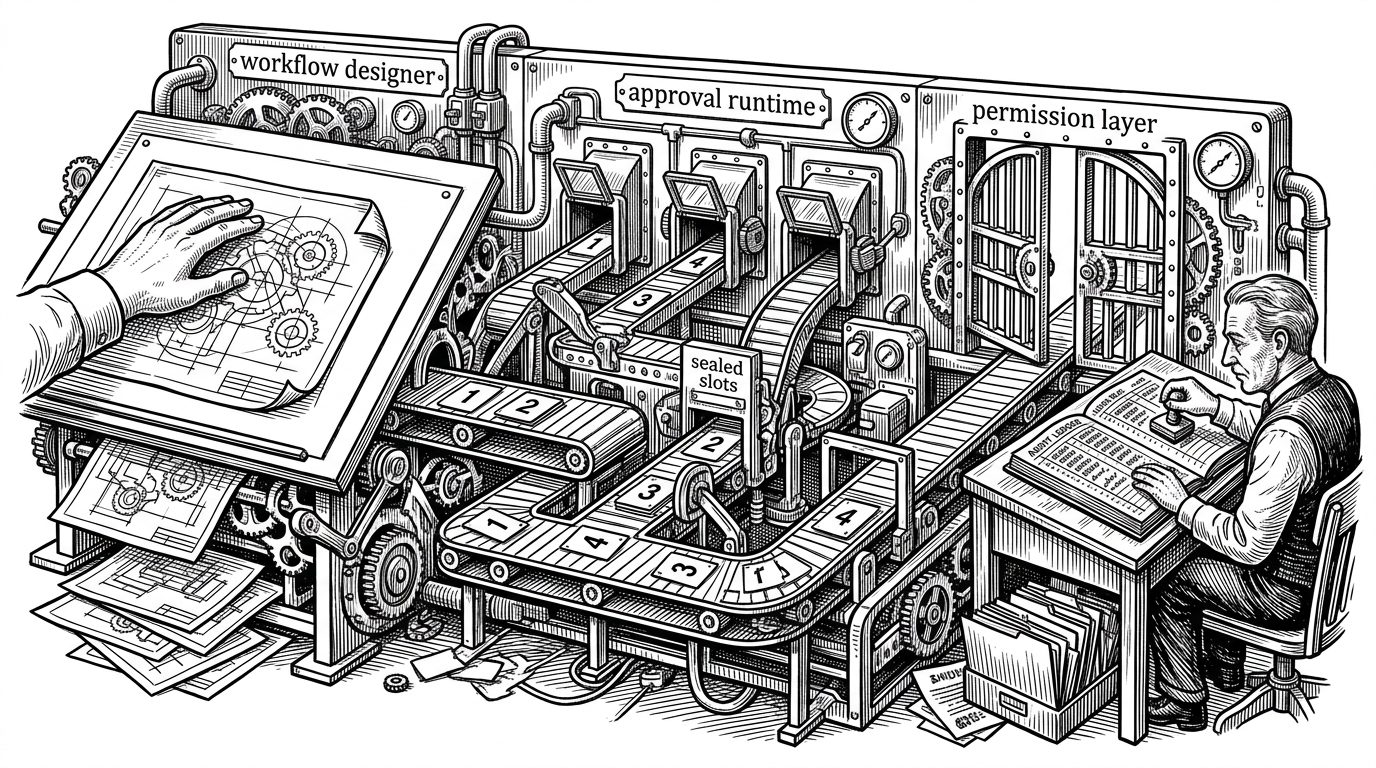
- Channel360 treats approval logic as versioned data, so admins can change process design without breaking in-flight requests.
- Its real trick is the runtime model: a submission selects an active workflow version, creates tasks, and moves through controlled states.
- Security is not bolted on at the edges, because permission checks are enforced through an AOP layer instead of scattered service code.
- The backend also configures the interface itself, which turns menus and homepage content into governed product behavior rather than static UI.
Channel360 is easy to misread. On the surface, it looks like a polished Spring Boot admin app. Underneath, it behaves more like a workflow engine that just happens to ship with user management, menus, and homepage configuration.
The app is a workflow engine first
The core idea is simple and rare: approvals are not hardcoded paths. They are data, versioned and executed at runtime. A submitted request picks the active workflow version, creates an approval request, and spawns the first task in the chain.
That separation matters because it prevents a common failure mode in workflow systems. If an administrator edits a live approval chain, in-flight requests should not silently inherit the new rules. Channel360 avoids that by treating workflow definitions as governed versions, not mutable instructions attached to live cases.
| Capability | Typical CRUD admin backend | Channel360 |
|---|---|---|
| Workflow logic | Hardcoded in services or controllers | Stored as versioned data and executed at runtime |
| Change safety | Edits can affect active requests | Old requests stay bound to their original version |
| Approvals | Simple status updates | Task generation with controlled transitions |
| Governance | Ad hoc checks | Permissions and audit wrapped into the platform |
| UI behavior | Mostly static | Menu and homepage configuration come from the database |
Why versioning is the whole trick
Versioning is not a nice-to-have here. It is the thing that makes the whole platform safe. The designer can clone a workflow, reorder stages, and activate a new version without rewriting history for requests that are already moving through the system.
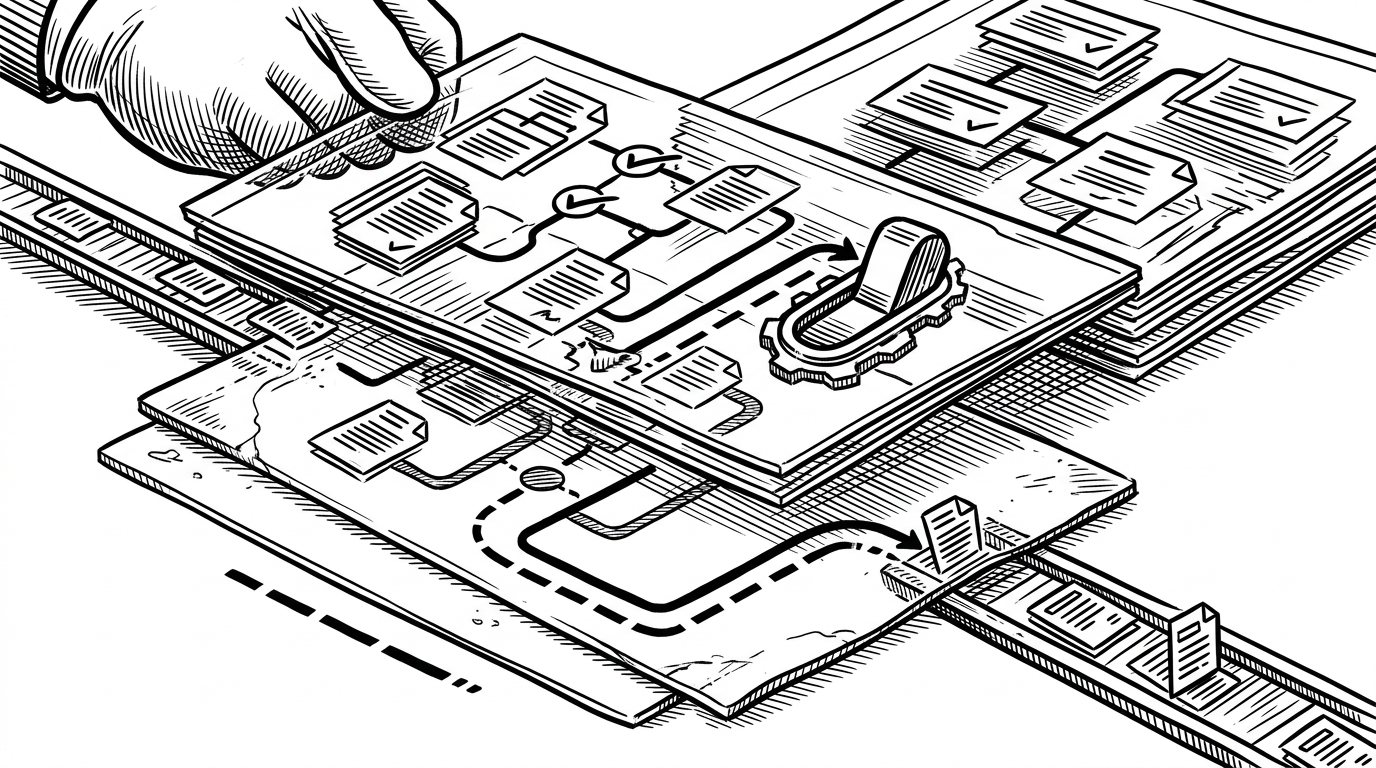
That is the real governance model. A workflow can be retired, cloned, or activated like a policy document. The runtime keeps moving, and the platform preserves the exact version each request belongs to.
The implementation details from the repo line up with that story. `WorkflowDesignerService` handles stage reordering and version management. `ApprovalRuntimeService` selects the active version at submission time, then creates the request and task entities that drive the state machine forward.
Security disappears into the seams
Channel360 does not scatter authorization checks across business methods. Instead, permission enforcement sits in an aspect, with a `@RequirePermission` annotation and a `PermissionAspect` that intercepts the call before the real work happens. That keeps the domain code focused on workflow logic.
@RequirePermission("workflow:approve")
public void approveTask(Long taskId) {
    approvalRuntimeService.approve(taskId);
}
The JWT approach is equally pragmatic. The token stays stateless, but it still carries a session ID. That gives the system a way to track sessions and support logout-all behavior without turning every request into a database lookup.
This is a good example of security that serves the product model instead of dominating it. The permission layer is visible in the architecture, but almost invisible in the code that actually describes business behavior.
The backend also runs the UI
The menu and homepage modules show a more surprising move. Channel360 does not stop at storing business data. It also stores the configuration that shapes what the user sees. That makes the backend a control plane for the interface, not just a data source.
| UI concern | Static app | Channel360 |
|---|---|---|
| Menus | Hardcoded routes and roles | Database-backed menu definitions |
| Homepage | Fixed layout | Configurable sections and popups |
| Rollout | Requires frontend redeploy | Can change from the backend |
| Admin control | Engineering task | Operational task |
| Product behavior | Mostly coded into the client | Governed as data |
This is the kind of feature that quietly changes how teams operate. When the backend can configure navigation and homepage content, admins can adapt the product experience without waiting on a release cycle.
A modular monolith with discipline
The repository is a modular monolith, but not the lazy kind. Each domain area follows its own `api`, `application`, `domain`, and `infrastructure` layers. That keeps the codebase comprehensible even as the business logic gets more complex.
workflow/
  api/
  application/
  domain/
  infrastructure/
auth/
  api/
  application/
  domain/
  infrastructure/
role/
  api/
  application/
  domain/
  infrastructure/
That structure is not about trendiness. It is about containment. In a system where approvals, permissions, sessions, menus, and homepage content all interact, clean boundaries are what keep the whole thing testable and understandable.
| Architecture choice | What it buys | What it avoids |
|---|---|---|
| Layered modules | Clear ownership and testability | Spaghetti service dependencies |
| Domain separation | Business rules stay local | Cross-cutting logic leaking everywhere |
| Shared platform services | Consistent auth and audit | Every module reinventing infrastructure |
| Single deployable | Simple operations | Microservice overhead too early |
What Channel360 is really good at
Channel360 is strongest when a business has rules that change, but not recklessly. Procurement approvals, moderation queues, partner onboarding, and internal request routing all fit this shape. The platform lets operators edit process behavior while preserving control, traceability, and runtime safety.
That is why the repo stands out. It is not just a tidy Spring Boot monolith. It is a system that turns business process design into governed runtime behavior, then wraps that behavior in security, auditability, and database-driven UI control.
| If you need... | Channel360 is a fit when... | It is less useful when... |
|---|---|---|
| Approval governance | Rules must evolve without breaking live cases | Every flow is fixed and unlikely to change |
| Admin configurability | Non-developers need to adjust behavior | The product only needs a static dashboard |
| Auditability | You need traceable, controlled transitions | State changes do not matter much |
| Platform discipline | A single deployable is enough | You already need distributed services |