WanderLust: How One Express App Turns Listings, Maps, and Ownership Into a Real Marketplace
A full-stack Airbnb-style project that is more interesting than its clone status suggests: it uses MVC discipline, server-side validation, geocoding, Cloudinary images, and cascading deletes to keep the whole product coherent.

- WanderLust is compelling because it treats a listing like a governed object, not a loose bundle of form fields.
- Its strongest engineering move is the data path from text location to geocoded coordinates to rendered map pin.
- The repo’s middleware layer makes authorization and validation feel like product rules, not afterthoughts.
- Cascading deletes and Cloudinary image handling give the app the shape of a small system with real invariants.
The part most clones never get right
A lot of beginner marketplace clones stop at the visible stuff. Cards render. Forms submit. Pages switch. WanderLust goes further in the places that make a marketplace feel real: it decides who can touch what, rejects bad input before it lands in MongoDB, and turns a plain location string into coordinates the UI can actually use.
That is why this repo is worth looking at. The interesting part is not that it resembles Airbnb. It is that it behaves like a marketplace with rules.
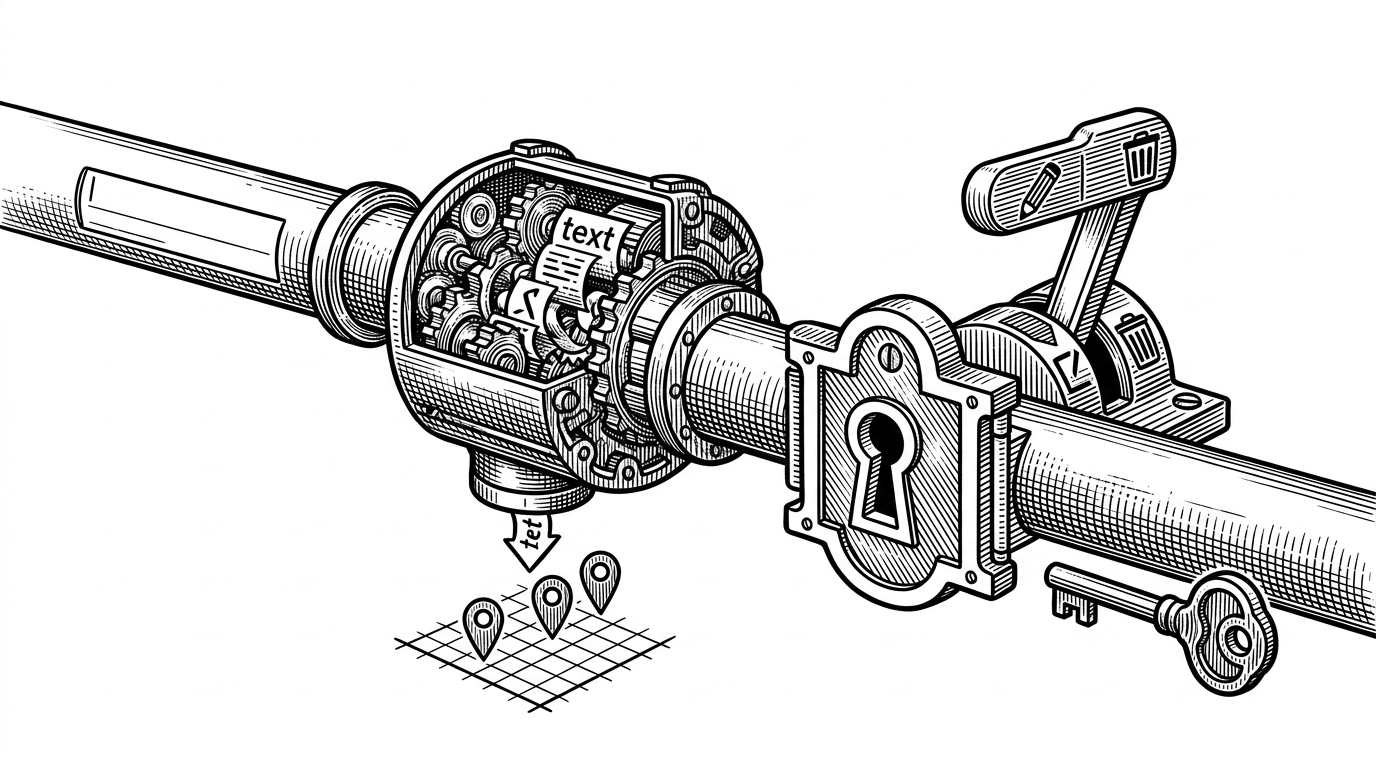
What this repo actually is
At the code level, WanderLust is a classic Express app with an MVC layout. Models live in /models, request logic in /controllers, routing in /routes, and EJS views in /views. That is not flashy, but it is a sane way to organize a first serious full-stack project.
The stack is also practical. MongoDB and Mongoose hold the data, Passport handles authentication, Joi validates requests, Cloudinary stores images, and Geoapify plus Mappls handle the location layer.
// The repo’s cleanest pattern is simple: validate early, process once, then persist.
router.post(
  "/",
  isLoggedIn,
  upload.single("listing[image]"),
  validateListing,
  wrapAsync(createListing)
);
The system is built around trust
The quiet center of the app is middleware. isLoggedIn keeps anonymous users out of protected flows. isOwner decides whether the current user can edit or delete a listing. validateListing and validateReview stop malformed payloads before they reach the database.
That matters because it shifts the project from page rendering to enforcement. A marketplace is not just content. It is a set of permissions and constraints.
| Concern | Typical beginner clone | WanderLust |
|---|---|---|
| Access control | Login exists, but actions are loosely protected | Authentication and authorization are separated with middleware |
| Input quality | Forms post directly into the database | Joi validates listings and reviews before persistence |
| Data ownership | Any signed-in user can often edit anything | Only the owner can mutate a listing |
| Error handling | Try-catch scattered through controllers | Async wrappers and centralized error flow |
| Review lifecycle | Deletes can leave orphaned records | Listing deletion cleans up related reviews |
From text field to map pin
This is the most teachable part of the repo. A user types a location into a form. The server sends that text to Geoapify. The response returns coordinates. Those coordinates are stored as GeoJSON geometry in MongoDB, then the front end uses them to place the listing on a map.
That path matters because it preserves meaning. The address is not just displayed. It becomes structured data that can power a location-aware product.
The edit form gets one more nice touch. The image preview trims the Cloudinary URL into a smaller version for the form view, which is exactly the kind of tiny detail that makes a learning project feel polished.
Why Cloudinary matters here
Cloudinary keeps uploads out of the local filesystem, which is the right move once the app starts behaving like a real product. Files are handled as hosted assets, not stray artifacts on disk.
That also makes editing cleaner. The repo does not need a complicated asset pipeline to show a thumbnail, store the main image, or swap in a new upload. The storage layer is doing the heavy lifting.
// In the edit flow, the image preview is derived from the hosted URL.
const previewUrl = listing.image.url.replace("/upload", "/upload/w_250");
Deletion is where the app feels grown-up
The listing model includes a cascading delete hook. When a listing disappears, its reviews disappear with it. That sounds small, but it is a marker of maturity: the code is protecting the integrity of related records instead of leaving cleanup to chance.
This is the difference between a demo and a system with invariants. A demo can forget orphaned data. A system should not.
Where WanderLust fits in the clone ecosystem
Compared with a generic clone, WanderLust is more disciplined than most. It does not just show the surface of a travel marketplace. It encodes the rules that make one trustworthy.
Compared with a production travel platform, it is still clearly educational. The codebase is small, the architecture is straightforward, and the stack is intentionally legible. That is a strength, not a weakness. It means the repo is teaching the right habits without hiding them behind framework magic.
| Pattern | WanderLust | Production travel platform |
|---|---|---|
| Primary goal | Learn full-stack composition | Serve scale and reliability |
| Architecture | Single Express app with MVC | Multiple services and operational layers |
| Data source | Manual forms plus geocoding | Many external APIs and business systems |
| Media handling | Cloudinary uploads | Distributed asset pipelines |
| Trust model | Middleware and schema validation | Defense in depth across services |
| Lesson value | High for app structure | High for systems complexity |
What this project reveals about modern full-stack learning
WanderLust is not novel because it invents a new product category. It is useful because it composes familiar tools into a coherent one. That is what modern full-stack learning looks like when it is done well.
The repo shows how to combine validation, auth, storage, geocoding, and cleanup into one loop that feels believable. That is the real lesson. Not how to clone a marketplace, but how to make one hold together.