qwen-audio-agent: Qwen Audio Agent Turns Voice Into a Live Operating Layer for AI Agents
An open-source runtime that keeps agents talking while they work, separates real-time presence from task execution, and wraps ACP-compatible backends in a persistent voice interface.
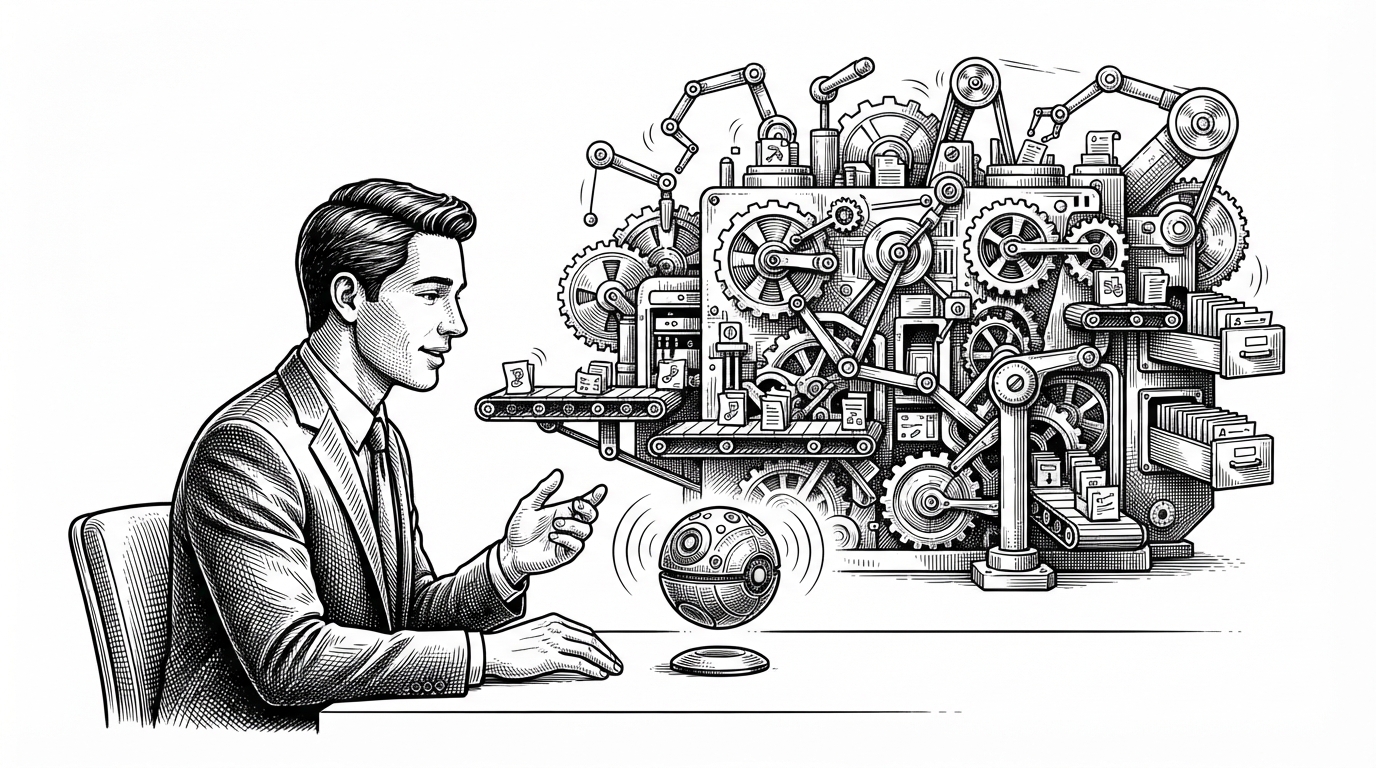
- Qwen Audio Agent is built around continuity, not just transcription or synthesis.
- Its real innovation is the split between live voice presence and asynchronous task execution.
- The runtime is bigger than a single app because it can host multiple ACP-compatible backends.
- The desktop and daemon layers push voice interaction closer to infrastructure than a tabbed interface.
Qwen Audio Agent starts with a complaint that anyone who has watched a voice bot stall already knows: the conversation dies the second the model has real work to do. The project answers with a different contract. Keep the voice layer alive, hand the hard task elsewhere, and never make the user stare into dead air.
真正的交流,不该在说完一句话后,就陷入漫长的等待。也不该因为Agent 正在查资料、调用工具或处理任务,整场对话就此暂停。交流应该是连续的,Agent 也应该始终在场。
What Qwen Audio Agent actually is
This is not a single model and not a polished demo wrapper. It is a monorepo built around a gateway that coordinates live conversation, task dispatch, memory, and backend adapters. The repository includes a server, CLI, desktop app, web UI, TUI, shared utilities, and config presets for different agents.
The point of the architecture is simple. Voice is front-end presence. Tasks are back-end work. The Coordinator sits between them and decides whether the right move is to answer immediately or to delegate and keep the user informed while something else runs.
The core idea: stay present, delegate work
Most voice systems behave like a ping-pong game. The user speaks, the model thinks, and everyone waits. Qwen Audio Agent tries to replace that with a live operating pattern: it can acknowledge, continue the exchange, and hand off the actual job to an agent backend without collapsing the interaction.
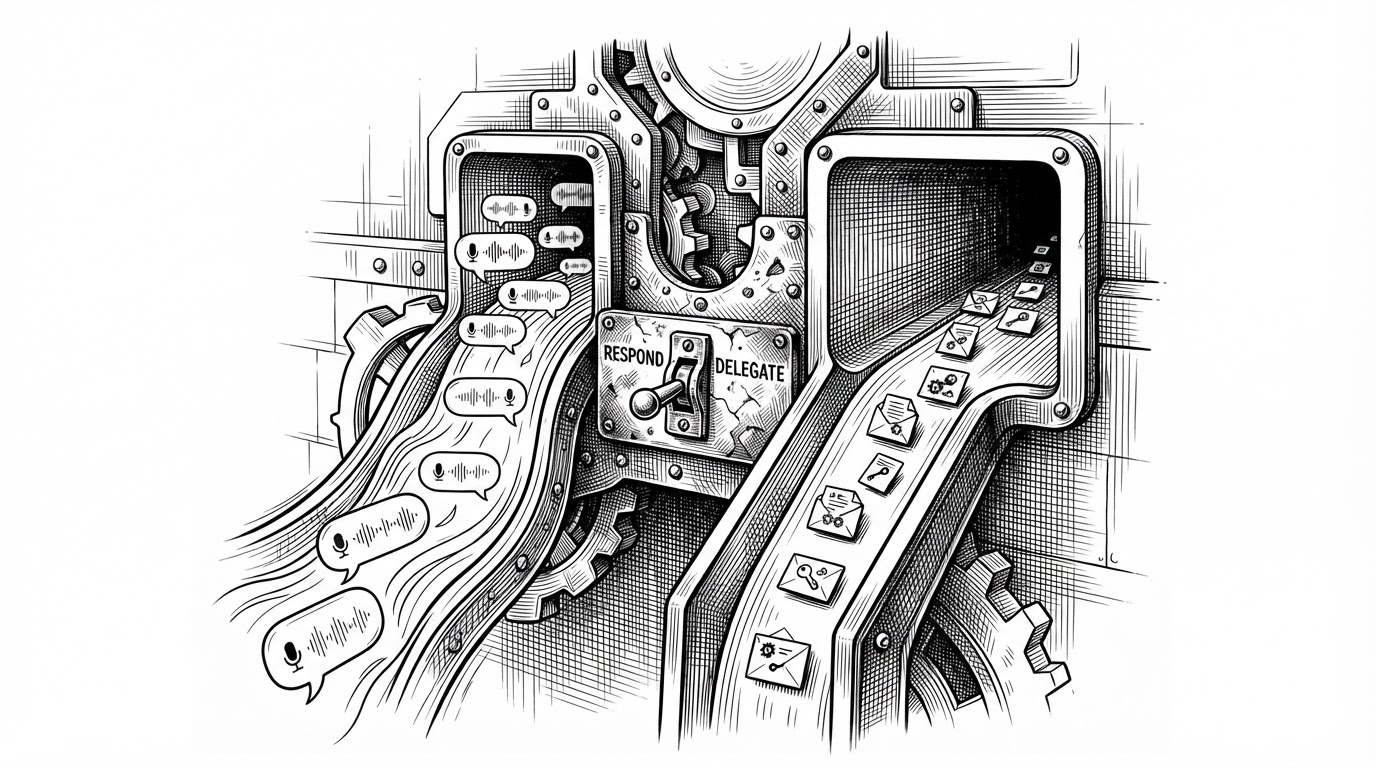
That is why the project feels less like a chatbot and more like a runtime. The user is not waiting for a response blob. The user is in a conversation with a system that can keep a hand on the wheel while the rest of the job happens off to the side.
How the gateway separates voice from action
The gateway is the brain. It handles identity, task tracking, and memory. The memory model combines short-term frontend state with a persistent user profile, so the system can keep context across sessions instead of behaving like a fresh prompt every time.
User audio -> Voice Frontend -> Coordinator -> [respond | delegate]

respond   -> continue live conversation
delegate  -> Task Manager -> Backend Agent -> progress/result -> live layer

Memory Store:
- Frontend Memory
- User Profile
That separation matters because it lets the runtime manage latency explicitly. The user-facing side can stay conversational while the backend side does the slow, tool-heavy work. When the backend updates, those events flow back into the same live interaction instead of appearing in a disconnected log.
The desktop app is not a wrapper
The desktop build makes the project feel infrastructural. It can launch an embedded gateway, keep it running locally, and even expand the process PATH so GUI sessions can still find shell-based tools from nvm or brew installs. That is a subtle fix for a very real problem: desktop apps often lose the environment developers actually use.
Why ACP compatibility makes it bigger than Qwen
The project is not trying to trap users inside one model or one ecosystem. Its backend layer speaks to ACP-compatible agents, which means the voice runtime can host multiple agent stacks instead of acting like a single-brand demo. That makes the open-source argument stronger than usual: the interface layer stays stable even if the agent backend changes.
| Layer | Plain voice bot | Qwen Audio Agent |
|---|---|---|
| Conversation handling | Waits while the model works | Keeps speaking while work runs in the background |
| Task execution | Blocking tool calls | Asynchronous delegation through a coordinator and task manager |
| Backend support | Usually one model stack | ACP-compatible backends and permission modes |
| Runtime control | Usually bundled into the app | Gateway, CLI, desktop, web, and TUI |
| Deployment posture | A feature | A persistent service or daemon |
That also explains the permission design. The runtime distinguishes between different trust levels, which is the right instinct for an agent that can touch files, shells, and long-lived local processes. Voice is easy to romanticize. Permissions are where the product becomes real.
The open-source alternative to silent voice stacks
The comparison is not just between models. It is between layers. OpenAI Realtime and Gemini Live are strong commercial baselines for low-latency multimodal interaction. LiveKit Agents is a serious framework for building the transport and session plumbing. Qwen Audio Agent sits elsewhere: it is the runtime that wraps a backend agent in a persistent voice shell.
| System | Best at | What it is missing |
|---|---|---|
| OpenAI Realtime API | Native audio interaction with a commercial stack | Open-source runtime control and backend plurality |
| Gemini Live | Multimodal interaction with long-context feel | A dedicated voice-shell pattern for delegating agent work |
| LiveKit Agents | WebRTC infrastructure and real-time plumbing | A higher-level coordination layer for persistent agent presence |
| Qwen Audio Agent | Continuous voice presence plus background delegation | The brand recognition of a large commercial platform |
That is the real distinction. Some systems make voice possible. Qwen Audio Agent tries to make voice durable, which is a different problem entirely.
Why this feels like an OS layer, not an app
The service management pieces push the idea further. The CLI can generate launchd and systemd services, which means the runtime can behave like a background daemon instead of a foreground tool you open and forget. Once you do that, voice stops being a mode and starts looking like infrastructure.
That is the most interesting implication in the repo. If the gateway stays resident, if the desktop can embed it, and if backend agents can be swapped in behind ACP-style adapters, then voice becomes the surface of a living system. Not a tab. Not a demo. A shell for agentic work.