DevMindX402: The AI Repo Analyzer That Thinks in Graphs, Not Prompts
A local-first FastAPI and React system that parses code, maps dependencies, and grounds chat answers in a structured knowledge base instead of a copy-paste prompt loop.
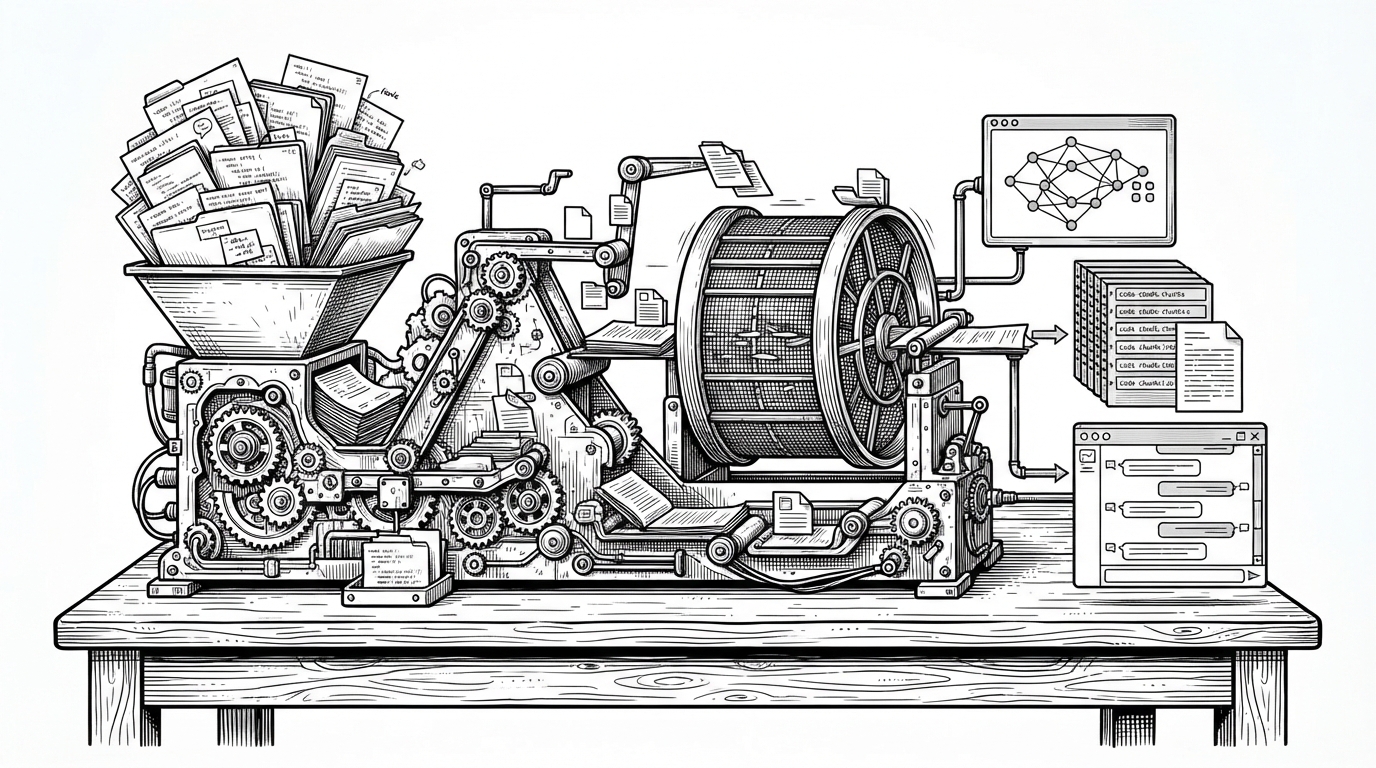
- DevMindX402 treats a repository as a system to model, not just text to summarize.
- Its core move is to separate deterministic parsing and graph building from LLM narration.
- The dependency graph gives the product structural visibility that plain semantic search cannot match.
- Local embeddings and Ollama keep the workflow inside the machine, which changes the privacy story for proprietary code.
The Real Product Is Not the Chatbox
The obvious pitch is “AI chat for code.” That is not the interesting part. DevMindX402 is really a repository intelligence engine that turns source code into something you can query, inspect, and trust.
That matters because most code assistants begin with the model. DevMind begins with structure. It scans files, parses code, builds a dependency graph, and stores chunks in a vector database before the LLM ever sees a prompt.
The result is a different kind of answer path. The model is not the source of truth. It is the last mile interface on top of a code knowledge system.
How Raw Code Becomes a Queryable Model of the Repo
The backend pipeline is the real story. In the parsing layer, DevMind uses tree-sitter to recognize functions, classes, and imports instead of guessing with regex. That gives the system an intermediate representation, or IR, that preserves line numbers and symbol names while stripping away clutter.
# Simplified flow from the backend services
files_ir = parse_files(repo_path)
for f in files_ir:
    del f["content"]  # keep metadata lightweight
    store_metadata(f)

chunks = chunk_ir(files_ir)
embed_and_store(chunks)

graph = build_dependency_graph(files_ir)
risk_flags = run_risk_checks(graph, files_ir)
That small design choice matters. Raw source stays in the chunks table for retrieval, while the primary IR stays lightweight. The system keeps metadata, structure, and text in separate layers instead of stuffing everything into one prompt blob.
| Typical code chat | DevMindX402 |
|---|---|
| Manual copy-paste into a chat model. | Repository ingestion, parsing, and indexing happen first. |
| Ad hoc retrieval over whatever text the user pasted. | Chunked vector search is grounded in code structure and metadata. |
| The model is the main source of knowledge. | The model narrates facts produced by deterministic analysis. |
| No architectural visibility. | Dependency graphs expose relationships across the repo. |
The Dependency Graph Is the Hidden Superpower
The graph builder is where DevMind stops being a search tool and starts becoming a systems tool. It resolves imports, builds a networkx.DiGraph, and can detect circular dependencies with cycle analysis.
That opens questions semantic search alone cannot answer cleanly. Which module depends on what. Where the import loop lives. Which file acts as a choke point. The graph makes structure visible, and structure is usually what new engineers need first.
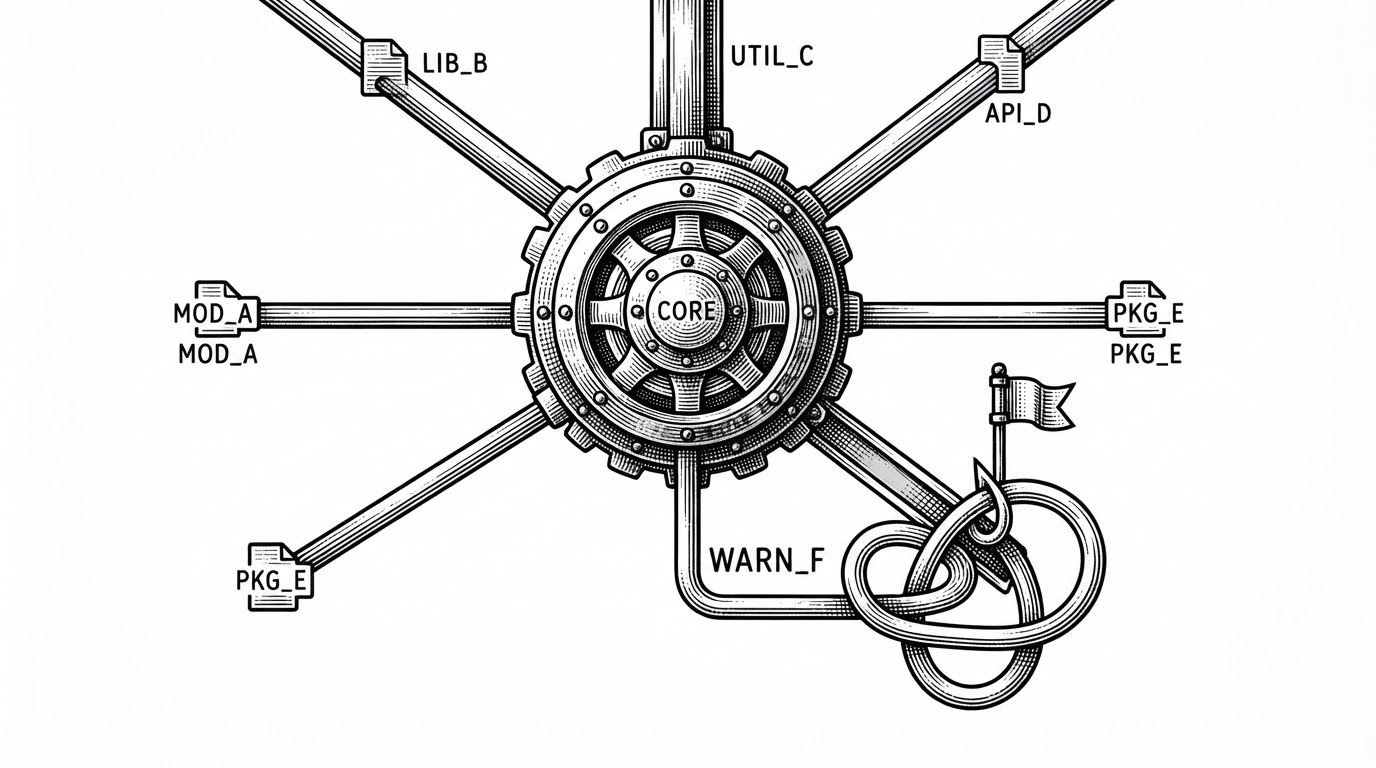
This is also where the product gets honest about risk. A retrieval system can find relevant text. A graph system can tell you whether the repository itself is healthy.
Why Local-First Changes the Product
DevMind leans on Ollama and local embeddings, which makes the privacy story practical rather than ideological. Proprietary source code stays on the machine instead of being shipped to a third-party API.
That changes adoption. Teams with internal code, compliance constraints, or simple caution can still use the product. The trade-off is obvious: local models may be narrower than frontier hosted ones, but the control story is stronger.
| Hosted code chat | Local-first DevMind |
|---|---|
| Source code leaves the machine. | Code can remain inside the local environment. |
| Model choice is external and opaque. | Embedding and generation layers are explicit. |
| Easy to start, harder to trust. | Slightly more setup, better privacy posture. |
| Answers can be fluent without structural grounding. | Answers are built from parsed code, graph context, and retrieved chunks. |
The System Uses Three Kinds of Intelligence
DevMind works best because it does not rely on one style of reasoning. It combines deterministic parsing, heuristic risk checks, and probabilistic chat. Each layer covers the others' blind spots.
The parser gives you facts. The risk engine adds automated scrutiny, looking for issues like secrets, oversized functions, and circular dependencies. The LLM then turns that structured context into an answer that a human can read quickly.
That stack is the product's trust model. The model is downstream of structure, not the other way around.
| Layer | Role | Failure mode |
|---|---|---|
| Deterministic parsing | Builds IR and dependency facts. | Can be narrow if only some languages are deeply parsed. |
| Heuristic risk checks | Flags suspicious patterns and architectural issues. | Can produce false positives that need review. |
| Probabilistic chat | Explains and summarizes the grounded context. | Can hallucinate if retrieval is weak, which is why the earlier layers matter. |
What It Already Does Well, and Where It Is Still Narrow
This is clearly an MVP, but it is not a toy. The backend has migrations, schemas, pgvector storage, and a real service split between parsing, graph building, retrieval, chat, and risk analysis.
The narrowness is just as clear. Deep parsing is Python-first, which means the platform is strongest where the parser exists and more approximate elsewhere. The frontend also looks built for demo-driven exploration, with visualization doing a lot of the heavy lifting.
That is not a flaw so much as a boundary. DevMindX402 has the shape of a serious code intelligence platform, but it still reads like a focused build rather than a finished product suite.