ShinkaEvolve: The Survival of the Fittest Code
Sakana AI's framework for autonomous discovery uses "Islands of Intelligence" and a ruthless Novelty Judge to evolve programs that outperform human engineers.

The Ruthless Editor
In a world of infinite AI generation, the hardest problem is finding the one mutation that actually matters. Most LLM coding tools operate as advanced autocomplete engines. You write a prompt, and the model generates a statistically probable continuation. ShinkaEvolve flips this dynamic by treating the LLM not as a solitary author, but as a mutation operator within a strict evolutionary ecosystem.
The core of this ecosystem is the Novelty Judge. Found in novelty_judge.py, this component solves a critical inefficiency in AI-driven discovery. When an LLM generates a new program that passes basic tests, the system does not immediately accept it. Instead, the Novelty Judge compares the new code against an archive of existing solutions using vector embeddings. If the code is functionally correct but conceptually redundant, it is rejected.
ShinkaEvolve is particularly well-suited for scientific tasks where there is a verifier available and the goal is to optimize performance metrics while maintaining code correctness and readability.
The Meta-Evolutionary Engine
Standard genetic algorithms mutate code through blind, stochastic bit-flips. ShinkaEvolve uses LLMs to suggest semantically meaningful improvements. But the true architectural breakthrough lies in its nested evolutionary loop. The system does not just evolve code; it evolves the instructions used to write that code.
Governed by prompt_evolver.py, the framework treats the system prompt itself as a genome. It tracks the historical success rate of different prompting strategies. Using a Multi-Armed Bandit algorithm, the system balances exploiting the best-known prompts with exploring novel instructional variations. If a specific prompt consistently yields high-performance code, it survives and replicates.
Islands of Intelligence
A known danger in both biological evolution and AI generation is premature convergence. If a single "good enough" solution is found, it can rapidly dominate the population, stifling the diversity needed to discover global optimums. ShinkaEvolve mitigates this using an architectural pattern defined in islands.py.
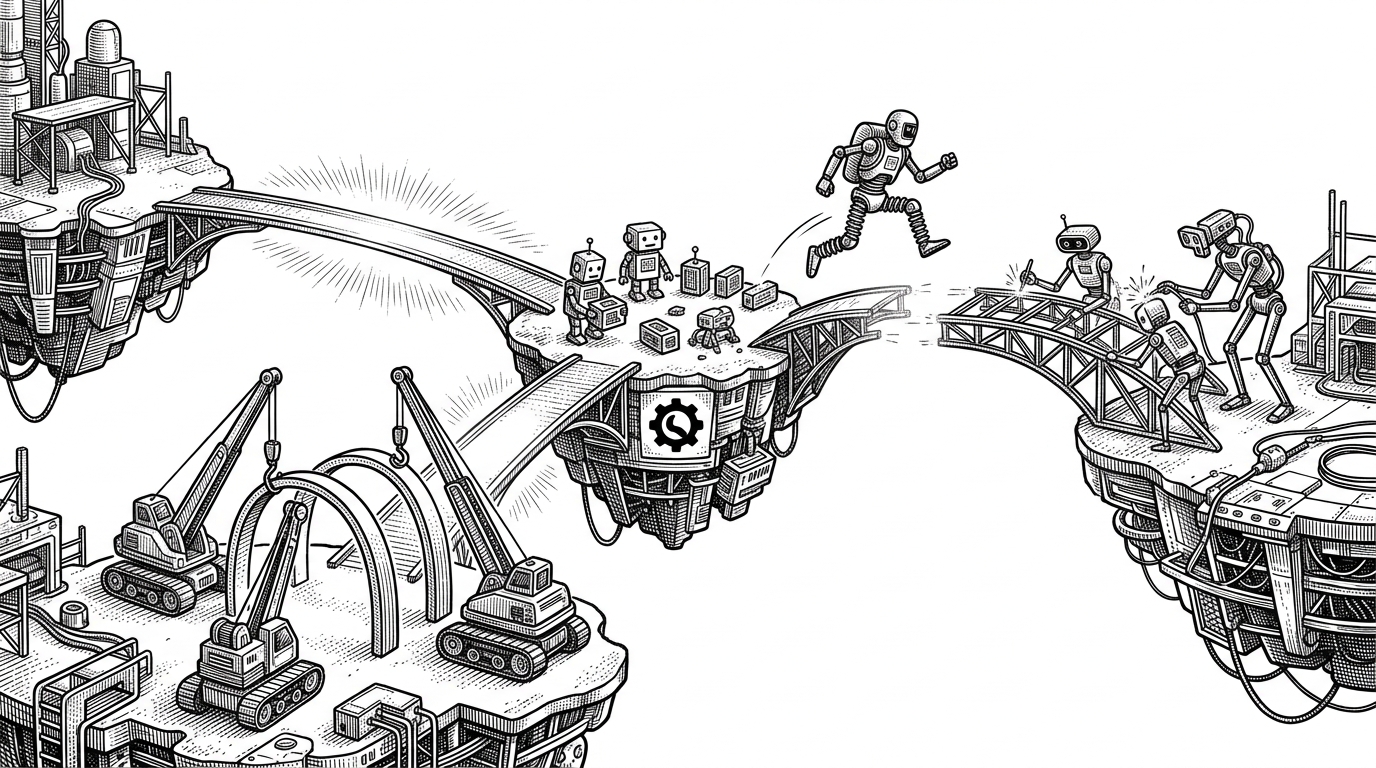
The framework partitions candidate programs into isolated databases or "islands." Each island evolves its own unique approach to the problem in a vacuum. Periodically, an IslandSampler evaluates the fitness across the archipelago and allows "migration." A top-performing individual from a highly fit island is copied to a struggling one, injecting highly optimized genetic material into a pool of diverse, unconventional ideas.
| Feature | Traditional Genetic Algorithms | ShinkaEvolve (LLM-based) |
|---|---|---|
| Mutation Mechanism | Stochastic bit-flips and blind crossover | Semantic, context-aware LLM reasoning |
| Sample Efficiency | Millions of iterations required | State-of-the-art results in ~150 samples |
| Diversity Control | Basic fitness penalties | Novelty Judge using vector embeddings |
From Circle Packing to ICFP
The efficacy of this nature-inspired architecture extends beyond theoretical benchmarks. ShinkaEvolve was deployed to tackle mathematical optimization problems, including the notoriously difficult 26-circle packing problem. By forcing the LLM to search purely for novel, high-fitness code paths, the framework discovered a state-of-the-art solution using only a fraction of the compute required by previous methods.
By automatically optimizing the SAT encoding at the heart of our approach, ShinkaEvolve accelerated our solver by up to 10x.
This efficiency translated into competitive success. The framework optimized solver execution times to help secure a victory at the ICFP Programming Contest. By combining the vast, unstructured knowledge of frontier LLMs with the rigorous, verifiable selection pressures of evolutionary algorithms, ShinkaEvolve demonstrates a clear path forward for autonomous scientific discovery.