Inside `real-estate-and-web-development-system`: A Real Estate App Built as a Blueprint, Not a Codebase
A README-only repo can still teach something useful. This one sketches a classic Java-and-SQL marketplace stack, and the interesting part is the discipline behind that choice.
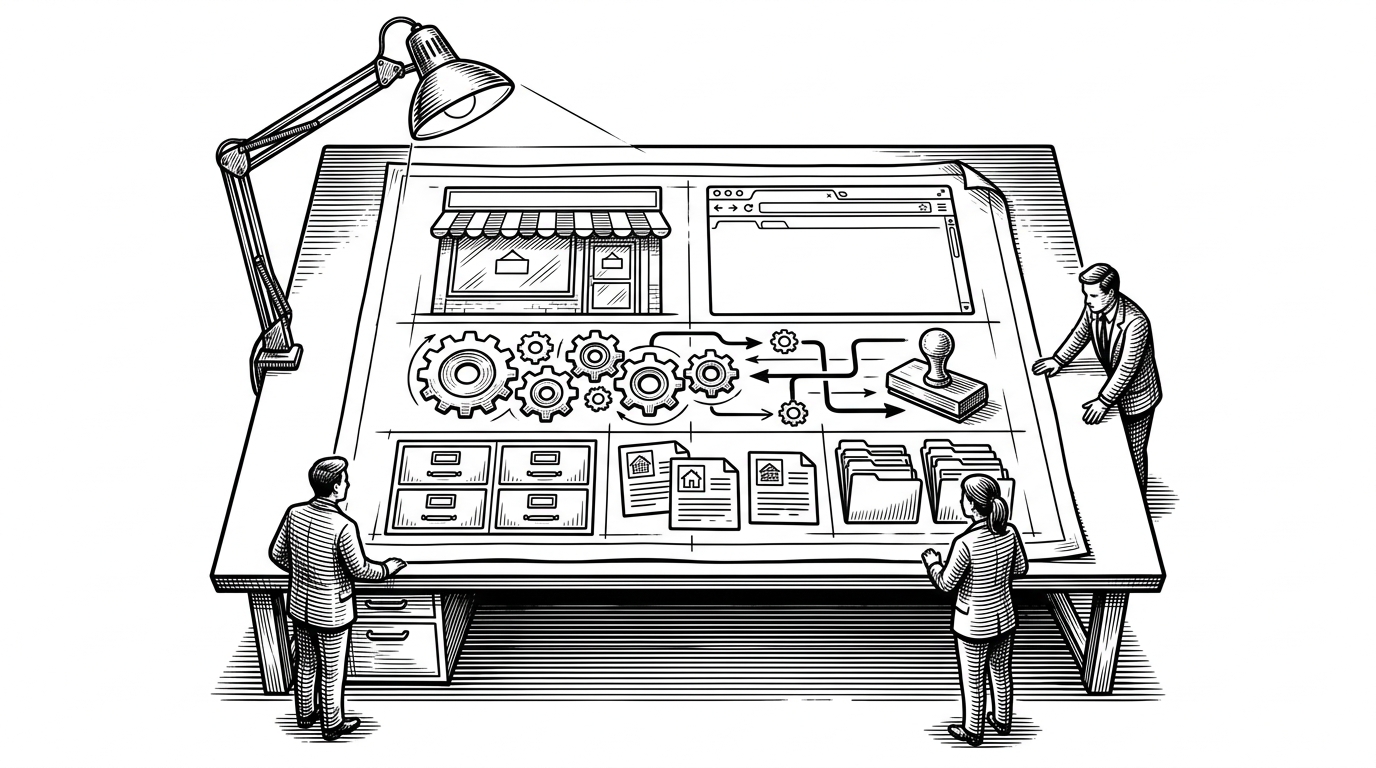
- This repository is interesting because it treats architecture as the first deliverable, not an afterthought.
- The README frames real estate as a trust-heavy, relational problem where search, security, and payments matter immediately.
- Its Java, SQL, and JavaScript stack looks conservative, but that conservatism matches a transactional marketplace.
- The most important thing here is not implementation detail but the clarity of the system model.
Most open-source repos try to impress you with code. This one starts by defining the problem instead: a marketplace where listings, users, agents, search, and payments have to fit together cleanly. That makes the repository less like a demo app and more like an architectural memo.
The Blueprint Is the Product
The striking thing about Shubh8788/real-estate-and-web-development-system is that it is almost entirely a README. There is no visible implementation to inspect, no framework scaffolding to praise, and no app behavior to benchmark. Instead, the repository performs a rarer move: it names the system before it builds it.
That matters because blueprint-stage repos are usually invisible. They sit between idea and code, where the hard decisions are still being made. In this case, the decision that stands out is to treat a real estate product as a structured, transactional system from day one.
Why Real Estate Pushes You Toward Structure
Real estate is not a generic content site. It is a trust machine. Listings have to be accurate, users have to be authenticated, transactions have to be traceable, and search has to feel fast even when the underlying data is messy and relational.
That is why the README’s list of concerns feels right. UX, data management, security, scalability, search, and payments are not bonus features here. They are the actual product requirements.
What the README Actually Commits To
The repo sketches a classic three-tier stack: HTML, CSS, and JavaScript on the front end; Java in the middle; SQL at the data layer. That is a familiar pattern, but it is also a revealing one. It says the author wants clear boundaries, strong business logic, and relational persistence rather than a framework-first shortcut.
How the Data Flow Is Supposed to Work
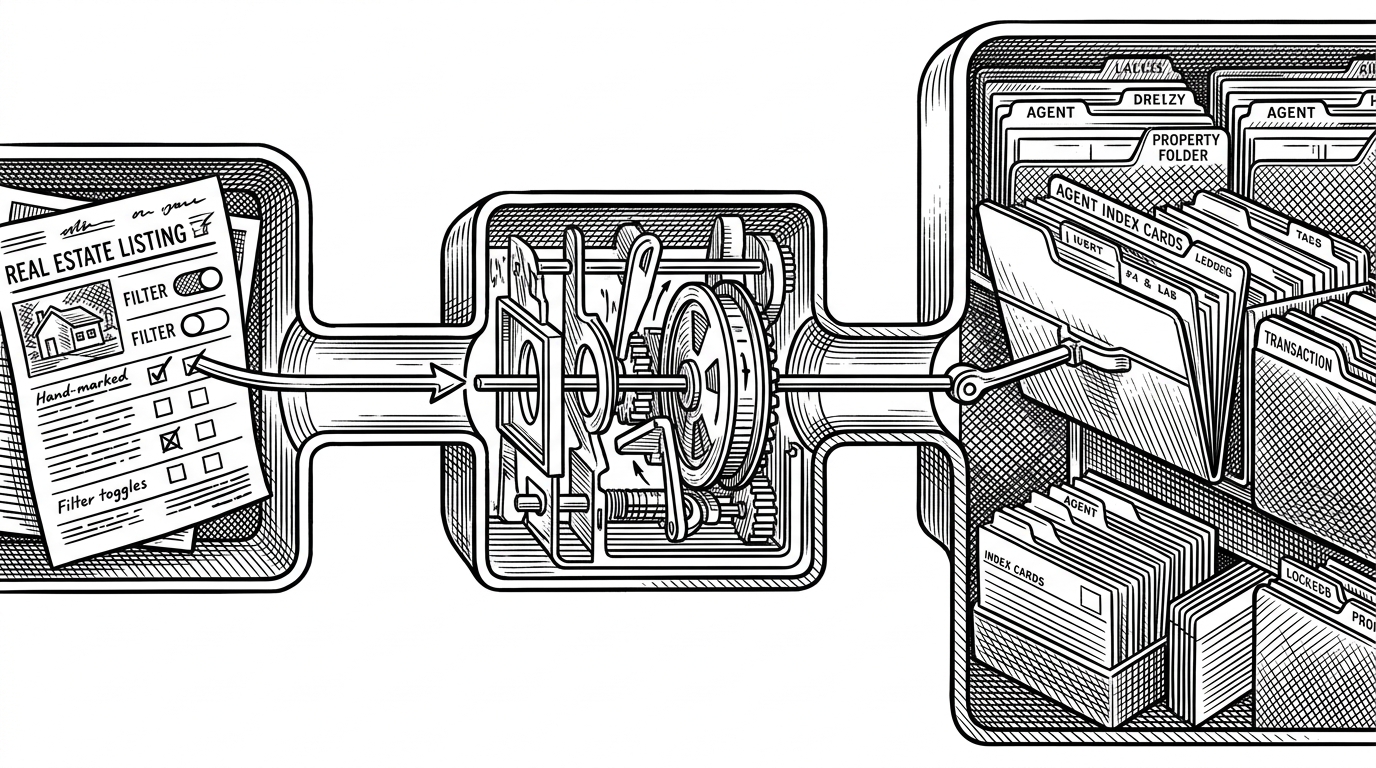
The implied request lifecycle is straightforward. JavaScript captures a search or filter action, sends a request, Java handles validation and business rules, SQL retrieves the matching rows, and the UI updates without a full page reload. That last detail matters because it signals a reactive interface, not a static brochure site.
This is the architectural center of the repo. The stack is not being chosen for trend value. It is being chosen because the domain needs strict boundaries between interaction, rules, and data.
User action -> JavaScript request -> Java validation and business rules -> SQL query -> result payload -> UI updateWhy the Stack Choice Is the Point
| Dimension | Trend-driven stack | This repo's stack |
|---|---|---|
| Speed of prototyping | Very fast for a demo, especially with framework presets | Slower at the start, but clearer once the data model matters |
| Data integrity | Often delegated to libraries and conventions | Protected by Java logic and relational schema discipline |
| Search and filtering | Easy to start, harder to keep predictable at scale | Built around structured queries and explicit rules |
| Payment readiness | Usually added late as an integration layer | Feels native to a transaction-first design |
| Long-term maintainability | Can become fragmented across tools | Benefits from explicit layer boundaries |
| Fit for a relational marketplace | Good for content-heavy apps | Better for listings, agents, users, and transactions |
The table is the real argument. A real estate marketplace is schema-shaped. It has entities that point at other entities, and it has operations that cannot be casual about consistency. In that context, Java plus SQL looks less old-fashioned than purpose-built.
That does not make the choice perfect. It makes it legible. You can see the designer thinking about stability, transaction safety, and maintainability before the first endpoint exists.
The Tradeoff: Clarity Now, Proof Later
The weakness is obvious too. A well-written README is not a working product. There is no schema, no authentication flow, no search index, no payment integration, and no tests to show that the architecture survives contact with reality.
For this repo to become credible as software, those missing pieces would have to appear next. The first proof points would be a database schema, then auth and listing CRUD, then filterable search, then transaction handling, then deployment and tests. Until then, this is a confident plan, not a shipped system.
What This Repo Teaches About Early-Stage Open Source
That may be the most useful lesson here. Not every open-source project begins as runnable code. Sometimes the first valuable artifact is a clear model of the problem, expressed well enough that the next person can build without guessing.
In that sense, this repository is already doing real work. It turns architecture into a visible object, and it shows that boring stack choices can still reflect serious judgment when the domain demands them.