ProjectsFolder Turns a Complaint Portal Into a Security-First Bureaucracy Machine
Under the hood of a student admin system that treats refresh tokens, role gates, and audit logs like enterprise infrastructure, while keeping the frontend brutally simple.
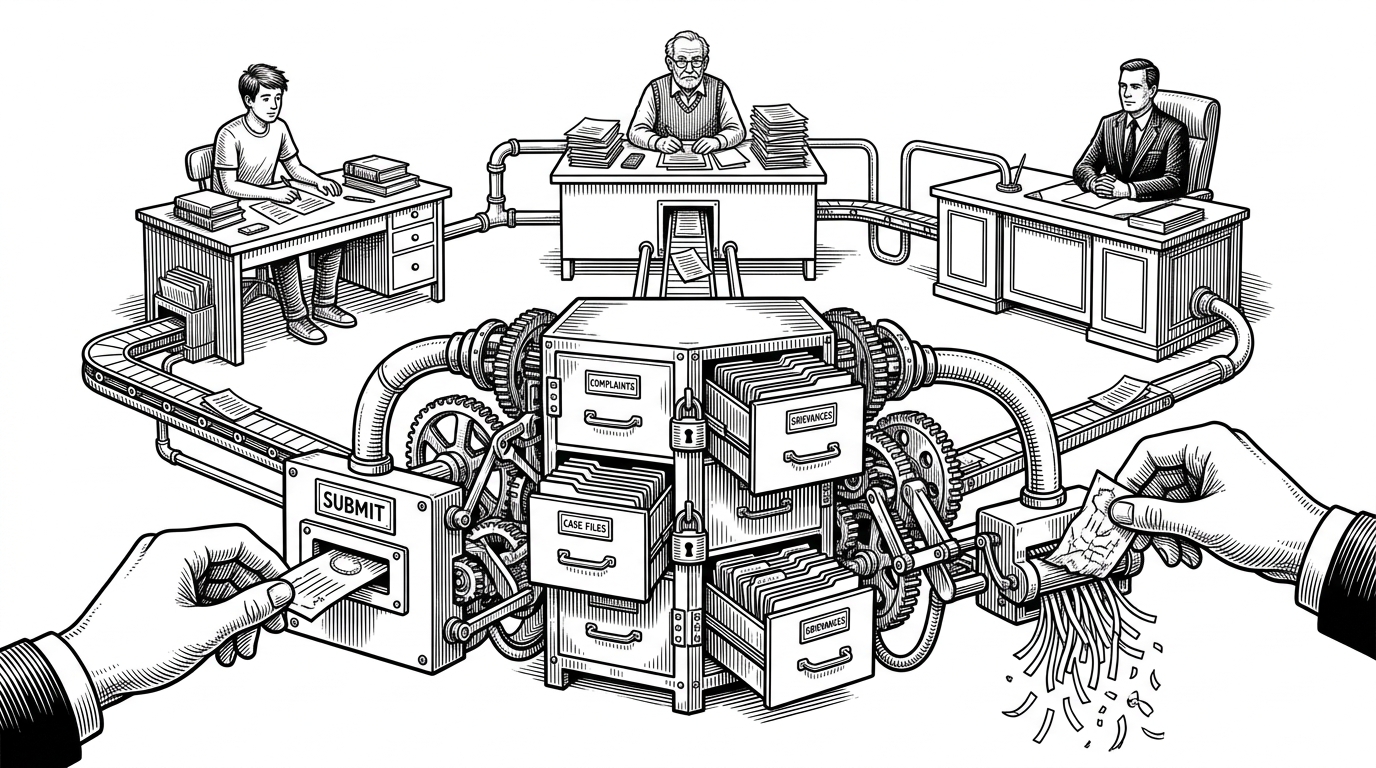
- ProjectsFolder is less interesting as a complaint app than as a small but serious security system for institutional workflows.
- Its strongest move is hashed refresh token storage plus token rotation, which turns session handling into a revocable process instead of a blind trust relationship.
- The backend behaves like enterprise software because authorization, error handling, and audit logging are all centralized and layered.
- The no-build vanilla frontend is not a weakness here, because it keeps the system legible while the backend carries the real discipline.
The most revealing part of ProjectsFolder is not the complaints feature. It is the way the app treats session security like a first-class system, not an afterthought. A student admin portal rarely earns that kind of discipline.
The Part Most Projects Get Wrong
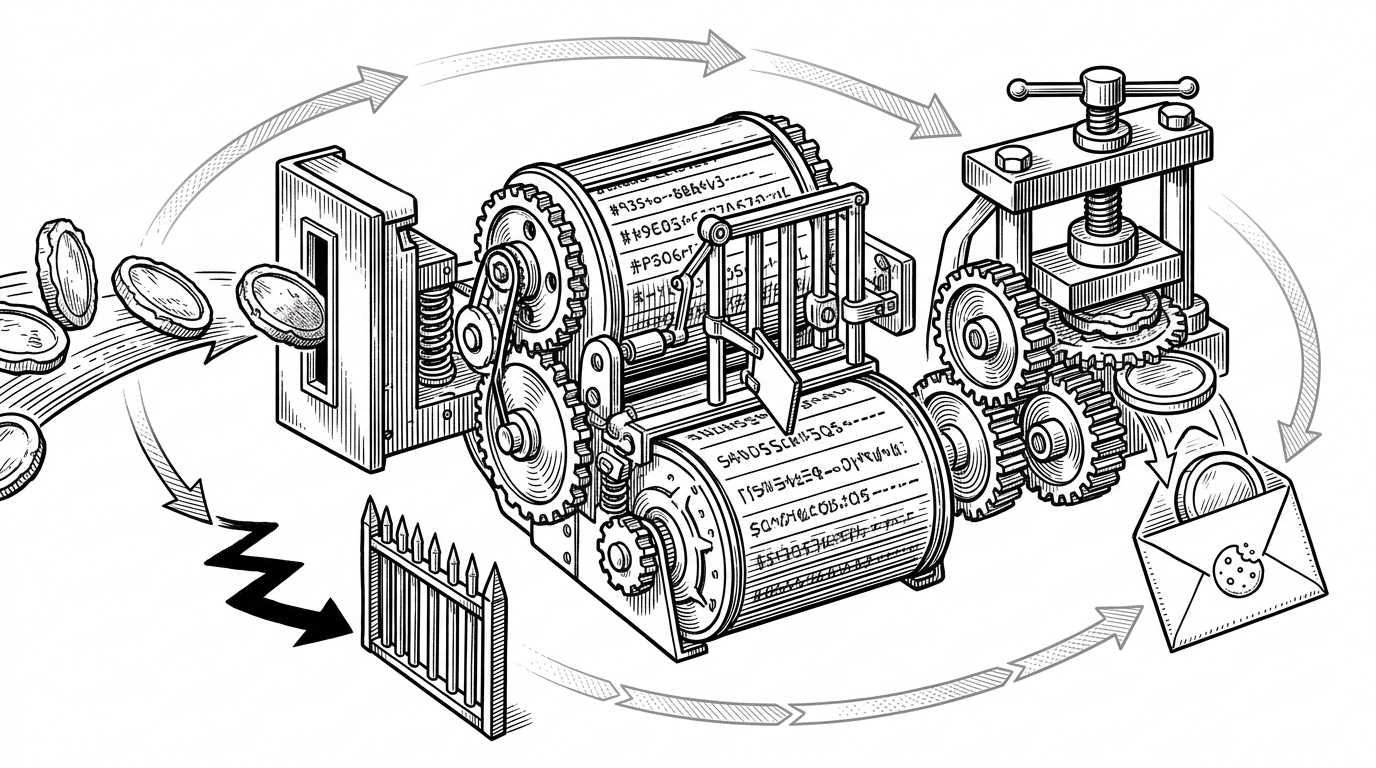
The backend stores refresh tokens hashed, then rotates them on use. That is a strong pattern for a small repo, because it means a stolen token does not stay useful forever. The app also leans on httpOnly cookies and strict same-site behavior, which keeps the browser from exposing the session token in the places attackers usually hope to find it.
A Complaint Portal That Behaves Like Infrastructure
Once you step back, the app looks less like a help desk and more like a digital bureaucracy. Students file complaints, faculty can intervene where needed, and admins close the loop. That three-role shape matters because it turns the system into a managed process with accountable handoffs.
That structure shows up everywhere in the codebase. The backend uses Node.js, Express, Mongoose, bcryptjs, Multer, and middleware-heavy route protection. The frontend stays framework-free, which keeps the workflow simple enough to deploy without a build chain or a packaging ritual.
| Layer | ProjectsFolder | Typical student CRUD app |
|---|---|---|
| Session security | Hashed refresh tokens, rotation, httpOnly cookies | Plain-text tokens or local storage |
| Authorization | Granular role middleware for admin, faculty, and hybrids | Ad hoc checks scattered across routes |
| Error handling | Centralized middleware with normalized responses | Mixed try-catch blocks and inconsistent payloads |
| Auditability | Administrative actions are logged | Logs are optional or absent |
| Frontend | Vanilla JS with direct DOM control | Framework-heavy UI even when the app is simple |
The Complaint Model Is the Real Product
The central schema is not just a form record. The Complaint model ties a complaint to a student, tracks who resolved it, indexes the fields people will query most, and leaves room for attachments and status changes. In practice, that makes the schema the system’s memory.
That matters because institutional software lives or dies on state. A complaint is not only text. It has ownership, history, resolution, and traceability. The repo’s data model understands that, which is why the rest of the app feels coherent.
RBAC as a Gatekeeper, Not a Suggestion
Role-based access control is not treated as a single yes-or-no check. The project uses granular middleware such as adminOnly, facultyOnly, and mixed-role variants to protect routes at the boundary. That is the right move, because a valid JWT does not automatically mean a user should be allowed to resolve complaints or change roles.
This is the difference between authentication and authorization, and the repo keeps them separate. Login proves identity. Middleware decides what that identity can do. That layered approach is what makes the backend feel durable instead of improvised.
Audit Logs Make the App Feel Institutional
The repo also logs sensitive administrative actions like role changes and user deletion. That is a small detail with a big implication. Once an app can affect people, accountability becomes part of the product, not a separate compliance layer.
A complaint portal without audit trails is just a message box. A complaint portal with audit trails becomes part of an institution’s record-keeping. That is the line this project crosses.
Why Vanilla JS Is the Right Kind of Old School Here
The frontend choice is easy to misread. No build step does not mean no discipline. It means the UI is direct, portable, and easy to inspect. In a project like this, that is a feature, because the complexity belongs in the workflow and security model, not in a heavyweight client stack.
| Choice | What it buys | What it avoids |
|---|---|---|
| Vanilla JS frontend | Low deployment friction, clear control flow, simple portability | Build-tool overhead and framework churn |
| Express and Mongoose backend | Structured routing, schema discipline, queryable models | Loose server code that grows messy fast |
| Middleware-based auth | Readable boundaries and reusable policy | Permission checks duplicated across handlers |
| Centralized logging | Traceability for administrative actions | Invisible state changes |
What This Project Would Need Next
The repo already shows strong instincts, but the next step would be consistency tooling. Tests would harden the security claims. Better asset management would make the frontend easier to extend. More automation around validation and deployment would finish the move from a solid student system to a dependable institutional one.
That is the useful takeaway here. ProjectsFolder is not impressive because it has a complaint form. It is impressive because it understands that real internal systems are built from trust boundaries, traceable actions, and state that can be revoked.