Cloud-Sentinel Is a CSPM in Pieces. That’s Why It Works.
A Node gateway, Redis, a Python worker, and a risk-score layer turn cloud auditing into a distributed system you can test, scale, and reason about.
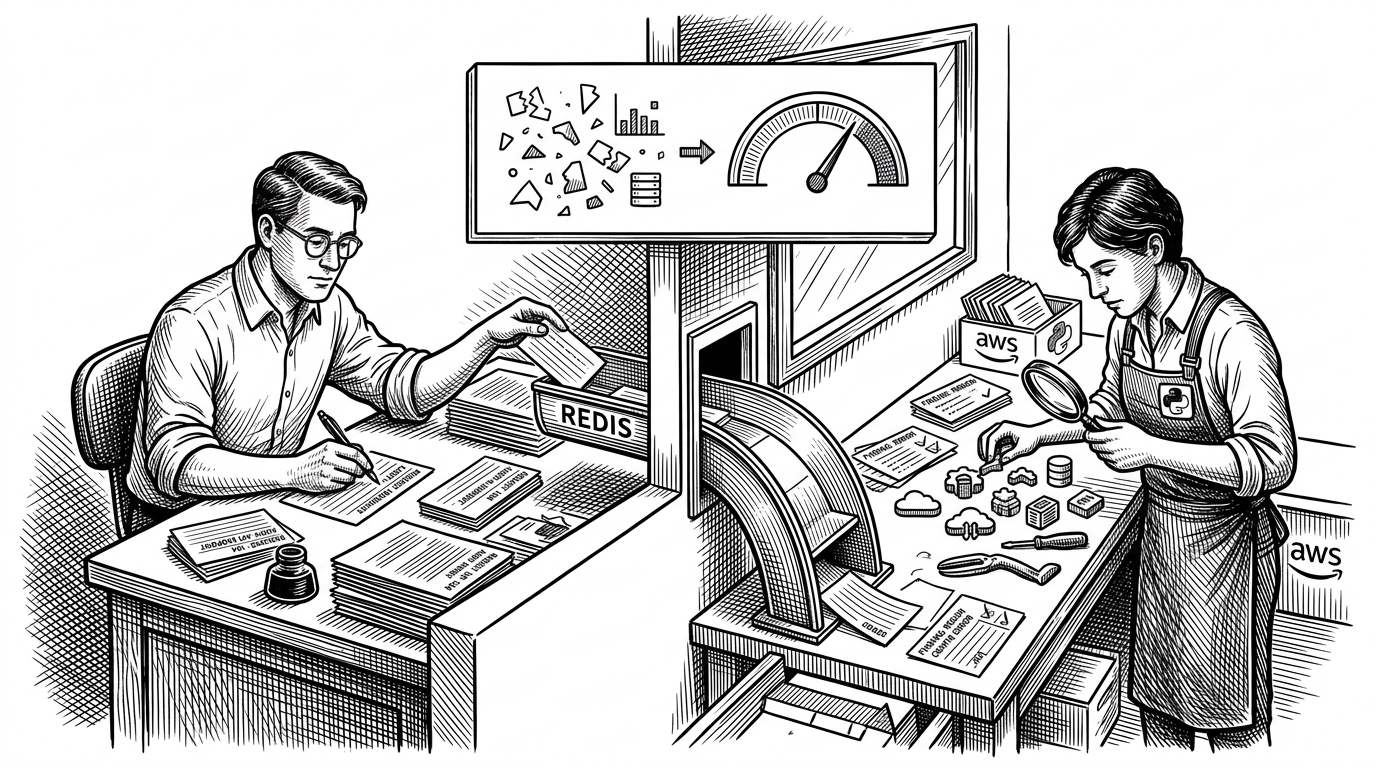
- Cloud-Sentinel’s main idea is architectural separation: the gateway accepts intent, Redis carries work, and the Python worker performs the cloud checks.
- The floci mode matters because it lets the same scan pipeline point at a local endpoint instead of real AWS, which makes the project testable rather than performative.
- The worker is where the security substance lives, with modular checks for S3, IAM, and EC2 misconfigurations.
- The dashboard does not just display findings, it translates them into weighted risk, which is the step that makes the project feel CSPM-shaped.
The Clever Part Is the Boundary
Cloud-Sentinel is not trying to be a monolith. The gateway handles auth and task creation, Redis acts as the handoff point, and a Python worker does the expensive AWS work through `boto3`. That split is the project’s real design decision, because it turns cloud auditing into a pipeline instead of a script.
Why Floci Mode Changes the Story
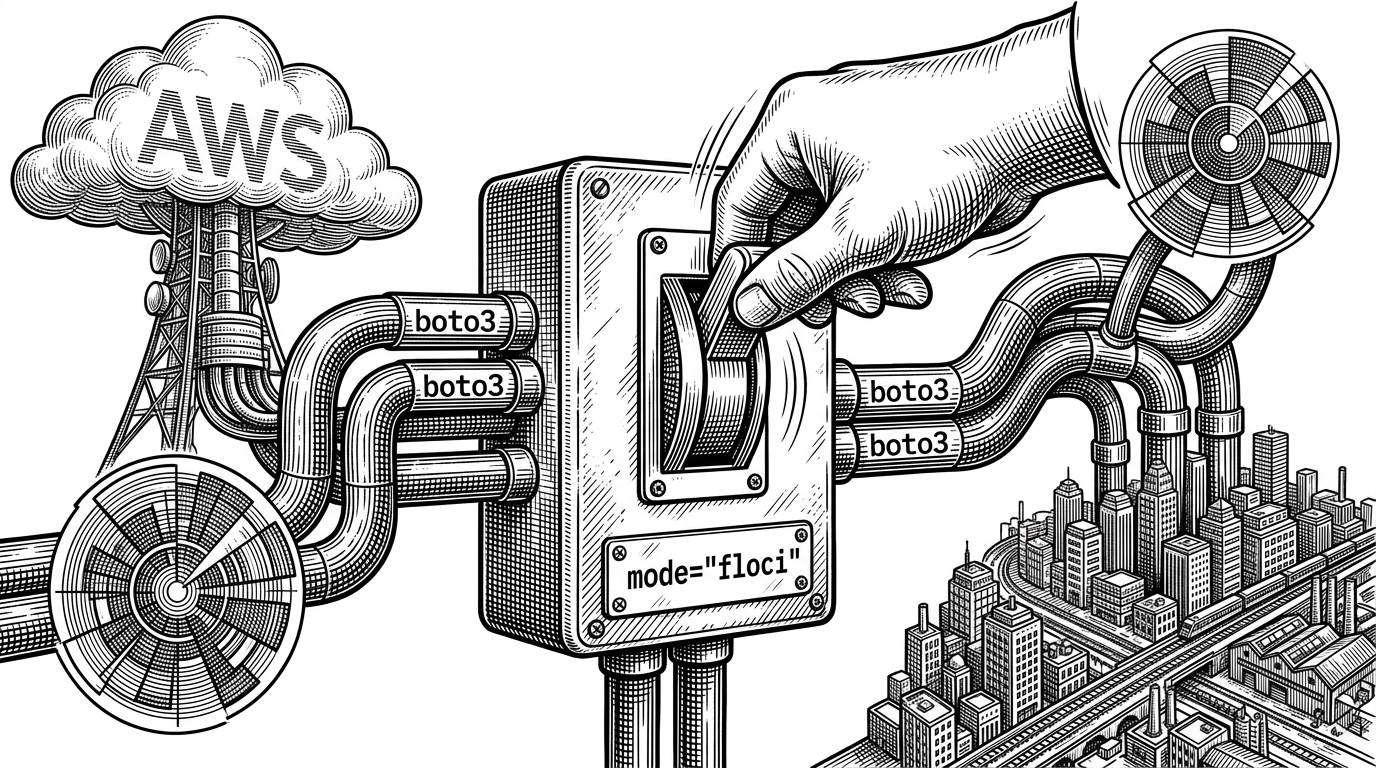
The `mode="floci"` branch changes the repo from a plain AWS auditor into something you can actually develop against. Instead of hardwiring every scan to live cloud services, Cloud-Sentinel can point its client layer at a custom endpoint and keep the rest of the worker logic intact.
That matters because the hard part of security tooling is not only detection. It is repeatability. If the same scan path works against a real account and a local emulator, the project becomes easier to test, demo, and extend without turning every run into a billable event.
The Worker Is Where the Security Logic Lives
The Python worker waits on Redis with a blocking pop, then fans out into scan modules. That is a clean division of labor: the gateway worries about accepting tasks, while the worker focuses on the cloud APIs and the security semantics they expose.
# worker/worker.py
job = redis_client.brpop("audit_tasks")
mode = job_payload.get("mode", "aws")
clients = get_aws_clients(mode=mode)

# scan modules
check_s3(clients["s3"])
check_iam(clients["iam"])
check_ec2(clients["ec2"])

# record timing
start = time.time()
process_task(job_payload)
duration_sec = time.time() - start
The scan modules map well to real risk. S3 checks look for encryption and public access. IAM checks look for MFA and account safeguards. EC2 checks look for security groups that expose the world to the internet through `0.0.0.0/0`.
What the scans are really looking for
- S3: at-rest encryption and public ACL exposure.
- IAM: MFA coverage and root-account protection.
- EC2: permissive inbound rules and world-open security groups.
Turning Findings Into a Risk Score
Cloud-Sentinel does not stop at findings. In the dashboard, raw signals are weighted and converted into a risk score, which is the move that makes the tool legible to a security lead. A missing encryption setting and a disabled MFA policy are not just separate facts. They become penalties in one model.
| Finding type | Typical penalty shape | Why it matters |
|---|---|---|
| Unencrypted storage | Higher fixed penalty | Data exposure is often the highest-value issue. |
| Disabled MFA | High penalty | Account takeover risk is immediately actionable. |
| Public network exposure | Variable penalty | Reachability changes the blast radius fast. |
That design is subtle but important. A scanner can flood you with evidence. A scoring layer turns evidence into priority.
What Cloud-Sentinel Is Really Competing With
| Approach | Strength | Weakness | Best for | Cloud-Sentinel’s advantage |
|---|---|---|---|---|
| One-off audit script | Fast to write and easy to run | Hard to scale, hard to reason about, little structure | Ad hoc checks and short experiments | It keeps script-like simplicity at the edges, but adds a real workflow and persistence layer |
| Commercial CSPM | Broad coverage and polished workflows | Opaque internals, vendor lock-in, less room to customize | Large teams that want a managed platform | It gives you a platform-shaped architecture without closing off the code or the endpoint layer |
Why This Repo Feels More Mature Than Its Size
The polish shows up in the boring places. There is retry logic for Postgres startup, structured logging in the worker, security middleware in the gateway, and environment validation instead of loose assumptions. Those are the habits of a project that expects to run outside a laptop.
- Retry loops make container startup less fragile.
- Structured logs make worker duration visible.
- Middleware and validation show a security-first baseline.
- Docs and infra files suggest a platform, not just a prototype.