Ankole: The AI Workforce OS That Treats Agents Like Long-Lived Processes
A deep look at the Elixir, TypeScript, and browser runtime stack behind an open-source system built for autonomous labor, not chat.
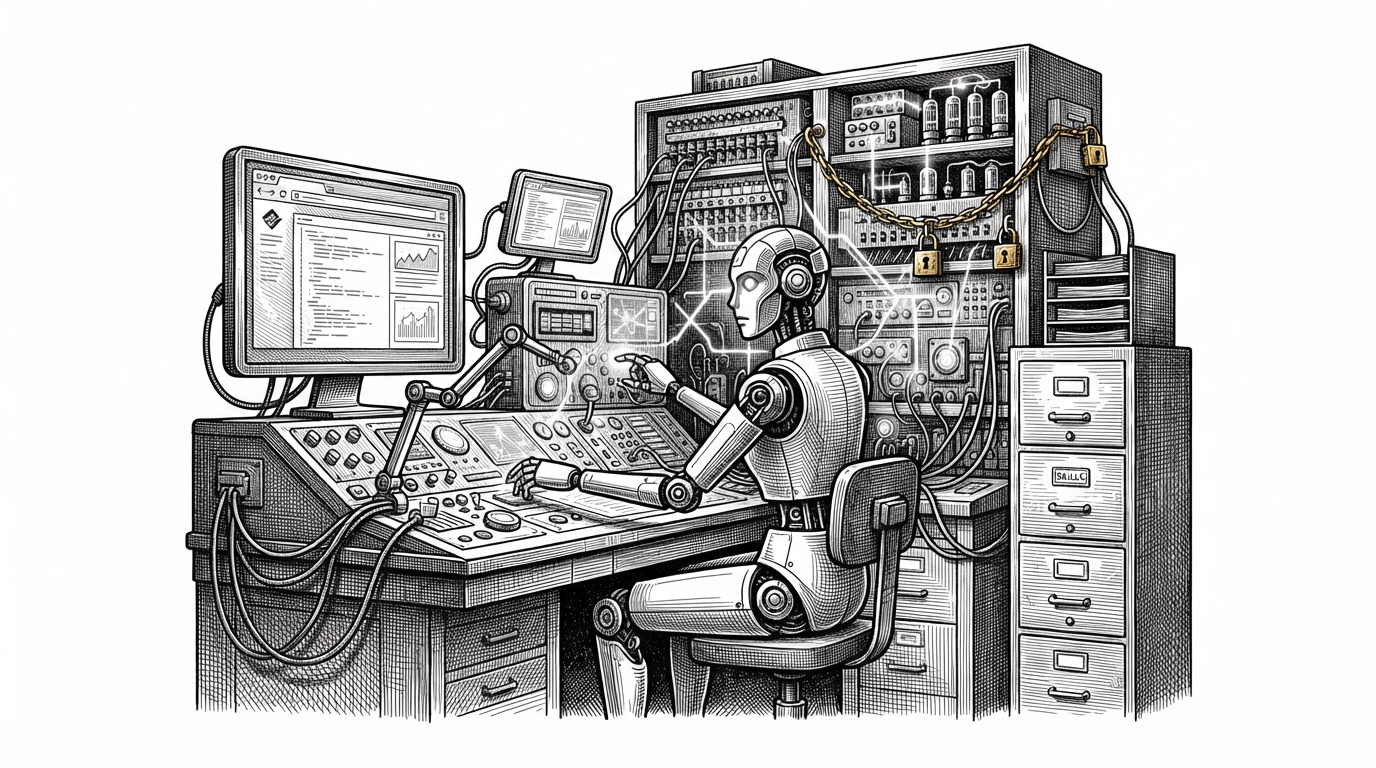
- Ankole’s core idea is not a chat assistant with tools, but a durable worker that can survive crashes, retries, and handoffs.
- The repo’s architecture treats leases, supervision, browser execution, and skill materialization as the real body of the agent.
- Its technical stack, especially Elixir, ZeroMQ, Bun, and Protobuf, is chosen to make long-lived autonomous work reliable rather than merely possible.
- Compared with chatbot assistants and lightweight frameworks, Ankole is trying to be the runtime that carries work over time.
Ankole’s most interesting move is philosophical, not cosmetic. It refuses the default chatbot model. Instead of treating the agent as a session that dies when the prompt ends, it treats the agent like a process with a job, a lease, a browser, a filesystem, and a recovery path.
That matters because most agent demos are easy when everything goes right. The hard part is what happens when a browser crashes, a tool call fails, context drifts, or ownership of a task needs to move. Ankole is built around those failure modes from the start.
Ankole is an open-source, self-hosted AgentOS for shared AI colleagues. Claude Tag open source alternative.
The AI worker, not the AI assistant
The README pitch is blunt: turn AI agents into autonomous labor measured by outcomes. That is a different unit of value from helpfulness. It implies work that continues after the first response, and systems that can be judged by completion, not conversation.
This is why the project feels more like infrastructure than an app. The agent is not a thin wrapper around model calls. It is an operating environment with boundaries, state, and accountability.
Why this looks like an operating system
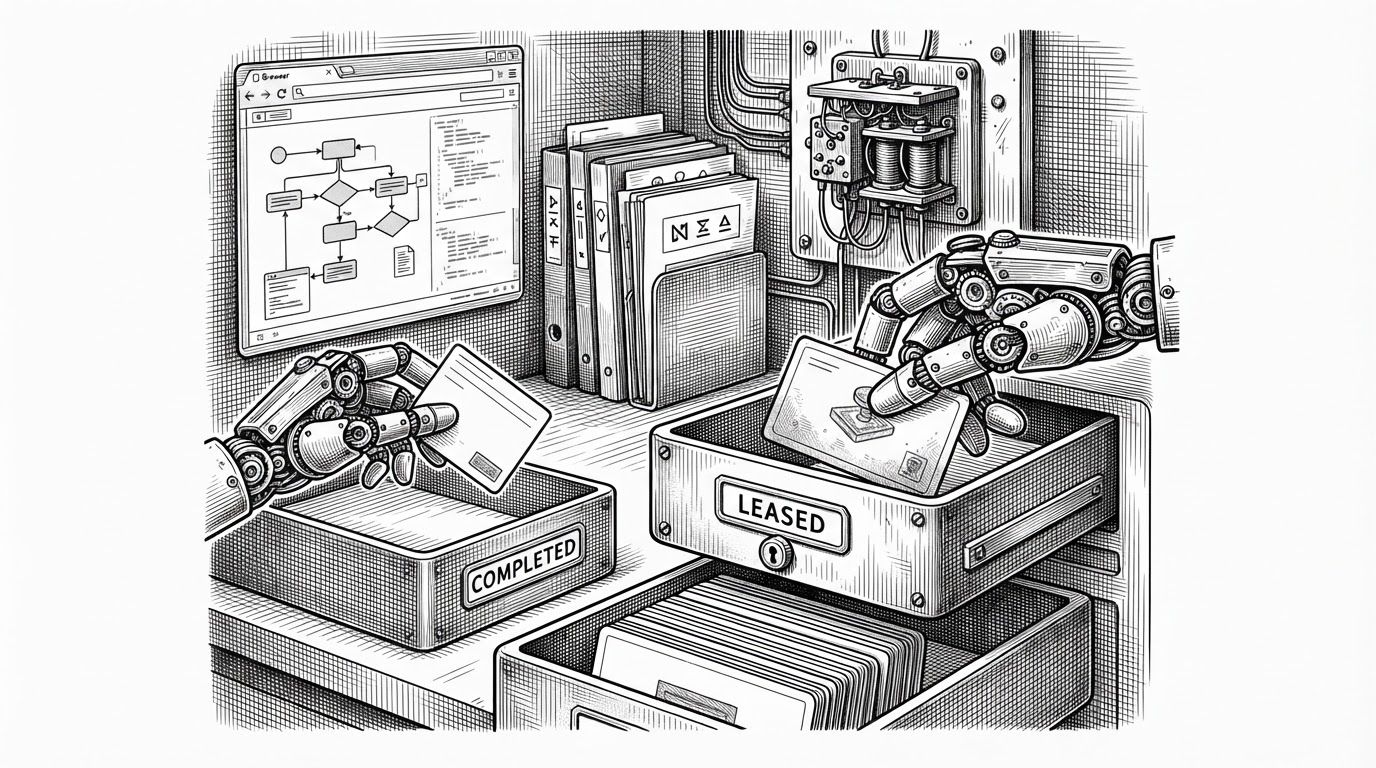
The architecture makes the model legible. The control plane issues work, the worker acquires a lease before it owns runtime resources, the browser daemon is a first-class execution surface, and skills are materialized onto disk rather than kept as vague prompt lore.
That separation is the real clue. Ankole is not trying to make the model smarter in isolation. It is building the machinery around the model so the work can continue when the model, browser, or context becomes imperfect.
The execution loop that keeps the agent honest
The heart of the worker is the Responses loop in agent-loop.ts. It calls the model, parses tool calls, runs them locally, feeds the results back, and keeps going until it hits an iteration limit or reaches a valid stopping point.
Two details matter. First, tool arguments can be repaired instead of immediately failing. Second, if the loop runs out of budget, the system synthesizes a summary rather than silently dropping the thread. That is a small design choice with a large consequence: the worker is expected to leave behind something coherent even when it cannot finish cleanly.
while (iterations < maxModelIterations) {
  const response = await callModel(input)
  const toolCalls = parseToolCalls(response)

  for (const call of toolCalls) {
    const repaired = await validateToolArgumentsWithRepair(call)
    const result = await executeTool(repaired)
    journal.append(result)
  }

  if (shouldStop(response)) break
  iterations += 1
}

if (iterations >= maxModelIterations) {
  return synthesizeAfterModelIterationLimit(journal)
}
That is the difference between a chatbot loop and a work loop. A chatbot can stop when the conversation gets awkward. A worker has to close the books.
How Ankole keeps state, ownership, and runtime alive
The runtime manager uses a lease pattern, and that choice does most of the heavy lifting. The lease says who owns the runtime right now, for how long, and under what conditions it can be reclaimed.
That is why the system can tolerate long-lived work without becoming chaotic. If no lease is active, the manager can close the entry and save resources. If ownership changes, the runtime is fenced. If the worker dies, the durable layer still has enough state to recover the task.
| Concern | Ephemeral agent | Ankole |
|---|---|---|
| Ownership | Implicit, session-based | Explicit lease and runtime fencing |
| Failure handling | Often restarts from scratch | Recovery preserves enough state to resume |
| Resource use | Process often stays hot by habit | Runtime closes when no lease is active |
| Task model | Conversation turns | Long-lived work units |
| Safety | Tool calls are ad hoc | Ownership is enforced with runtime locks |
This is also where the security story shows up. The codex-home-lock style guardrail prevents two workers from mutating the same runtime at once. That is not glamorous, but it is exactly what a durable autonomous system needs.
The browser is not a tool. It is part of the body
Ankole’s browser runtime is not a helper utility bolted on at the edge. It is a core execution surface with its own daemon supervisor, crash monitoring, socket communication, and rendered fetch behavior.
That matters because browser work is where most real-world agent systems get messy. Pages crash, JavaScript mutates the DOM, and the visible state is not the same as the raw HTML. By treating rendered web access as first-class, Ankole makes the browser part of the agent’s body rather than an external gimmick.
The practical effect is simple: the agent can work against what a human would actually see, not just against source code or static markup.
Skills become files, not abstractions
Ankole materializes skills into the filesystem. That sounds mundane, but it is one of the most important reliability choices in the repo. Skills stop being an invisible blob of context and become concrete artifacts the worker can inspect, mount, version, and initialize atomically.
Atomic initialization is the point. The agent should never see a half-installed skill. It either has the capability or it does not. That discipline reduces ambiguity, and ambiguity is where agent systems usually leak confidence.
It also improves reproducibility. A file-backed skill is easier to debug than a prompt fragment floating through memory.
Why Elixir and ZeroMQ are not accidental
The stack choice matches the problem. Elixir gives Ankole OTP supervision, concurrency, and the cultural permission to let failures be isolated instead of catastrophic. ZeroMQ and Protobuf make inter-process communication feel like infrastructure, not HTTP glue.
Bun and TypeScript handle the worker-side runtime where agent logic and browser operations live. Rust appears where performance-critical NIFs make sense. The point is not novelty. The point is that each layer is doing the job it is good at.
| Layer | Why it fits | What it buys Ankole |
|---|---|---|
| Elixir / OTP | Supervision and fault tolerance | Long-lived workers that survive failures |
| ZeroMQ + Protobuf | Low-latency IPC | Fast activation fabric and bounded RPC |
| Bun + TypeScript | Modern worker runtime | Pragmatic execution for loop and browser code |
| PostgreSQL | Durable ledger | Replayable history and recovery |
That stack makes the thesis credible. If the project were only an LLM wrapper, these choices would look theatrical. Because it is trying to manage durable labor, they look deliberate.
What Ankole is really competing with
Ankole is not competing with a single category. It is trying to outrun three different models at once: chat assistants, lightweight agent frameworks, and hosted SaaS agent platforms.
| Model | Execution model | State persistence | Browser access | Self-hosting | Fault tolerance |
|---|---|---|---|---|---|
| Chatbot assistant | Session-based | Minimal | Optional and shallow | Usually no | Low |
| Lightweight agent framework | Orchestration layer | Depends on the app | Often external | Usually yes | Variable |
| SaaS agent platform | Managed workspace | Vendor-controlled | Built in | Usually no | Moderate |
| Ankole | Durable leased worker | Designed in | First-class | Yes | High |
The useful distinction is this. Chat is a session. Most agent frameworks are orchestration layers. Ankole is trying to be the runtime that carries work over time, with enough supervision to make the promise believable.
The bet
If Ankole works, the category shifts. The thing people buy, self-host, and supervise is no longer a chatbot with extensions. It is an AI worker with infrastructure, constraints, and a recoverable life cycle.
Even if the project never becomes the default stack, it is still valuable as a blueprint. It shows what durable agent systems need to look like when reliability is not an afterthought.