huashu-art-motion: The Repo That Turns LLMs Into Motion Directors
A deterministic Canvas engine for art styles, explainer grammars, and agent-driven video generation. It treats motion like code, not timeline guesswork.
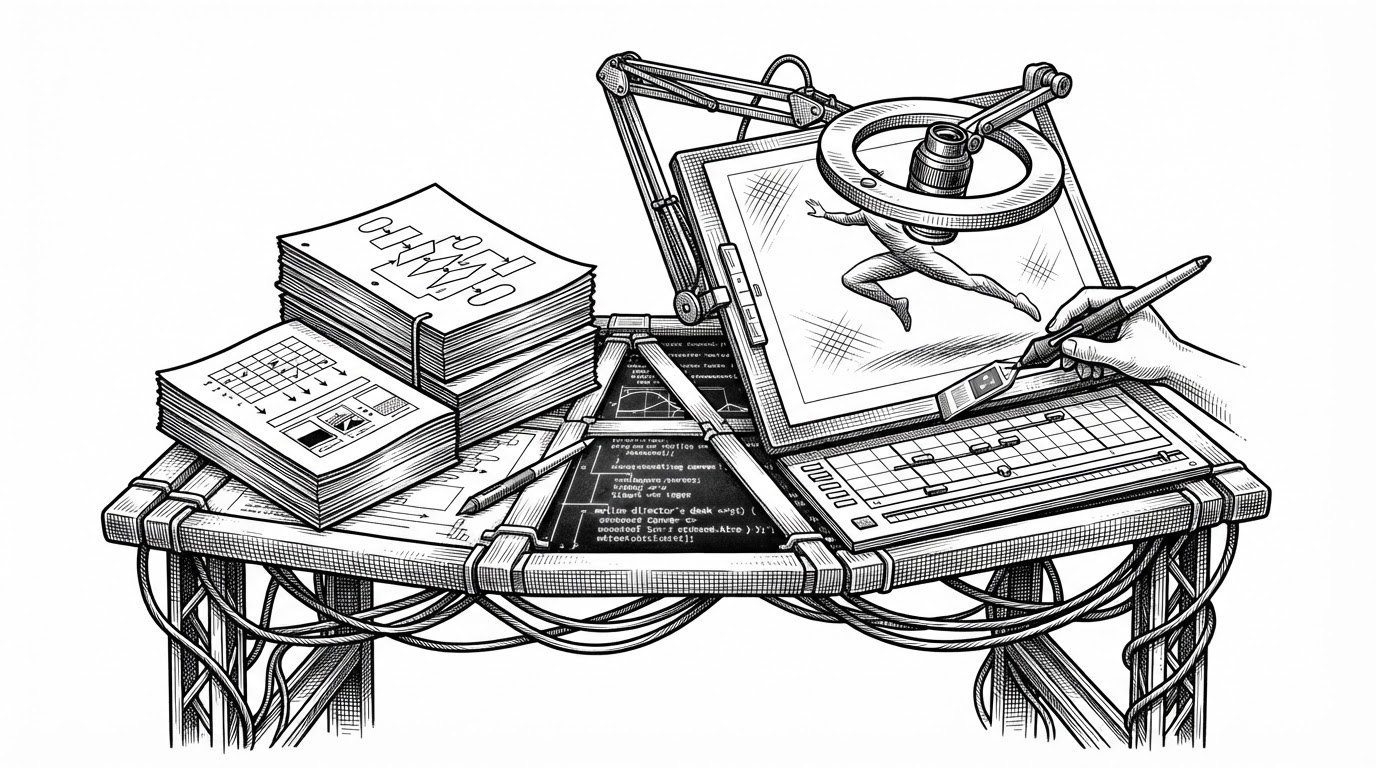
- huashu-art-motion treats animation as a contract between structured intent and a deterministic renderer, which makes it unusually friendly to agents.
- Its style system matters less as a catalog of looks than as a way to encode motion, timing, and camera behavior as repeatable recipes.
- The Clip Contract is the repo's real interface because it lets local time, cues, and grammars map cleanly to frame-accurate output.
- The project wins by being anti-framework on purpose, using Canvas, seeded randomness, and QA to keep creative output reproducible.
huashu-art-motion is easiest to understand if you stop thinking about it as an animation toolkit. It is a production language for agent-directed motion graphics, built so an LLM can assemble art-driven video from recipes, schemas, and grammars without improvising the pipeline.
除了纯测模型能力外,几种YouTube热门视频风格能做80分的商业级视频了。
What This Repo Really Is
The repository is packaged like a skill library for coding agents, not a conventional app. That difference matters: the code does not ask a human to drag keyframes around. It asks an agent to choose a grammar, fill a clip spec, and let a deterministic renderer do the rest.
That is why the project feels more opinionated than most creative coding libraries. It has to constrain the model. If the model is the director, then the repo is the script format, stage direction, and camera language all at once.
The public materials describe a stack built on JavaScript, Playwright Chromium, FFmpeg, and a QA layer that checks frame stability before export. In practice, that makes the system look less like an art toy and more like a controlled video factory.
The Engine Treats Time Like a Score
The core runtime treats animation as a function from time to frame. That sounds simple, but the implementation choice is the point. The engine uses beat-grid timing, offscreen buffers, and transition windows so scenes can be composed like measures in music rather than nudged manually on a timeline.
// The mental model: time maps to frame, not to hand-keyed timeline edits.
function renderFrame(t) {
  const beat = Math.floor(t * 128 / 60);
  const era = ERAS.find(e => t >= e.start && t < e.end);
  const localTime = t - era.start;
  const sceneA = drawScene(bufA, localTime, era);
  const sceneB = drawScene(bufB, localTime, nextEra(era));
  return composite(sceneA, sceneB, era.transition(localTime));
}
Brushes That Behave Like Materials
The most convincing part of the project is not the style list. It is the fact that the brush engine behaves like a material simulator. The repo's brush logic samples splines, varies opacity, introduces blur, and mixes blend modes so the stroke feels manufactured rather than stamped on.
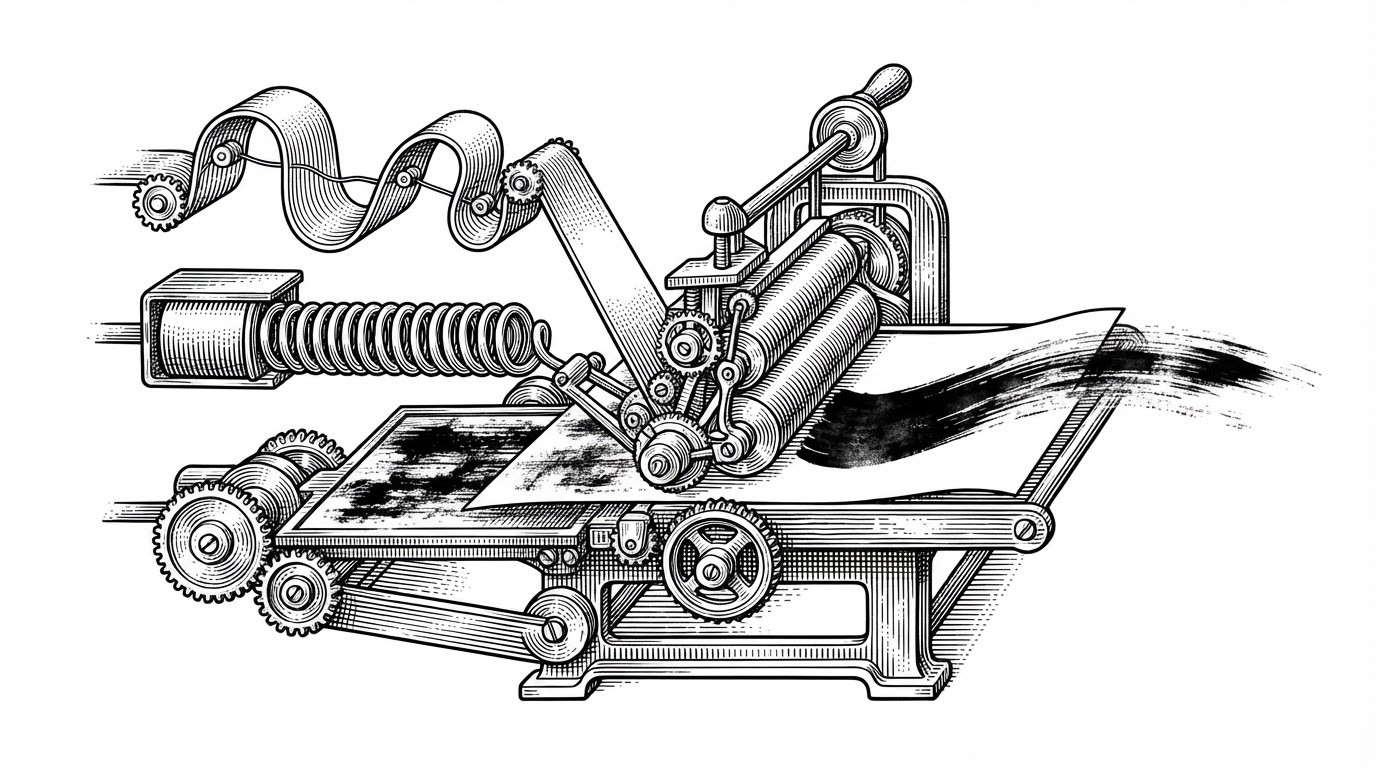
That is why the anti-framework stance matters. A heavier abstraction might make the code easier to browse, but it would weaken the one thing this repo needs most: precise control over the physical behavior of marks on the canvas.
The Clip Contract Is the Real API
This is the project’s sharpest idea. A clip spec can describe cues, text, images, and timing, while a grammar file decides how those elements behave locally in time. The contract between the two lets an agent generate motion with intent, but without freeform chaos.
That local-time abstraction is doing a lot of work. An element does not need to know the whole movie. It only needs to know when it enters, how it animates, and which grammar rules apply in that slice of the timeline.
| Dimension | Structured Clip + Grammar | Manual Timeline Editing |
|---|---|---|
| Input model | JSON cues and timing fields | Dragged keyframes and ad hoc state |
| Determinism | High, because local time and rules are explicit | Lower, because edits accumulate ambiguity |
| Agent friendliness | Strong, because a model can emit valid specs | Weak, because UI manipulation is hard to automate |
| Visual control | High, with reusable style rules | High, but only after hands-on work |
| Best use case | Repeatable explainer and art-motion pipelines | One-off handcrafted edits |
The comparison is not about taste. It is about who does the thinking. In this repo, the agent proposes the intent, and the runtime handles the discipline.
Why the Camera Matters More Than 3D
The camera system is built for painterly motion, not spatial realism. Functions like CAM.zlerp and parallax layers let the engine zoom and drift in ways that feel cinematic without needing a 3D scene graph.
That choice is consistent with the rest of the stack. The repository is not trying to simulate a virtual world. It is trying to move through illustrated worlds with enough depth, pace, and framing control to support explainers and stylized stories.
How It Compares With the Usual Suspects
Manim, Remotion, and prompt-to-video systems solve adjacent problems, but they do not occupy the same category. Manim is a math-first animation environment. Remotion is a code-first video framework. Prompt-to-video systems aim for generative speed. huashu-art-motion is something else: an agent-native motion language with prescriptive styles and deterministic rendering.
| Tool | Input model | Determinism | Agent friendliness | Visual control | Best fit |
|---|---|---|---|---|---|
| huashu-art-motion | JSON specs plus grammar recipes | High | High | High | Agent-directed stylized motion |
| Manim | Python scene code | High | Medium | High | Mathematical animation |
| Remotion | React components | High | Medium | High | Programmatic video production |
| Prompt-to-video | Natural language prompts | Low to medium | Medium | Variable | Fast generative experiments |
The differentiator is not that it has more styles. The differentiator is that it assumes an agent will author the first draft, then makes that draft stable enough to render, test, and repeat.
What Makes It Production-Ready
A lot of creative tools collapse the moment you ask for repeatability. This repo tries to prevent that with seeded randomness, QA scripts, and frame comparison workflows. That means the output can stay artistic without becoming unpredictable.
For teams, that matters more than novelty. If a motion system cannot be reproduced, it cannot be reviewed. If it cannot be reviewed, it cannot be safely delegated to an agent.
It is an MIT-licensed skill that lets a coding agent render animation with uv, ffmpeg and Playwright Chromium, covering styles from cave painting to vaporwave and Kurzgesagt, Vox, whiteboard and 3Blue1Brown-style explainers driven by JSON specs.