EphemeralGuard: Securing the Infrastructure That Disappears First
A real-time security lab for cloud workloads that vanish before traditional tools can finish an audit. It tags short-lived resources early, correlates noisy alerts into incidents, and measures its own precision against synthetic ground truth.

- EphemeralGuard treats disappearing infrastructure as a forensic problem, not a monitoring problem.
- Its sharpest move is tagging short-lived assets early enough to preserve context before the workload evaporates.
- The repo is a closed-loop lab that generates attacks, detects them, correlates them, and scores itself against ground truth.
- The project is strongest as an experimental model for ephemeral security, not as a full production SOC replacement.
The problem: you cannot investigate a pod after it is gone
Ephemeral infrastructure breaks the usual security rhythm. A pod can terminate, a spot instance can vanish, and a serverless function can disappear before an analyst even opens the alert. By the time a traditional tool gets around to inventory, scan, and correlate, the asset is already a memory.
That is the opening move in EphemeralGuard. It does not start by asking how to monitor everything. It starts by asking how to preserve enough context that a disappearing workload can still be investigated.
EphemeralGuard is a lab, not just a detector
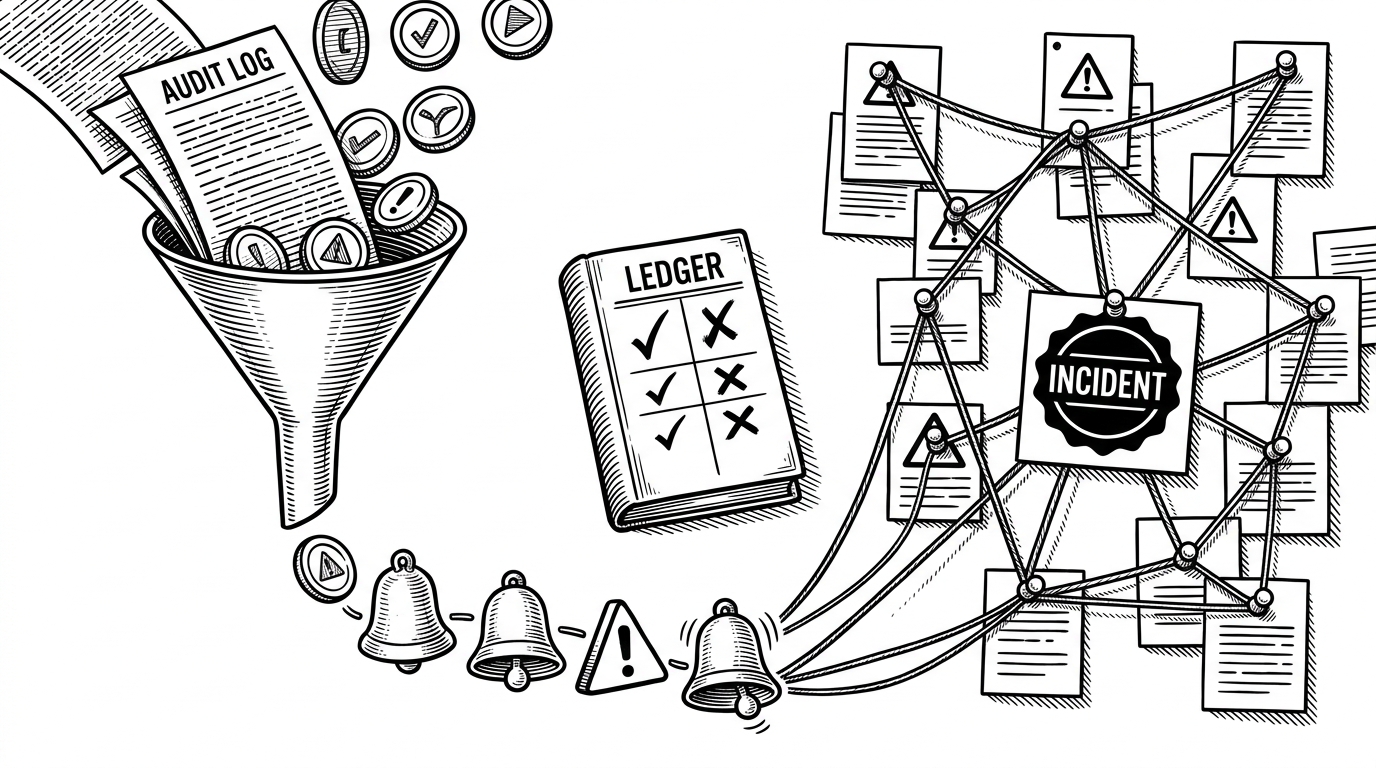
The repository is structured like a pipeline, not a product brochure. Synthetic logs are generated first. Detection happens next. Alerts are correlated into incidents. Then the dashboard turns the whole thing into something a human can read.
The generator cheats, on purpose
The synthetic side of the repo is not a toy logger. It is an adversary with a budget. In `log_generator.py`, anomalies are injected deliberately, with ground-truth labels attached so the rest of the system can measure itself instead of merely producing alarms.
That matters because security tooling often lives in a fog of unlabeled noise. Here, the point is controlled realism. If you want precision and recall, you need attacks you can actually count.
# Conceptual shape of the generator
if _should_inject_anomaly(target_rate=0.05):
    event["is_anomaly_gt"] = True
    event["attack_type"] = choose(["crypto_mining", "exfiltration"])
else:
    event["is_anomaly_gt"] = False
Tagging at birth is the project’s sharpest trick
The `EphemeralClassifier` is not trying to be clever for its own sake. It uses lightweight heuristics to decide whether a resource is likely to vanish soon, based on cues like spot-market markers, TTL behavior, and short-lived controller patterns. That is enough to mark the asset before the useful evidence disappears.
This is the right tradeoff for ephemeral security. The classifier needs to be fast, stateless, and easy to run everywhere. It is less important that it be fancy than that it be there in time.
How the engine separates signal from noise
`RiskDetectionEngine` combines three ideas that are stronger together than apart. Threshold rules catch obvious spikes. Time-window aggregation gives those spikes context. `IsolationForest` looks for the outliers the rules do not name directly.
That blend is pragmatic. Rules are transparent. The model is flexible. The rolling window keeps the engine oriented to what just happened, which is exactly what matters when the asset itself may only live for minutes.
| Approach | What it catches | What it misses | Why it matters |
|---|---|---|---|
| Threshold rules | Sharp bursts and obvious spikes | Subtle drift | Fast and explainable |
| Time-window aggregation | Patterns across short bursts | Single isolated events | Adds context without heavy state |
| IsolationForest | Odd behavior that does not fit the norm | Known attack signatures | Finds anomalies the rules do not name |
The detector is intentionally layered
Each layer answers a different question. The rules ask whether something is clearly wrong. The window asks whether the shape is getting weird. The model asks whether the behavior belongs at all.
From alerts to incidents
This is where `networkx` earns its keep. Instead of leaving the analyst with a pile of disconnected alerts, the repo builds a graph of related activity and groups it into incidents. That compression is the real payoff.
A single incident tells a story. It says which events belong together, which resource mattered, and how the noise should be read. That is a better unit of attention than raw alert volume.
| Mode | Output | User burden | Outcome |
|---|---|---|---|
| Raw alerting | Many isolated events | High | Alert fatigue |
| Graph correlation | Linked incident story | Lower | Fewer, richer investigations |
| Ground-truth evaluation | Measured precision and recall | Lowest | Confidence in the detector |
The dashboard is built to prove the point
The FastAPI and WebSocket dashboard is not just a front end. It is the explanation layer. It shows live ephemeral inventory, TTL countdowns, and noise-reduction metrics so the system’s thesis is visible, not implied.
That choice is smart. A security lab is easier to trust when the UI shows what is being observed, what is being compressed, and what is being lost.
The rare part: it measures itself against ground truth
Most tools can say they found something. Far fewer can compare their output to labeled truth and report precision, recall, and F1 with any confidence. EphemeralGuard’s evaluation loop is what keeps it from becoming just another alert demo.
Because the generator writes the labels and the evaluator reads them back, the project closes the loop. That makes it useful as a testbed, a teaching artifact, and a way to reason about ephemeral detection without hand-waving.
What EphemeralGuard is, and what it is not
EphemeralGuard is experimental, compact, and cleanly separated. It is a miniature model of ephemeral security that shows how tagging, scoring, correlation, and evaluation can fit together.
It is not a production SOC platform. It does not claim to replace mature cloud security tooling. Its value is narrower and more interesting: it makes the problem legible, then shows a plausible way to solve it.
| EphemeralGuard | Traditional security tooling |
|---|---|
| Captures context before the asset disappears | Usually investigates after the fact |
| Correlates alerts into incidents | Often leaves the analyst with raw alert volume |
| Measures itself against synthetic truth | Often lacks clean ground-truth evaluation |
| Optimized for short-lived cloud assets | Optimized for broader fleet monitoring |