promptHire-ai-interview-mocker: PromptHire: The AI Interview Mocker That Turns Your Browser Into the Hiring Panel
A close look at the browser-native loop behind PromptHire, where Gemini generates the questions, speech APIs run the interview, and a feedback table turns every answer into a reviewable lesson.
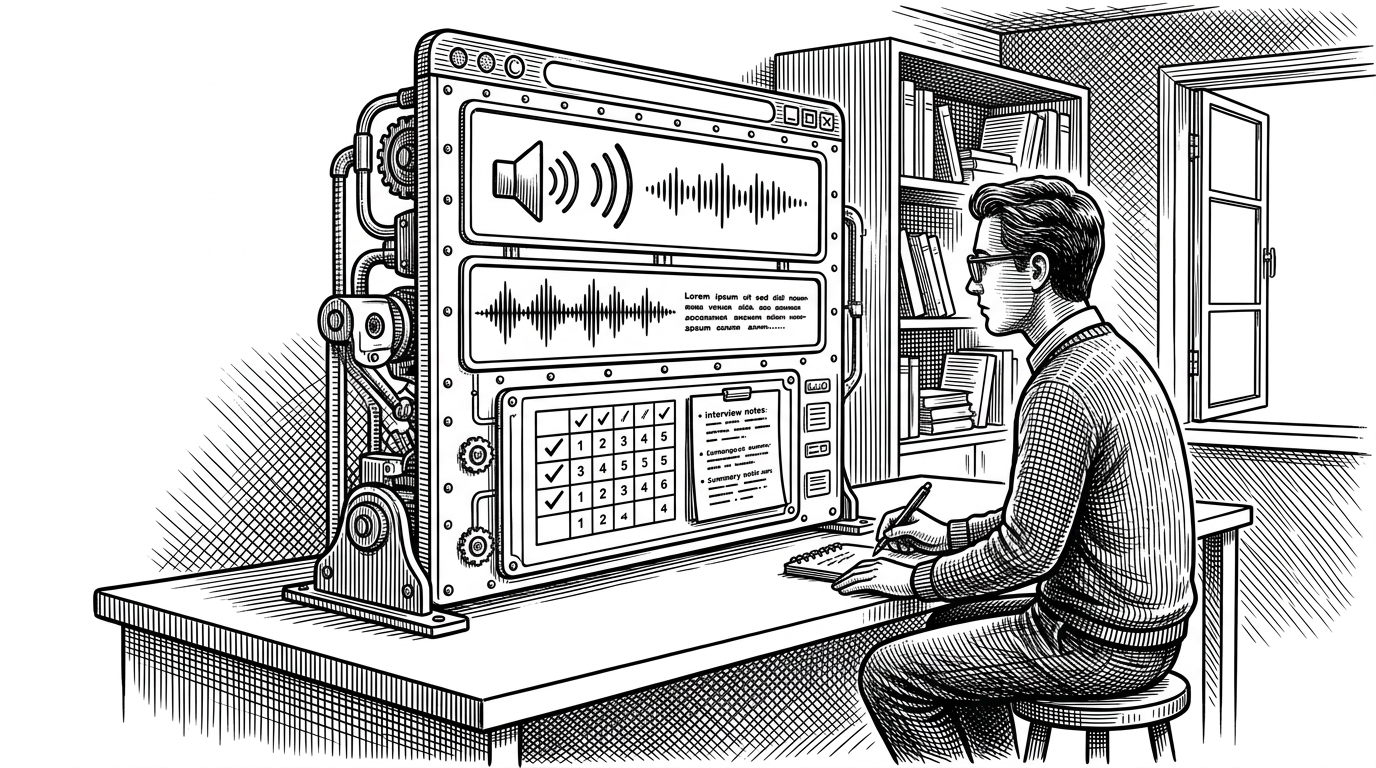
- PromptHire treats the browser as the whole interview engine, not just the place where a chatbot happens to live.
- Its real trick is orchestration, since speech synthesis, speech-to-text, JSON prompts, and database persistence work together as one loop.
- The app feels cheap to run because it leans on browser APIs and a lightweight Gemini model instead of heavy server infrastructure.
- Its database is not storage for its own sake, because every run becomes a reviewable record of answer, feedback, and rating.
The browser is the interviewer here. PromptHire does not stop at generating questions. It speaks them, listens to the answer, grades the response against a stored target, and saves the result for later review. That closed loop is the whole product.
The repo is a clean example of modern AI SaaS design. The value is not a novel model. The value is the way the app chains browser speech APIs, structured prompts, and a relational database into something that feels continuous.
I’m thrilled to announce the launch of PromptHire AI, an intelligent platform built to revolutionize how you prepare for job interviews. Leveraging the power of Google's Gemini AI, PromptHire offers a realistic, interactive interview experience tailored to your specific career goals.
Why this feels different from a typical AI wrapper
Most interview apps split cleanly into two categories. They either give you a text prompt and a form, or they jump straight into live help during a real interview. PromptHire sits in the practice zone and makes that practice feel alive.
| Project shape | Input mode | Feedback mode | Cost profile | Realism | Best for |
|---|---|---|---|---|---|
| PromptHire | Voice in the browser | AI feedback stored per answer | Low, because it leans on client-side speech APIs and a flash model | Moderate, with enough structure to feel like a session | Mock practice with reusable review |
| Human-led platforms like interviewing.io and Pramp | Live conversation | Human interviewer critique | Higher, because humans are the product | High, because the pressure is real | Candidates who want live signal |
| Warmup tools like Google Interview Warmup | Typed or guided answers | Basic automated coaching | Low | Low to moderate | Quick practice and confidence building |
| Interview copilots like Final Round AI and Verve AI | Live interview assistance | Real-time guidance during the call | Higher, because the product is doing more during the interview | High for assistance, not for practice | People who want help in the moment |
That makes the product easier to understand if you frame it as a practice-first system. It is not trying to replace a human interviewer. It is trying to make a rehearsal feel structured enough that the feedback is worth coming back to.
How the interview loop works
The flow starts with a job role, a job description, and a rough experience level. PromptHire feeds that into Gemini and asks for a structured interview set, not freeform prose. The app then strips the markdown wrapper, parses the JSON, and stores the generated interview as a reusable record.
Once the session begins, the browser takes over. The question is spoken aloud through speech synthesis, the user answers out loud, and the browser speech-to-text layer turns that into text. That transcription is then compared with the model answer, and the result becomes feedback plus a rating.

That feedback page matters more than it first appears. It does not just display one answer in isolation. It reconstructs the relationship between the original question, the user response, the model comparison, and the final rating. In other words, it gives the app memory.
// Simplified flow from the repo
const prompt = buildInterviewPrompt({ role, description, experience });
const response = await gemini.generateContent(prompt);
const questions = JSON.parse(response.text.replace('```json', '').replace('```', ''));

await db.insert(MockInterview).values({
  jobPosition: role,
  jobDescription: description,
  experience: experience,
  jsonMockResp: questions,
});

const transcript = await speechToText(answerAudio);
const feedback = await gemini.compare({ question, answer: transcript, goldAnswer });

await db.insert(UserAnswer).values({
  mockIdRef: interviewId,
  question,
  correctAns: goldAnswer,
  userAns: transcript,
  feedback,
  rating: feedback.rating,
});
What the database is really storing
The schema is simple, but the product logic is strong. MockInterview stores the interview template and generated questions. UserAnswer stores the evidence of each run: the answer, the feedback, the rating, and the link back to the original question.
That distinction is what turns PromptHire from a throwaway demo into a learning tool. The interview session does not vanish when you close the tab. It becomes a record you can audit.
| Table | What it stores | Why it matters |
|---|---|---|
| MockInterview | Role, description, experience level, generated questions | This is the reusable interview template |
| UserAnswer | Question, user answer, correct answer, feedback, rating | This is the performance history |
| Feedback page | Joined view across prior answers | This is where the memory becomes useful |
The stack tells you who this is built for
The stack reads like a solo builder’s shortcut to a polished SaaS. Next.js App Router, Clerk, Drizzle, Neon, Tailwind, Gemini, and browser speech APIs are all choices that optimize for shipping fast without building a large backend team around the product.
That is not a criticism. It is the point. PromptHire is designed around managed services and browser capabilities because the product is an orchestration problem, not a deep infrastructure problem.
| Layer | Choice in the repo | What it signals |
|---|---|---|
| Frontend | Next.js and React | A modern app shell with fast iteration |
| Auth | Clerk | Authentication without custom plumbing |
| Data | Drizzle on Neon | Structured data with serverless PostgreSQL |
| AI | Gemini 2.0 Flash Lite | Low-latency generation for interactive flows |
| Voice | Web Speech API style tooling | Browser-native input and output |
Where PromptHire sits in the market
PromptHire wins by being the simplest product that still feels interactive. It is cheaper and more customizable than human-led mock interview platforms. It is more immersive than a text-only warmup tool. And it is less intrusive than a live copilot that tries to help during the actual interview.
That puts it in a useful niche. It is practice-first, AI-assisted, and browser-native. The trade-off is obvious: you get convenience and low cost, not the realism of a live human interviewer or the deep nuance of a professional coach.
| Category | PromptHire's edge | Its limit |
|---|---|---|
| Human-led mock interviews | Cheaper and available on demand | Less realistic than a real person |
| Warmup tools | Voice makes the session feel active | Less deep than dedicated coaching |
| Interview copilots | Better for practice, not live rescue | No real-time help inside a live job interview |
| Generic chatbot | Structured loop and saved feedback | Far more opinionated, so less flexible |
What this project proves
PromptHire is a good reminder that many useful AI products do not need a new model. They need a tight loop. When the browser can speak, listen, transcribe, and persist state, a thin backend can feel like a much larger system.
That is the larger lesson in this repo. Product value comes from orchestration, from sequence, and from memory. The model matters, but the loop is what makes the experience feel real.