anthropics/cwc-long-running-agents: Why Long-Running Agents Need a Harness, Not More Prompts
A compact Bash-and-Git reference architecture that forces evidence, preserves memory, and separates builders from judges.
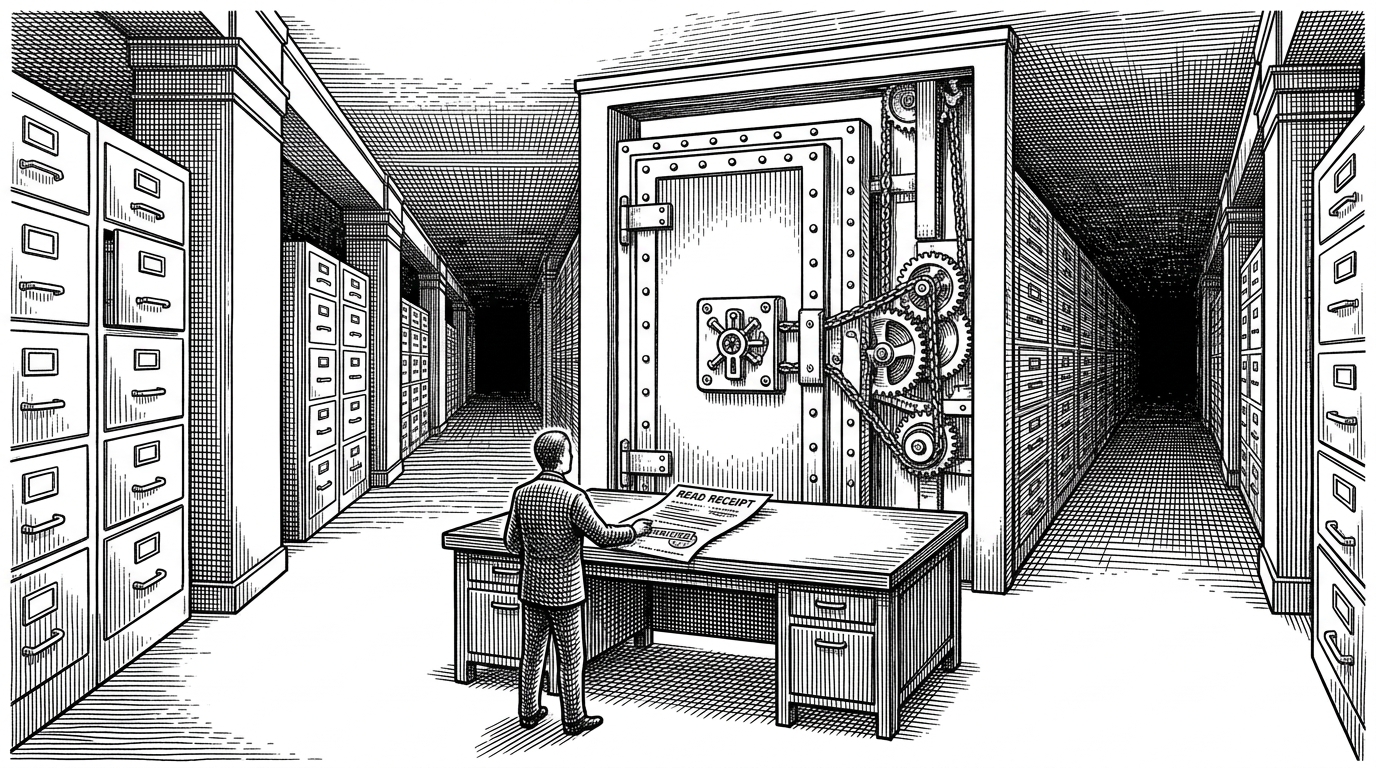
- This repo treats long-running agents as untrusted actors, so it enforces proof before it allows a result to be written.
- Its real invention is harness engineering, where hooks, files, and Git shape behavior more reliably than prompt wording.
- The evaluator gets a fresh context and fewer tools, which separates judgment from momentum and reduces self-approval bias.
- Git, progress files, and stop hooks turn fragile session memory into durable project state that survives interruptions.
The lie this repo refuses to accept
Most agent systems assume the model can judge its own work. This repo rejects that premise. Its sharpest move is a default-fail gate that blocks a pass result until the agent has first inspected evidence.
That sounds small. It is not. It changes the unit of trust from a model’s self-report to a workflow that demands observable proof before success can be recorded.
Harness engineering, not prompt engineering
The repo’s real subject is not a smarter prompt. It is a system of constraints that makes long-running work more accountable. Shell hooks, Git state, and Claude lifecycle events become the actual control surface.
That matters because long-running agents fail in repeatable ways: they drift, they forget, they declare victory too early. This harness is built around those failure modes instead of pretending they do not exist.
The control loop under the hood
The implementation is plain and effective. `.claude/hooks/` contains the interception logic, `.claude/settings.json` wires hooks to lifecycle events, `.claude/agents/` defines the evaluator, and `CLAUDE.md` extends the agent’s operating rules.
# Lightweight JSON parsing inside hooks
path=$(cat | python3 -c 'import json,sys; print(json.load(sys.stdin).get("tool_input",{}).get("file_path",""))' 2>/dev/null)

# Event-driven interception
# Tool call -> hook -> allow or block
The point of the design is not to modify the model. It is to intercept what the model tries to do. That is a different kind of architecture, closer to an operating environment than an application framework.
Why the evaluator gets a fresh context
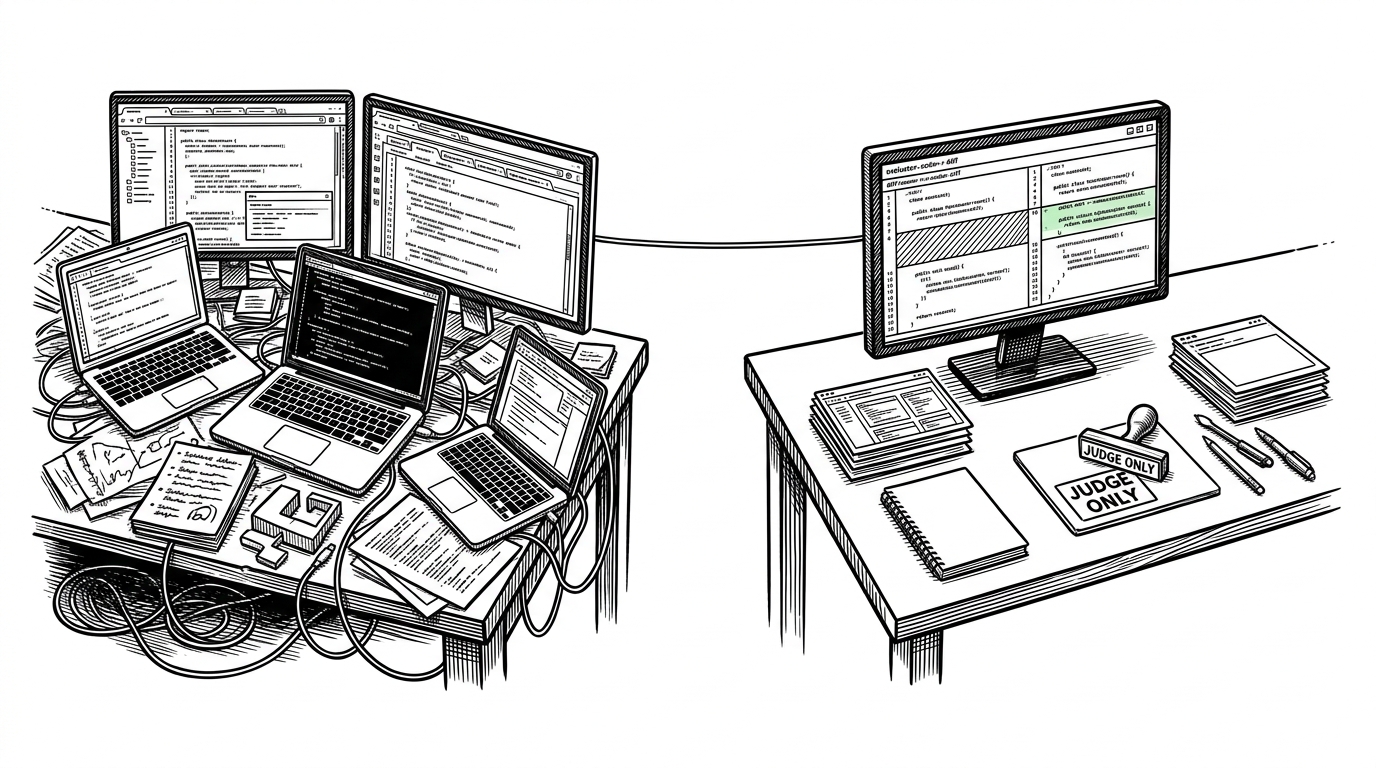
The evaluator is separated from the builder on purpose. The builder can write and accumulate bias. The evaluator starts with `git diff` and screenshots, and it does not get the same power to edit the world it is judging.
That division is the strongest anti-hallucination move in the repo after the evidence gate. It reduces sunk cost bias by making judgment structurally independent from authorship.
| System | Primary goal | How control is enforced | Evidence handling | Memory persistence | Evaluation | Best fit |
|---|---|---|---|---|---|---|
| anthropics/cwc-long-running-agents | Trustworthy long-running execution | Hooks, gates, and session controls | Requires evidence before result writes | Git and progress files | Separate evaluator with fresh context | Reliability-first harnesses |
| AutoGPT | General autonomy | Prompted tool loops | Usually model-led | Project dependent | Often self-directed | Experimental task chaining |
| LangChain Agents | Tool orchestration | Developer-defined chains | App-level logic | App-level logic | Externalized by the builder | Flexible app frameworks |
| Microsoft AutoGen | Multi-agent collaboration | Conversation structure | Conversation based | Conversation state | Peer agents and humans | Collaborative agent systems |
| CrewAI | Role-based crews | Role orchestration | Task workflow driven | Workflow state | Team-style coordination | Organized agent teams |
| OpenDevin | Software engineering agent | Environment and task loop | Tool and environment feedback | Session and task artifacts | Task specific verification | Coding and repo work |
Memory that survives a broken session
Long-running agents do not just need a brain. They need a notebook that outlives crashes, resets, and context limits. Here, Git and `PROGRESS.md` play that role by pushing memory outside the model and into durable files.
# Session checkpoint on stop
# Conceptually: save state before the context disappears

git commit -am "session checkpoint"
That is a practical insight, not a decorative one. If an agent cannot preserve what it learned, it will relearn the same lesson inside every new session.
The human still has an off switch
The safety story is not hidden. `kill-switch.sh` checks for an `AGENT_STOP` file before tool use, and `steer.sh` gives the operator a low-friction way to intervene. The environment itself becomes the control panel.
That is a cleaner model than waiting for a chat prompt to catch up with reality. The operator can change the world around the agent instead of trying to outtalk it.
What this is, and what it is not
This repo is not trying to be the broadest agent platform. It is a reference harness for teams that care about reliability, oversight, and long-running work more than capability theater.
That is what separates it from systems like AutoGPT, LangChain Agents, AutoGen, CrewAI, and OpenDevin. Most frameworks optimize for what agents can do. This one optimizes for whether you can trust the result.