The Invisible Scaffolding of the Java Ecosystem: Unpacking apache/maven-dependency-plugin
How hundreds of hermetic integration tests, bytecode scanning, and a strict Java 8 mandate keep the enterprise build pipeline from collapsing.
- The plugin relies on a massive suite of hermetic integration tests and a mock repository to ensure backward compatibility across millions of CI/CD pipelines.
- The dependency:analyze goal bypasses XML declarations to perform static bytecode analysis, finding the truth of dependency usage in compiled .class files.
- Maintaining core infrastructure requires deliberate technical debt, including hardcoding Java 8 constraints to support legacy enterprise build agents.
- Unlike Gradle's programmatic DSL, Maven enforces strict, declarative dependency management bound to a rigid lifecycle.
The Burden of a Simple Command
Every Java developer has typed `mvn dependency:tree` or `mvn dependency:analyze` to untangle a broken build. The command feels simple. The reality is a staggering web of edge cases. A single regression in the `maven-dependency-plugin` can break millions of continuous integration pipelines worldwide.
To prevent this collapse, the repository relies heavily on its `src/it` directory. This is not a standard unit test suite. It is a massive ecosystem of dummy projects. The plugin uses the Maven Verifier and a Mock Repository Manager (MRM) to simulate remote network calls offline. This proves that for core infrastructure, integration tests are the only tests that matter.
The Bytecode Detective
Dependency analysis is notoriously difficult. Developers often declare dependencies they never use, or rely on transitive dependencies they never explicitly declare. The plugin solves this with the `dependency:analyze` goal.
dependency:analyze analyzes the dependencies of this project and determines which are: used and declared; used and undeclared; unused and declared.
It does not just read XML files. It waits for the `test-compile` phase and cracks open the compiled `.class` files. By scanning at the bytecode level, it maps actual usage back to the `pom.xml` declarations. This static analysis reveals the truth of what the application actually requires to run.

The Compatibility Tightrope
The Java ecosystem is moving rapidly toward Java 17 and 21. Yet, the `maven-dependency-plugin` remains firmly anchored to Java 8. This is a deliberate choice. Core build tools must run reliably on ancient enterprise build agents.
This mandate requires active maintenance of technical debt. A look at the `.github/dependabot.yml` file reveals explicit rules blocking updates to modern libraries like Jetty 10+ and Mockito 5+. The maintainers sacrifice modern Java features to guarantee flawless execution for legacy users.
updates:
  - package-ecosystem: "maven"
    directory: "/"
    schedule:
      interval: "daily"
    ignore:
      # Jetty 10+ requires Java 11
      - dependency-name: "org.eclipse.jetty:*"
        versions: [">= 10.0.0"]
      # Mockito 5+ requires Java 11
      - dependency-name: "org.mockito:*"
        versions: [">= 5.0.0"]
The Programmatic Divide
The plugin exemplifies Maven's rigid, declarative philosophy. Dependencies are manipulated via strict lifecycle goals and XML configuration. This approach provides predictable, standardized builds across massive organizations.
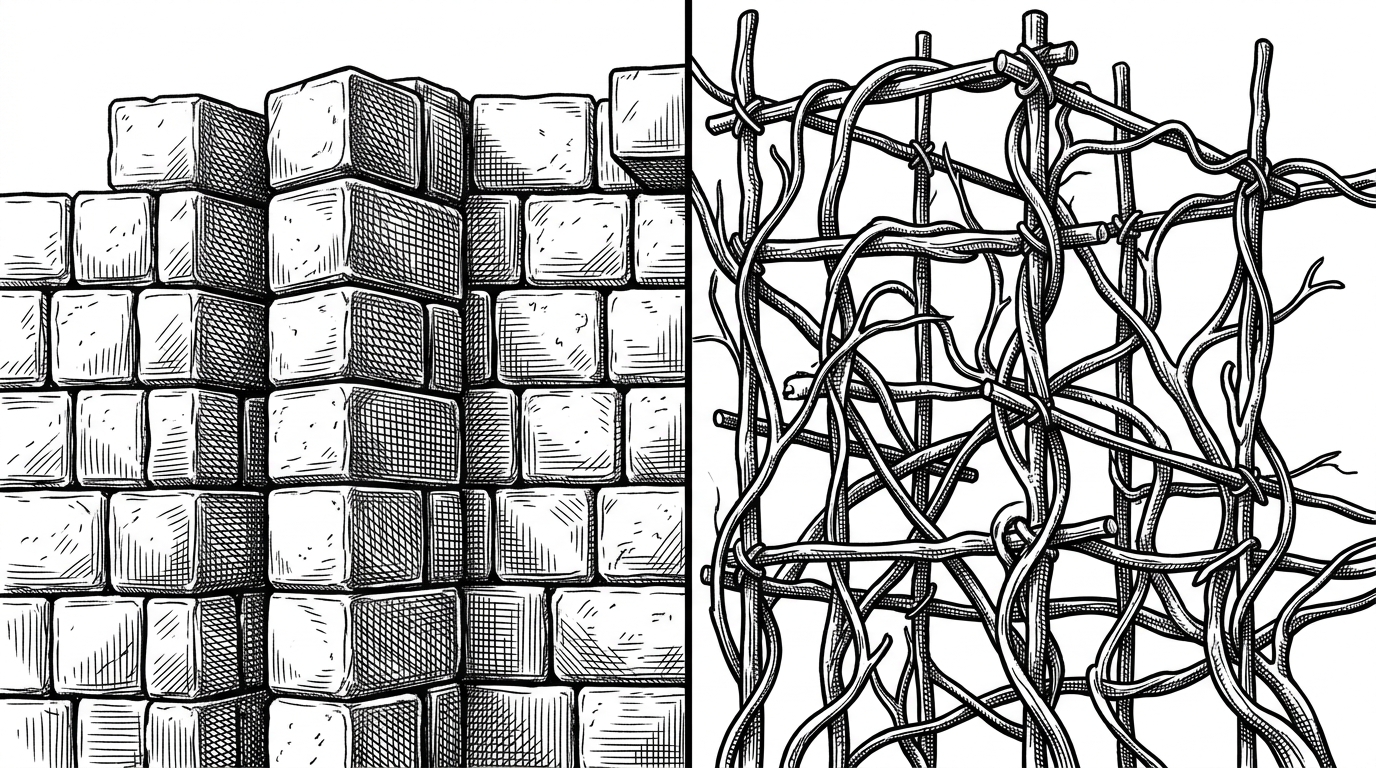
This contrasts sharply with Gradle. Gradle treats dependency resolution as a first-class programmatic citizen. Developers use a Groovy or Kotlin DSL to manipulate resolution strategies dynamically. Maven offers stability built from stone blocks. Gradle offers flexibility grown from intertwining vines.