Appwrite Agent: The Forgetful Runtime That Runs a Backend Like a Console
A look at how Appwrite combines stateless turns, just-in-time skill loading, and UI protocols to turn natural language into safe, structured infrastructure actions.
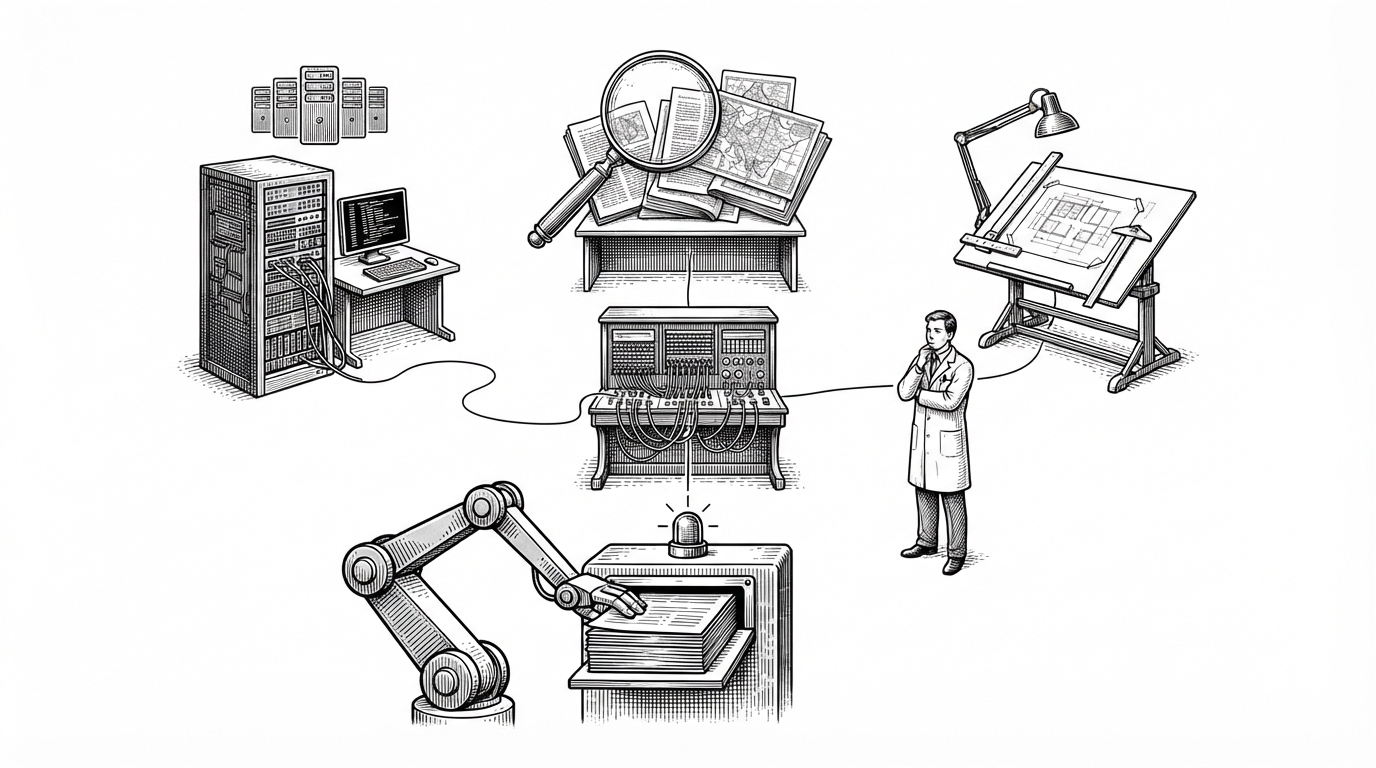
- Appwrite Agent is built to forget between turns, which makes it behave like a stateless control plane instead of a long-lived chatbot.
- Its real advantage is not generic reasoning, but precise routing, on-demand skills, and UI protocols that turn backend intent into structured actions.
- The Clarify and write-guard paths matter because they slow the agent down exactly where infrastructure work needs hesitation.
- Compared with broad agent frameworks, Appwrite is optimizing for BaaS-native operations, not universal autonomy.
Most agent demos are built around the same promise: ask a question, get a clever answer. Appwrite Agent is different. It treats the agent as a control layer for backend operations, where the important outputs are not just words, but routing decisions, confirmation prompts, and UI actions the console can render.
We're also working to make it even easier to build persistent, agent-driven applications using Appwrite Functions together with Appwrite Realtime.
Not a chatbot. A control plane.
The repo centers on a stateless runtime behind /v1/agent. Each turn arrives with its own history, attachments, and MCP connections, and the backend trims and routes that payload without pretending it has a durable inner life. That is the first important clue: Appwrite is not building a companion. It is building a request processor.
That choice changes the product shape. Once memory is pushed to the proxy or client layer, the backend becomes easier to scale, easier to reason about, and less vulnerable to hidden state. The agent can still feel continuous to the user, but the server itself stays clean.

Why Appwrite made it forget
Statelessness is usually framed as a concession. Here it is a feature. Appwrite can keep the runtime thin because the turn carries its own context, and that makes the system friendlier to cloud infrastructure, safer around sensitive actions, and easier to inspect when something goes wrong.
| Conventional stateful agent | Appwrite Agent |
|---|---|
| Holds conversation memory inside the agent loop | Carries full turn context into each request and keeps the backend stateless |
| Loads broad context up front | Injects skills only when the task needs them |
| Often answers in plain text | Can emit structured console and clarify protocols |
| Lets autonomy drive the flow | Uses routing and validation to constrain action |
Appwrite Skills are open source markdown files that give AI agents deep, language-specific knowledge of Appwrite SDKs. Install once, and your agents generate correct Appwrite code automatically.
The supervisor decides who thinks
Under the hood, the agent uses a supervisor pattern to route work between specialized subagents. Platform handles Appwrite-specific tasks, Researcher handles outside lookup, and Planner handles the broader logic of what should happen next. The point is not that the system is multi-agent in the abstract. The point is that autonomy is narrowed by a strict route schema.
Route = Literal['researcher', 'platform', 'planner', 'FINISH']

# The supervisor chooses the next best lane.
# The subagent then gets a focused prompt and a smaller task.
That design creates a useful boundary. The model is not left to improvise a workflow from scratch every time. It is given a small set of legal moves, which makes the whole system more predictable for infrastructure work than a free-form chat loop.
Skills are not docs. They are on-demand memory
This is the strongest product idea in the repo. Appwrite does not stuff every SDK guide into the prompt. It loads Markdown skills only when a task actually needs them, which keeps context smaller and lets the same runtime serve different languages and surfaces without ballooning the prompt.
That matters because docs drift. A generic model can sound confident while being wrong about a service name, a parameter order, or a SDK pattern. By turning documentation into a loadable skill, Appwrite makes domain knowledge feel like a tool, not a blob of static text.
| Always-loaded docs | Just-in-time skills |
|---|---|
| Bigger prompt, more noise | Smaller prompt, tighter focus |
| Knowledge is present even when irrelevant | Knowledge arrives only when needed |
| Harder to keep aligned across languages | Easier to swap in language-specific guidance |
| Feels like search | Feels like working memory |
Arena doesn't just measure general coding ability. It measures Appwrite-specific knowledge: correct SDK usage, accurate API patterns, and proper service configuration.
The UI is part of the agent
The most important protocols in the repo are not about text generation. They are about interface control. The console protocol can trigger native UI behaviors, while clarify can stop the flow and ask for missing information before a dangerous action is taken.
That means the agent is not just describing infrastructure. It is shaping the console that presents it. A chart, a resource list, or a confirmation modal is not an afterthought. It is part of the response contract.
MCP extends the surface area, but write-guard narrows the risk
MCP widens the agent's reach by letting users bring their own tools. Write-guard narrows the danger by checking mutations before they land. Together, they create a sane compromise: more power, less accidental damage.
That trade-off is easy to miss if you only look at the agent through the lens of autonomy. Appwrite is not trying to remove the human from infrastructure changes. It is trying to make the human's intent legible enough for the system to act safely.
| Open-ended agent | Appwrite's guarded agent |
|---|---|
| May call tools whenever it thinks it should | Validates write actions before they mutate state |
| Often assumes the user's intent | Can ask for clarification first |
| Returns text and leaves rendering to the app | Emits structured UI actions for the console |
| Feels powerful but vague | Feels constrained but dependable |
How it compares to the usual agent stack
Compared with LangGraph-style general orchestration, Appwrite is more opinionated. Compared with RAG-heavy docs systems, it is more operational. Compared with generic coding agents, it is narrower and safer. That is the point. It is not trying to be the agent for everything. It is trying to be the agent for Appwrite.
| System | What it optimizes for | What Appwrite does differently |
|---|---|---|
| LangGraph or CrewAI | General orchestration | Uses routing, but keeps the runtime stateless and BaaS-specific |
| RAG documentation search | Answering from static docs | Loads skills only when needed and treats them like task-specific memory |
| Generic coding agents | Broad coding help | Adds console and clarify protocols for backend operations |
| Autonomous tool agents | Maximal action scope | Adds write-guard and confirmation steps for risky mutations |