The Executable Resume: Inside arffsaad/DSO-training
How a personal repository demonstrates the shift from paper certifications to automated proof-of-competence in modern platform engineering.

- Modern platform engineering roles increasingly require executable proof of competence over static paper certifications.
- Shift-left security pipelines enforce quality gates that automatically block vulnerable code from reaching production environments.
- Effective DevSecOps implementation requires balancing rigorous security scanning with fast developer feedback loops.
The Death of the Paper Certificate
For years, the technology industry relied on multiple-choice exams to validate engineering capability. A paper certificate proved you could memorize AWS services or Kubernetes commands. Today, that model is crumbling. Hiring managers and technical leads no longer want to know if you can pass a test. They want to see if you can build a secure, automated pipeline that survives contact with real code.
Enter the era of the executable resume. Repositories like arffsaad/DSO-training are not designed to be the next big open-source framework. They have zero stars and no community contributors. Instead, they serve a singular, critical purpose. They are living, breathing artifacts that prove a developer understands the complex orchestration of DevSecOps.
Anatomy of a Shift-Left Pipeline
At its core, a DevSecOps project binds application code to container infrastructure using an orchestration layer. This is typically managed via a Jenkinsfile or GitHub Actions workflow. The goal is to automate every step from the moment a developer commits code to the moment it is deployed.
The architecture is deliberately modular. The source directory contains the application logic, while separate configuration files define the infrastructure as code. This separation of concerns allows security tooling to be injected at multiple stages of the build process.
Enforcing Quality Gates
The defining characteristic of this architecture is the implementation of shift-left security. Security is not an afterthought handled by a separate team just before release. It is a mathematical prerequisite for the build to pass.
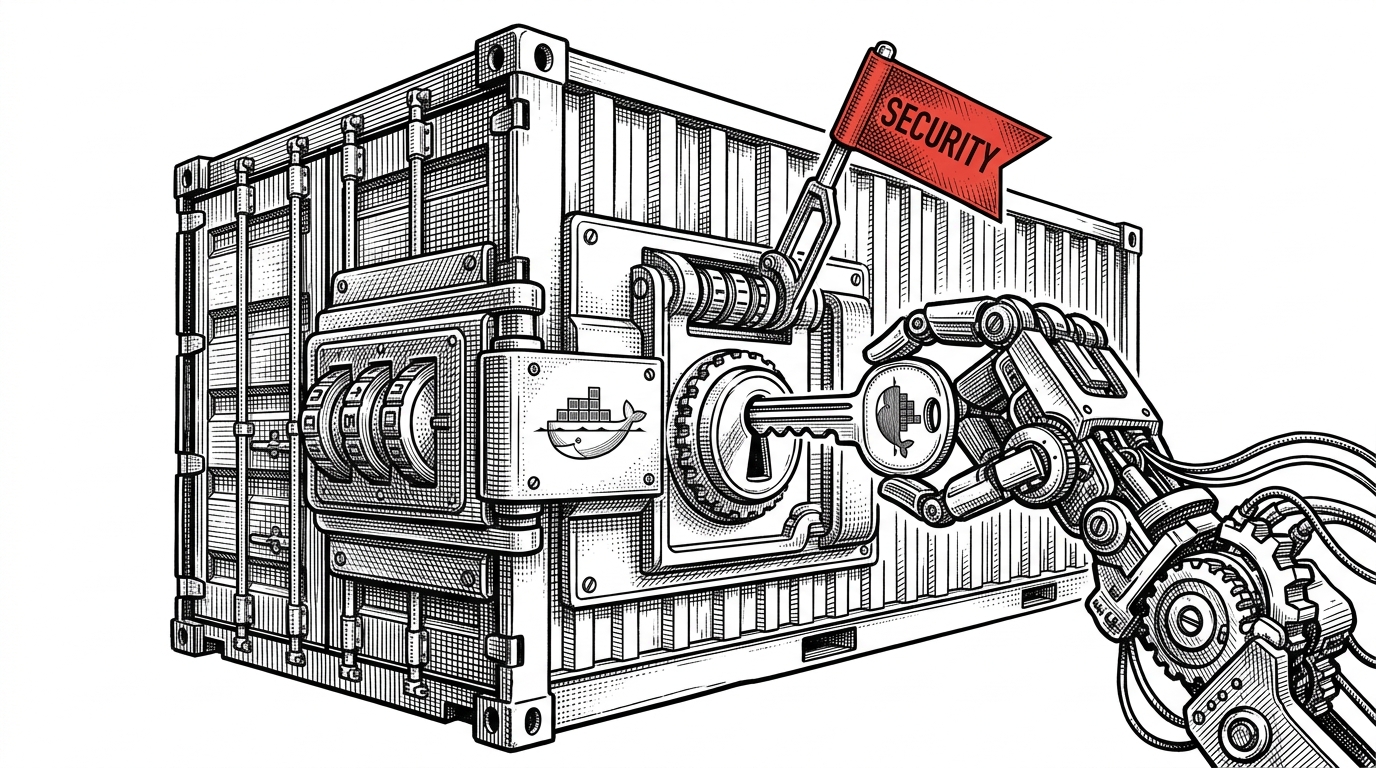
Static Application Security Testing (SAST) and container scanning tools like Trivy are integrated directly into the pipeline workflow. These tools act as quality gates. If a scan detects a critical vulnerability, the pipeline intentionally fails. The code is blocked, and the developer receives immediate feedback.
The Speed vs. Rigor Trade-off
Building a pipeline is an exercise in pragmatism. Security scanning is computationally expensive and takes time. Running a comprehensive Dynamic Application Security Testing (DAST) suite on every single commit would grind developer productivity to a halt.
A well-designed DevSecOps repository demonstrates an understanding of this tension. It establishes baseline scans for immediate developer feedback while scheduling heavier, time-consuming audits for nightly builds or release candidates. This balance is the true mark of a mature platform engineer.
The New Baseline for Platform Engineers
We are witnessing a fundamental shift in how technical competence is evaluated. Trust is no longer granted by an examining board. It is earned through public, verifiable automation. A working pipeline is the new baseline.
| Evaluation Method | Paper Certification | Executable Pipeline |
|---|---|---|
| Format | Static, multiple-choice | Dynamic, automated code |
| Tooling Context | Theoretical knowledge | Opinionated, integrated tools |
| Failure State | Retake the exam | Automated build failure |
| Maintenance | Decays over time | Requires active upkeep |