Inside `grok-bot-0.18-reconstructed`: The Shell That Let Grok Bot Speak to Other Models
A contract-first rebuild of a proprietary Electron app, with readable TypeScript, a preserved frontend shape, and a backend that can route through Claude Code, Codex, or OpenRouter.
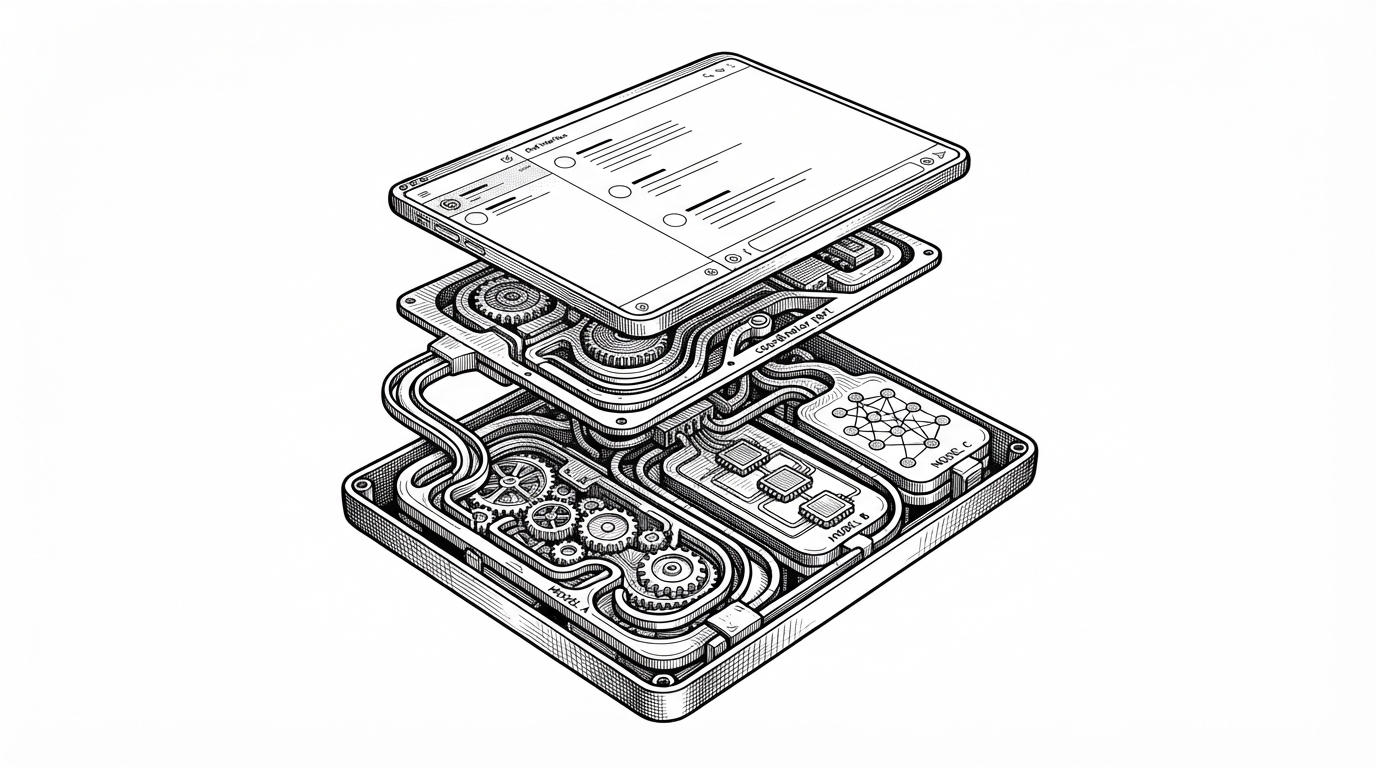
- The repo’s real innovation is the contract layer, not the chat UI.
- It reconstructs a proprietary Electron app from its bridge and coordinator boundaries, then swaps the backend under the same shell.
- The codebase reads like source-oriented archaeology, with provenance tags and deterministic build inputs guiding the rebuild.
- Its value is practical as well as forensic, because the same interface can route into different models and sandboxes.
Most forks copy the face of an app and call it progress. grok-bot-0.18-reconstructed does the harder thing: it rebuilds the seams that make the app behave, then uses those seams to redirect the system. That makes it less a clone than a working theory of how a proprietary AI desktop app is put together.
I know exactly what your Grok Bot is missing. 5 repos and it works 100x better. 1. awesome-grok-bot - every other repo on this list, plus 150+ more, tracked in one place https://t.co/BNJ5NuU2qx 2. grok-bot-0.18-reconstructed - swap the default backend for Claude Code or Codex
The app that changed underneath the same face
The surprise here is not that someone rebuilt an Electron app. The surprise is that the repo treats Grok Bot as a set of contracts. The UI, the IPC bridge, the coordinator protocol, and the sandbox boundary are all first-class. Once those are readable, the original shell becomes modifiable without a full rewrite.
That is why the project feels unusually clean for a reverse-engineering effort. It does not collapse everything into a pile of patched files. It separates recovered logic, glue code, manifests, and research artifacts so the reader can see what was inferred, what was preserved, and what was added.
What the reconstruction actually rebuilt
The repository layout makes the strategy obvious. `source/` holds the reconstructed main process and local execution logic. `frontend/src/recovered/` contains readable TypeScript for the parts that were recoverable. `frontend/src/production/` is the glue that lets the reconstructed frontend meet the original packaged assets. `frontend/manifests/` and `research-archives/` preserve the provenance trail.
That split matters because it keeps the forensic work legible. A future reader can tell which parts came from the observed behavior of the shipped app and which parts were added to make the reconstructed shell useful.
frontend/src/recovered/
frontend/src/production/
frontend/manifests/
source/
research-archives/
The bridge is the product
The most important file in a project like this is often not the one with the fanciest UI component. Here it is the membrane between Electron main and React renderer. `DesktopBridge`, `coordinator-client.ts`, and `bootstrap.tsx` define the contract that keeps the app coherent even when the backend is opaque.
The pattern is simple to describe and hard to execute well. The renderer creates a request, the coordinator client tracks it as a pending call, the bridge transfers it across the boundary, and the reply is validated before state updates continue. That sequence is what makes the shell feel original even after the execution target changes.
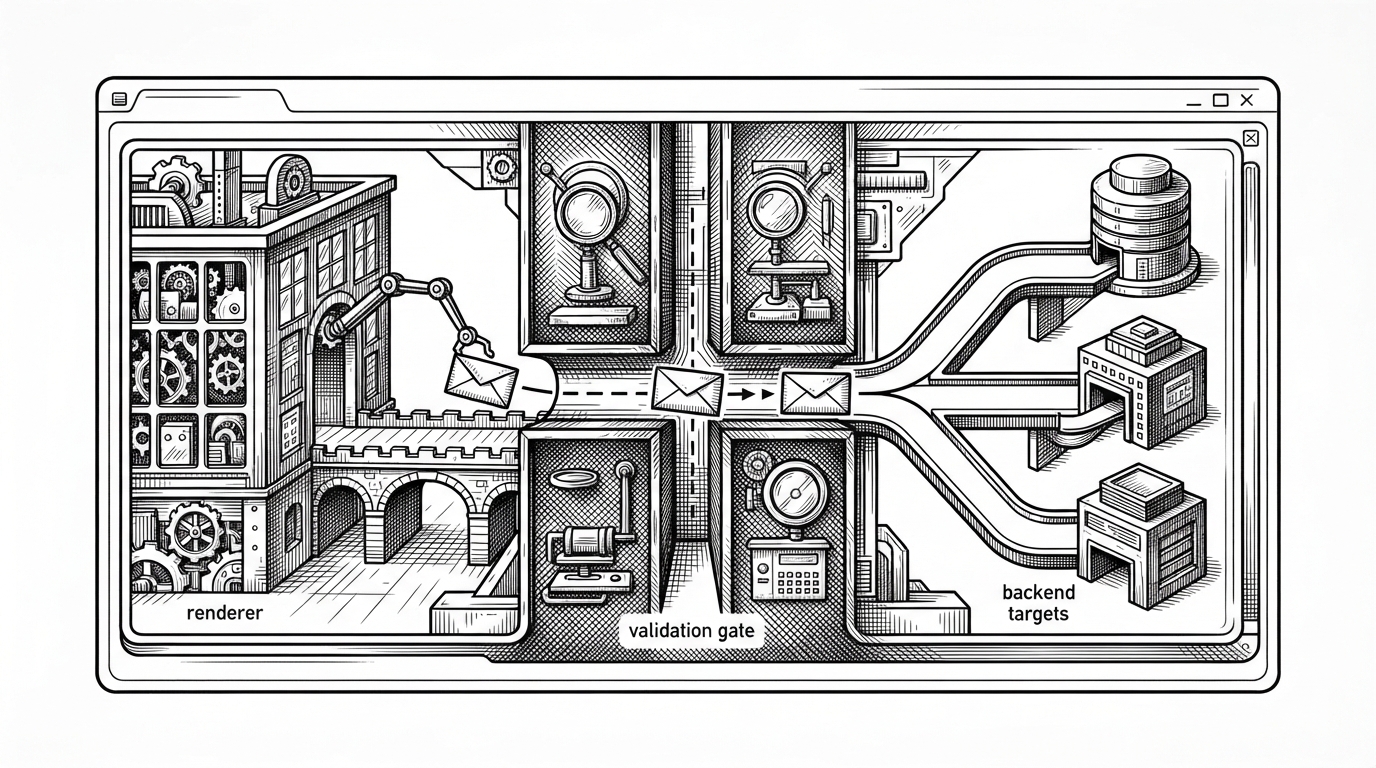
The reconstruction is also careful about trust. Evidence anchors tie recovered code back to specific assets, and the build process treats the original installer as a pinned input. That is a different discipline from casual reverse engineering. It is an attempt to make the reconstruction auditable.
How a pinned binary becomes readable code
The build does not start from wishful thinking. It starts from a known macOS app, verifies hashes, extracts the ASAR, and overlays the reconstructed sources. The repo then maps readable TypeScript back to minified production chunks with evidence comments and manifest files.
That workflow turns a binary into a source trail. It lets the author say, with some confidence, that a particular controller, reply validator, or bootstrap path matches a specific production artifact. The point is not just to make the app run. The point is to make the reconstruction explain itself.
// @evidence src/app/dist/renderer/assets/index-UbX-y3il.js#L537
invariant(window.coordinatorPort, PACKAGED_INVARIANT_MESSAGE)
const root = createRoot(container)
root.render(<ProductionRenderer coordinatorPort={window.coordinatorPort} />)
Why this shell is more useful than a rewrite
| Approach | UI ownership | Backend flexibility | Forensic fidelity | Maintenance burden |
|---|---|---|---|---|
| Full rewrite | New UI | High, but rebuilt from scratch | Low | Very high |
| Shallow fork | Mostly inherited | Low | Low | Moderate |
| Contract-first reconstruction | Preserved shape | High, through the bridge | High | High, but focused |
The comparison is blunt. A rewrite gives freedom but loses fidelity. A skinning fork keeps the look but not the leverage. This repo sits in the narrow space where the app remains recognizable while the execution layer becomes portable.
That is why Claude Code, Codex, OpenRouter, and a local Docker sandbox matter here. They are not just feature flags. They are proof that the reconstructed shell can keep its original ergonomics while pointing at a different engine.
What this says about modern AI desktop apps
The deeper lesson is that a modern AI desktop app is not really one thing. It is a stack of contracts. The renderer owns presentation, the coordinator owns execution, the bridge owns trust, and the sandbox owns containment. Change one layer carefully and the whole product can behave differently without looking different.
That is the pattern this repo exposes. The UI is only the part users can see. The membrane is where the leverage lives.