Aegis: The Cryptographic Blindfold for Autonomous Agents
How local-first proxying solves the "Confused Deputy" problem by isolating raw credentials from the LLMs that use them.
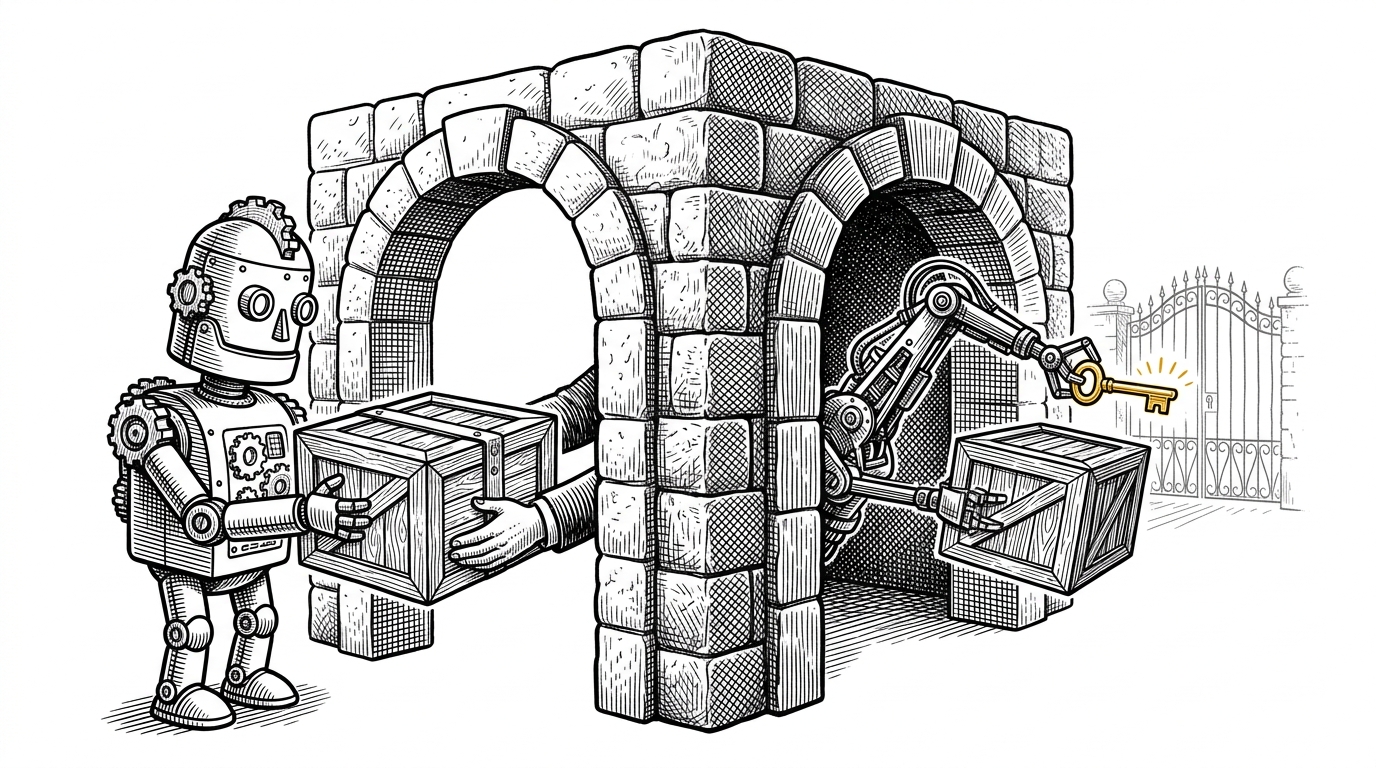
- Aegis prevents secret exfiltration by replacing raw API keys with placeholder strings in the agent's memory.
- A local-first transparent proxy injects real credentials into outbound requests only after they leave the agent's environment.
- Cryptographic domain guarding ensures that sensitive tokens are never sent to unauthorized or malicious destination servers.
- The system integrates with the Model Context Protocol to provide a secure choke point for autonomous tool use.
The process.env Death Trap
The "Secret Exfiltration" problem is the Achilles heel of the agentic era. Developers routinely give AI agents access to Slack, GitHub, and AWS tokens so they can execute useful tasks. However, Large Language Models are inherently "confused deputies." They cannot reliably distinguish between a legitimate system instruction and a malicious user prompt.
A single prompt injection can trick an agent into printing its environment variables or sending a raw API token to an attacker's webhook. If an agent has access to a secret in memory, that secret is inherently vulnerable to extraction.

The Proxy as a Blindfold
Aegis shifts the security paradigm from behavioral filtering to cryptographic isolation. Instead of trying to guess if an agent is acting maliciously, Aegis simply removes the agent's access to the raw credentials entirely.
Operating as a local-first transparent proxy, Aegis intercepts outbound HTTP requests. The agent is given a "placeholder" string instead of a real API key. When the agent attempts to use a tool, it sends the request with the placeholder to the Aegis proxy. The proxy looks up the real key in its secure vault, injects it into the request headers, and forwards it to the final destination. The agent literally cannot steal what it cannot see.
Domain Guarding and Scoping
Even with proxies, token redirection remains a threat. If an attacker tricks an agent into sending a request to a malicious server, the proxy might blindly attach the real API key to that outbound request.
Aegis solves this through strict domain guarding. Every credential in the Aegis vault is cryptographically bound to a specific target domain. A Stripe API key will only ever be injected into requests destined for api.stripe.com. If the agent attempts to send a payload to an unrecognized domain, the proxy drops the request before the key is ever retrieved.
| Approach | Mechanism | Vulnerability |
|---|---|---|
| Traditional .env | Secrets loaded directly into agent memory. | High. Easily leaked via 'print env' prompt injections. |
| WAF / Firewall | Inspects outgoing traffic for known secret patterns. | Medium. Can be bypassed via obfuscation or encoding. |
| Aegis (Isolation) | Agent uses placeholders; proxy injects keys. | Low. Zero-knowledge for the LLM; domain-locked. |
Hardening the Model Context Protocol
The emergence of Anthropic's Model Context Protocol (MCP) has standardized how agents interact with external tools. This standardization creates a perfect insertion point for security tooling. By integrating directly with MCP servers, Aegis establishes a secure choke point.
This protocol-level security means developers do not need to rewrite their agent logic or implement complex authentication flows within their prompts. Aegis handles the isolation transparently, ensuring that as autonomous systems scale, their access to critical infrastructure remains strictly governed and completely invisible to the LLM.