Dingo: Rewriting the Cardano "Haskell Sandwich" for the Cloud
How Blink Labs is collapsing the complex Cardano infrastructure stack into a single, high-performance Go binary.

- Dingo replaces the multi-tiered Haskell infrastructure stack with a single, high-performance Go binary.
- The node leverages Go’s native concurrency primitives to re-implement the Ouroboros consensus protocol from the ground up.
- Pluggable storage backends allow developers to move blockchain data from local disks to cloud-native services like AWS S3.
- An internal event-driven bus decouples block validation from API indexing to maintain performance under heavy query loads.
The End of the Infrastructure Tax
Running a Cardano node has historically meant managing a complex, multi-tiered stack. Developers call it the "Haskell Sandwich." You start with the official Haskell node. Then you add DB Sync to pipe chain data into a massive PostgreSQL database. Finally, you bolt on Ogmios or a GraphQL server just to make the data readable to a web application.
This architecture is a heavy tax on teams building decentralized applications. It requires significant memory, substantial disk space, and constant operational babysitting. Dingo eliminates this friction entirely.
By embedding Blockfrost and UTxO RPC servers directly into the node, Dingo collapses the stack. It talks directly to the Ouroboros network and serves data to your application from a single Go binary. No sidecars. No brittle database syncing pipelines.
| Feature | Standard Stack (Haskell) | Dingo (Go) |
|---|---|---|
| Architecture | Node + DB Sync + PostgreSQL + APIs | Single Go Binary |
| Resource Footprint | Heavy (32GB+ RAM recommended) | Lightweight |
| API Integration | Requires external tools (Ogmios, Blockfrost) | Embedded Natively |
| Storage Options | Local Disk Only | Pluggable (Local, S3, PostgreSQL) |
Porting the Protocol, Not the Code
Dingo is not a line-by-line translation of the official node. It is a ground-up re-implementation of the Ouroboros consensus protocol using Go's concurrency primitives. The team at Blink Labs recognized that Go's goroutines and channels are perfectly suited for the highly parallel nature of blockchain networking.
The core engine powering this is a library called gouroboros. It handles the intricate "mini-protocols" that Cardano nodes use to communicate. When Dingo connects to the network, it performs the exact same handshake and block-fetching dance as a Haskell node.
Internally, Dingo relies on an event-driven architecture. When a new block is validated, an event fires across an internal bus. The mempool, the ledger state, and the API indexers all listen to this bus and update their state independently. This decoupling prevents the node from locking up during heavy query loads.
Pluggable Truth
Perhaps the most radical departure from the standard node is Dingo's database/ package. The official node stores its immutable chain data strictly on local disk. Dingo introduces a pluggable storage backend.
Users can configure Dingo to store its raw block data in an AWS S3 bucket or a Google Cloud Storage blob. It can simultaneously write its indexed metadata to a remote PostgreSQL instance or a local SQLite file. This effectively turns the blockchain into a cloud-native microservice.
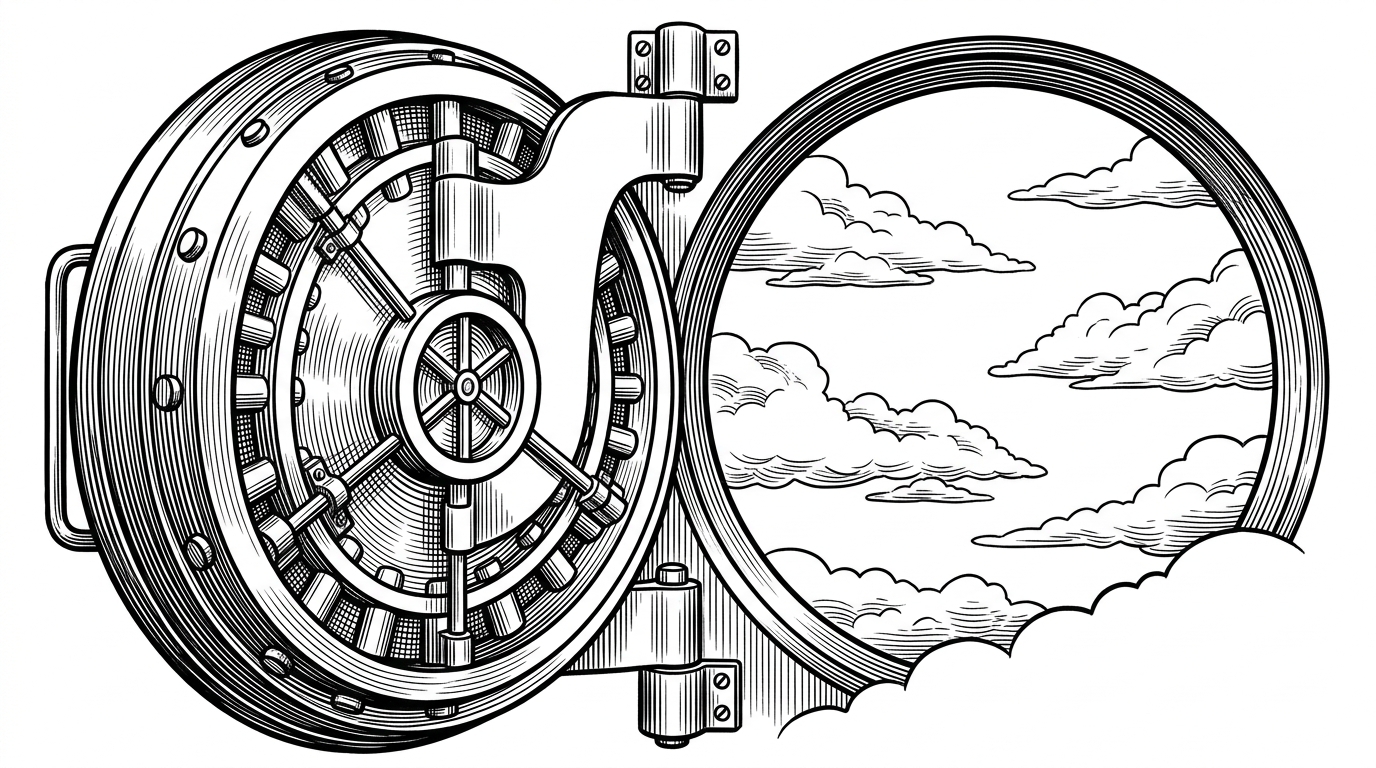
This storage flexibility is managed through two operational modes: Core and API. Core mode keeps only the minimal data required to validate blocks and participate in consensus. API mode aggressively indexes scripts, redeemers, and metadata to serve complex dApp queries. You choose whether to prioritize performance or data depth.
The Road to Mainnet
Implementing a blockchain node from scratch is a massive undertaking. The developers must perfectly replicate decades of academic research and 41 distinct UTXO validation rules. A single consensus bug could cause the node to fork from the main network.
Because of this immense complexity, the Blink Labs team is proceeding with caution. The project is iterating rapidly on testnets, integrating features like Mithril for instant bootstrapping and experimenting with the upcoming Ouroboros Leios scaling protocol.
Dingo is under heavy active development and is not yet ready for production use. It should only be used on testnets (preview, preprod) and devnets. Do not use Dingo on mainnet with real funds.
As the node matures, it represents a critical milestone for the Cardano ecosystem. Client diversity is the ultimate defense against network-wide outages. By providing a production-grade alternative written in a language beloved by the DevOps community, Dingo is paving the way for a more resilient and accessible network.