gouroboros: The Pragmatic Bridge to Cardano's Formal Network
How an open-source library mapped five years of Haskell-based blockchain evolution into cloud-native Go.

- gouroboros translates Cardano's strict Haskell network protocols into idiomatic Go to eliminate the need for heavy API middleware.
- The library implements exact state machine replicas to handle out-of-order messages and protect against memory exhaustion.
- By manually mapping custom CBOR structures across every Cardano era, the project acts as a functional archive of the blockchain's evolution.
The Language Barrier of Formal Blockchains
Cardano is famously built in Haskell. The language is revered for its mathematical rigor and formal verification capabilities. This foundation ensures rock-solid consensus and network security. However, it also creates a steep barrier to entry for standard enterprise and cloud-native developers.
To build indexers or wallets, teams typically resort to querying intermediate REST APIs. Alternatively, they run heavy local Haskell nodes and interact via command-line tools. This "REST API tax" introduces latency, adds centralized points of failure, and strips away the low-level control that infrastructure developers crave.
Speaking Native Ouroboros
The gouroboros library offers a direct wire-level solution. It bypasses wrappers and APIs entirely. Instead, it opens a TCP socket and natively speaks Ouroboros, which is the proprietary peer-to-peer protocol of the Cardano blockchain.
A single connection to a Cardano node is not a simple data pipe. The network uses a multiplexer to slice the connection into distinct "mini-protocols" operating in parallel. These include ChainSync for downloading headers, BlockFetch for retrieving full blocks, and LocalTxSubmission for broadcasting transactions.
Enforcing State in a Stateless World
Haskell enforces strict rules at compile time. Go is far more permissive. To safely interact with the network, gouroboros must artificially enforce strict state machines. This prevents malicious or buggy peers from crashing the Go application by sending out-of-order messages.
The library implements a StateMap for every mini-protocol. If a peer sends a rollback message while the client is still negotiating a handshake, the StateMap catches the violation instantly. Furthermore, gouroboros employs aggressive memory management techniques (like 16MB buffer limits and sync.Pool) to prevent garbage collection spikes during massive ledger state queries.
var StateMap = protocol.StateMap{
	stateIdle: protocol.StateMapEntry{
		Agency: protocol.AgencyClient,
		Transitions: []protocol.StateTransition{
			{
				MsgType: MsgTypeRequestNext,
				NewState: stateCanAwait,
			},
			{
				MsgType: MsgTypeFindIntersect,
				NewState: stateIntersect,
			},
			{
				MsgType: MsgTypeDone,
				NewState: stateDone,
			},
		},
	},
	// Additional states strictly map the formal protocol
}
Protocol Archaeology Across Eras
Blockchains never rewrite history. They simply add new layers on top of the old ones. Cardano has undergone multiple hard forks, transitioning through distinct "Eras" such as Byron, Shelley, Babbage, and Conway. Each era introduced new transaction structures and block formats.
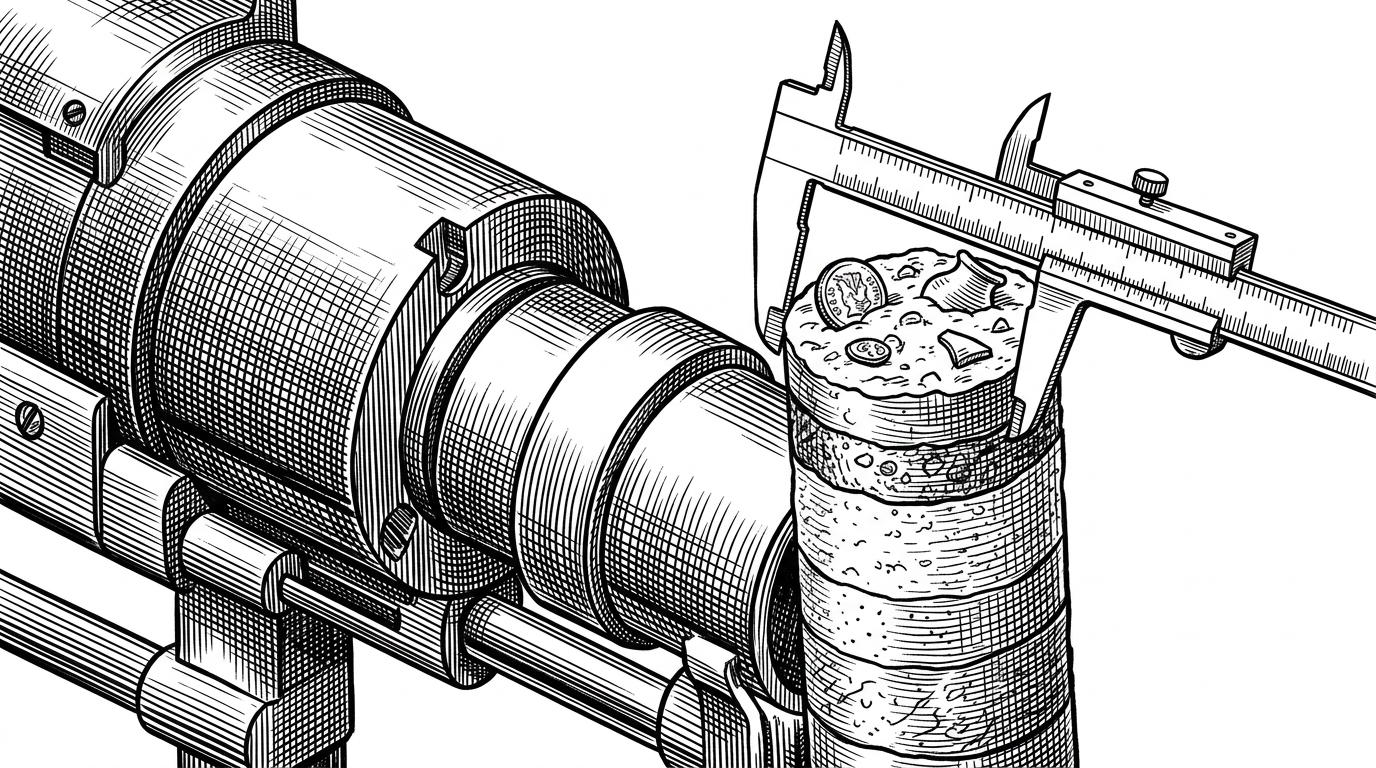
The ledger package inside gouroboros is a monumental effort in protocol archaeology. The maintainers mapped custom Concise Binary Object Representation (CBOR) structures across five years of history. This allows a modern Go application to parse a block from 2018 just as easily as a block minted today.
The Cloud-Native Node Alternative
Running a full Haskell node is necessary for core network consensus. However, it is overkill for a simple microservice that only needs to read balance updates. By using gouroboros, infrastructure teams can deploy highly targeted Go services that consume a fraction of the memory while maintaining native network connectivity.
| Feature | Cardano Node (Haskell) | gouroboros Service (Go) |
|---|---|---|
| Primary Role | Full Network Consensus | Targeted Indexing & Wallets |
| Language Paradigm | Strictly Functional | Pragmatic & Cloud-Native |
| Memory Footprint | Heavy (GBs) | Lightweight (MBs) |
| API Middleware | Often required for web apps | None (Direct TCP socket) |