customized_agentic_system_mvp: The Agent Harness That Puts Governance Before Intelligence
A multi-LLM agent stack where every tool call passes through RBAC, rate limits, injection scanning, and human approval before execution.
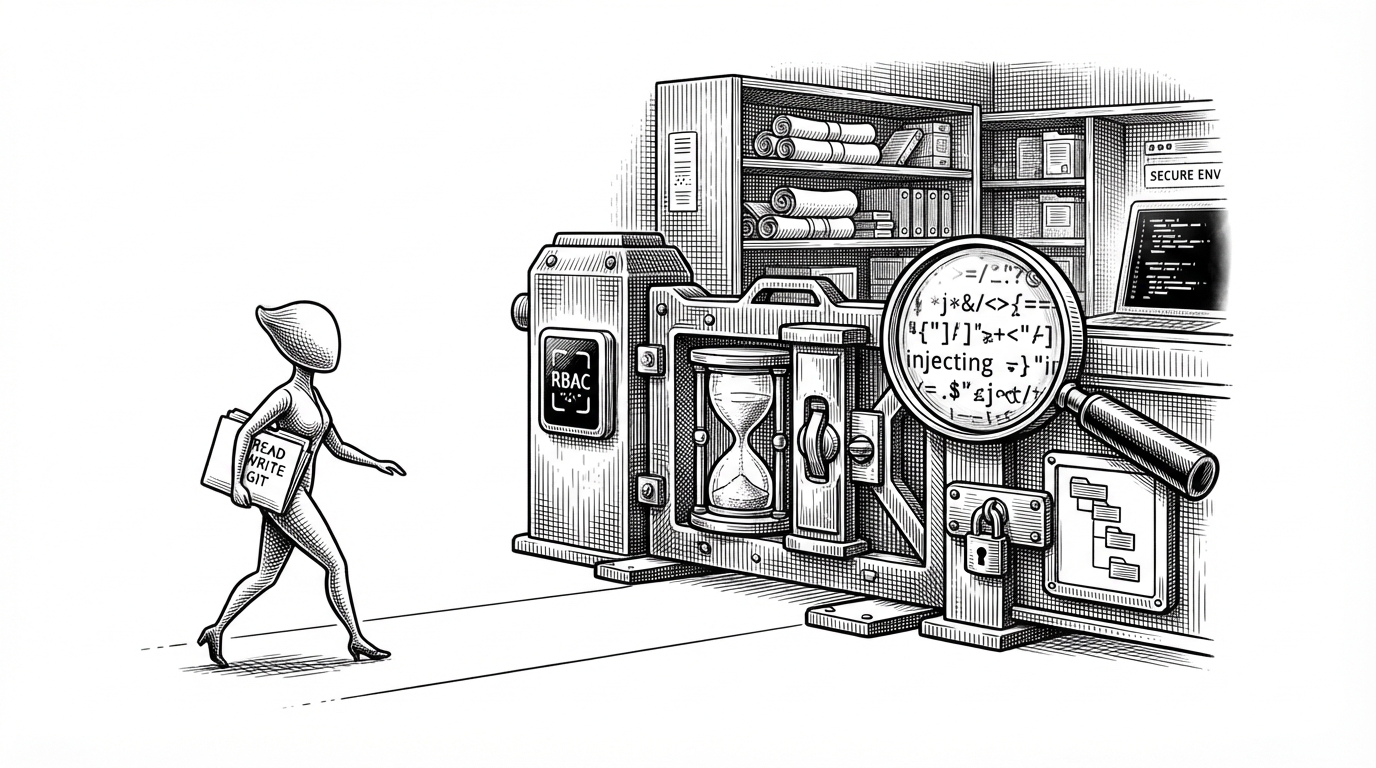
The Gate Is the Product
Most agent demos assume the hard part is making the model clever enough to use tools. This repo makes the opposite bet: the model is the easy part, and the real system is the control plane around it.
That control plane is the Governance Gate. Every tool call is inspected before execution, with the system deciding whether to pass, block, or require approval based on role, rate, path trust, and injection risk.
Autonomy, But Only on Your Terms
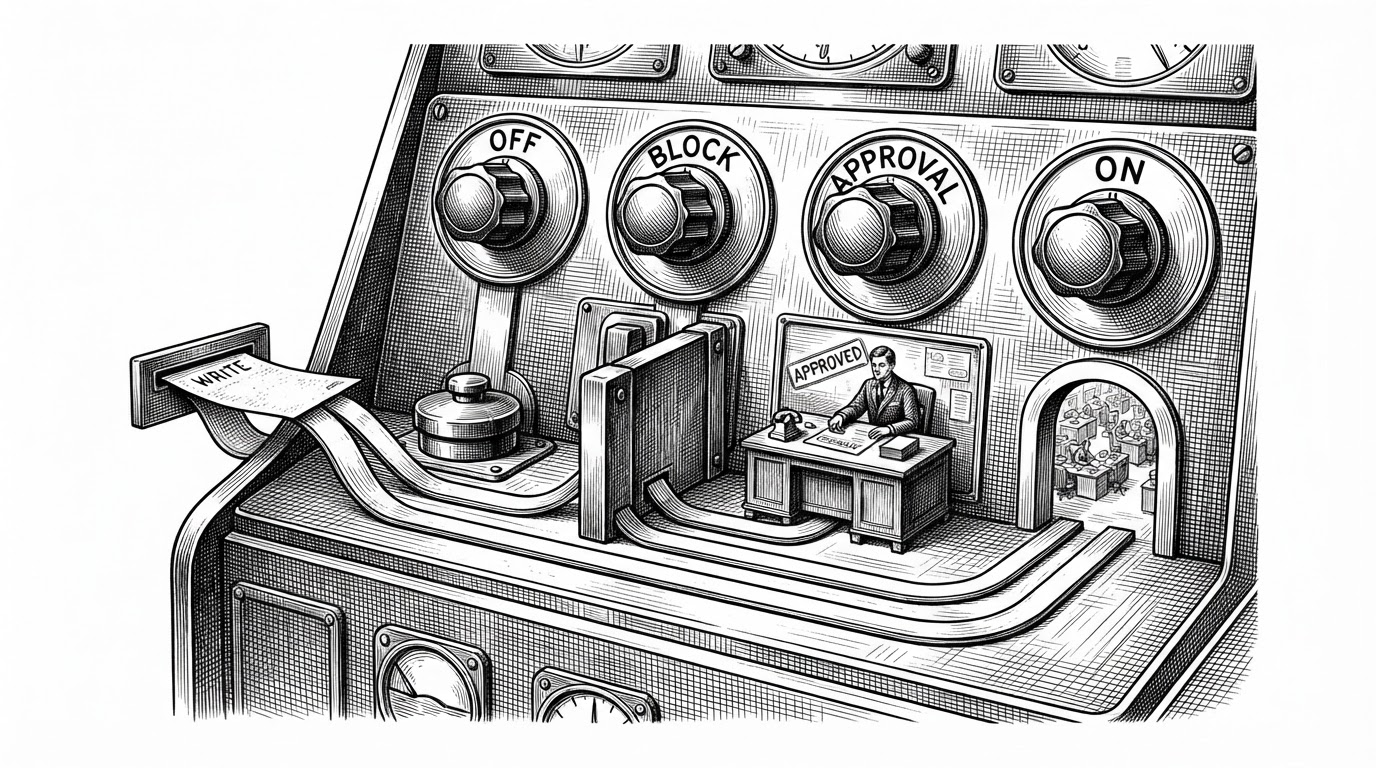
The clearest operator switch in the codebase is tool_write_mode. It turns autonomy into a policy choice instead of a philosophical one.
tool_write_mode = off | block | approval | onThat is a useful frame because it lets one system serve very different risk profiles. Read-heavy workflows can stay fluid, write-heavy workflows can be reviewed, and dangerous actions can be shut down entirely.
| Mode | What it allows | What it protects |
|---|---|---|
| off | No write execution | Everything that mutates state |
| block | Write attempts are denied | Accidental or runaway changes |
| approval | Human review before write | Sensitive paths and risky edits |
| on | Direct write execution | Only the checks already in the gate |
How the Stack Stays Decoupled
The repo is built like infrastructure, not a demo. The backend handles chat and streaming, the frontend renders the operator view, and the shared core keeps message roles consistent across the stack.
That separation matters because it lets the system swap models without rewriting the business logic. The governance layer, tool registry, and telemetry can stay stable while the LLM provider changes underneath.
backend/
src/core/
src/llm/
src/governance/
src/tools/
src/stats/
The architecture also makes auditability practical. Tool calls, approvals, and rate-limited events can be logged as system behavior rather than reconstructed from prompt history.
The Swappable Model Layer
The LLM layer is deliberately boring in the best way. A base interface defines the contract, and provider adapters handle the differences between OpenAI, DeepSeek, and Gemini.
| Layer | Job | Why it matters |
|---|---|---|
| BaseLLM | Defines chat and stream contracts | Keeps the backend provider-agnostic |
| Adapter | Translates provider quirks | Lets each model keep its own behavior |
| Factory | Builds the right backend | Moves selection out of business logic |
| DeepSeek support | Carries reasoning content | Preserves model-specific signals without leaking them everywhere |
That abstraction is the point. When model quality, pricing, or availability shifts, the system can keep the workflow intact and swap the provider instead of starting over.
Why This Is Not Just Another Agent Demo
Vendor-integrated tools like Claude Code and Codex optimize for a smooth product experience. This repo optimizes for ownership of the workflow boundary.
That difference sounds subtle until something breaks. If the model changes, the policy, memory, and execution rules still belong to you. If a tool is risky, the gate can stop it. If a path is untrusted, approval can be required once and remembered briefly without surrendering control.
| System | Model support | Governance depth | Who owns the workflow logic |
|---|---|---|---|
| customized_agentic_system_mvp | Multi-model | High, with RBAC, rate limits, and approval flow | Your codebase |
| DeepSeek Harness | Multi-model | Framework-level extensibility | Harness layer |
| Claude Code / Codex | Vendor-tied | Productized but closed control plane | The vendor |
That is why the repo matters even as an MVP. It shows the shape of an enterprise agent system where autonomy is earned, measured, and reversible, not assumed.
The Enterprise Shape of a Tiny Repo
The codebase already behaves like something meant to survive a longer life than any single model release. There is telemetry, a roadmap, tests, and a clear separation between policy and execution.
- Governance makes the agent safe enough to use in real workflows.
- Adapter patterns make model churn an implementation detail.
- Audit logs and telemetry make agent behavior inspectable.
- Human approval keeps autonomy inside organizational bounds.