NorthCinder: The Shopping Agent That Refuses to Trust the Marketplace
A local MCP server for agentic commerce, built around deterministic ranking, human approval, and audit trails that keep the buyer in control.

- NorthCinder is not a shopping bot with a nicer UI. It is a buyer-side control system that assumes the marketplace will try to steer the result.
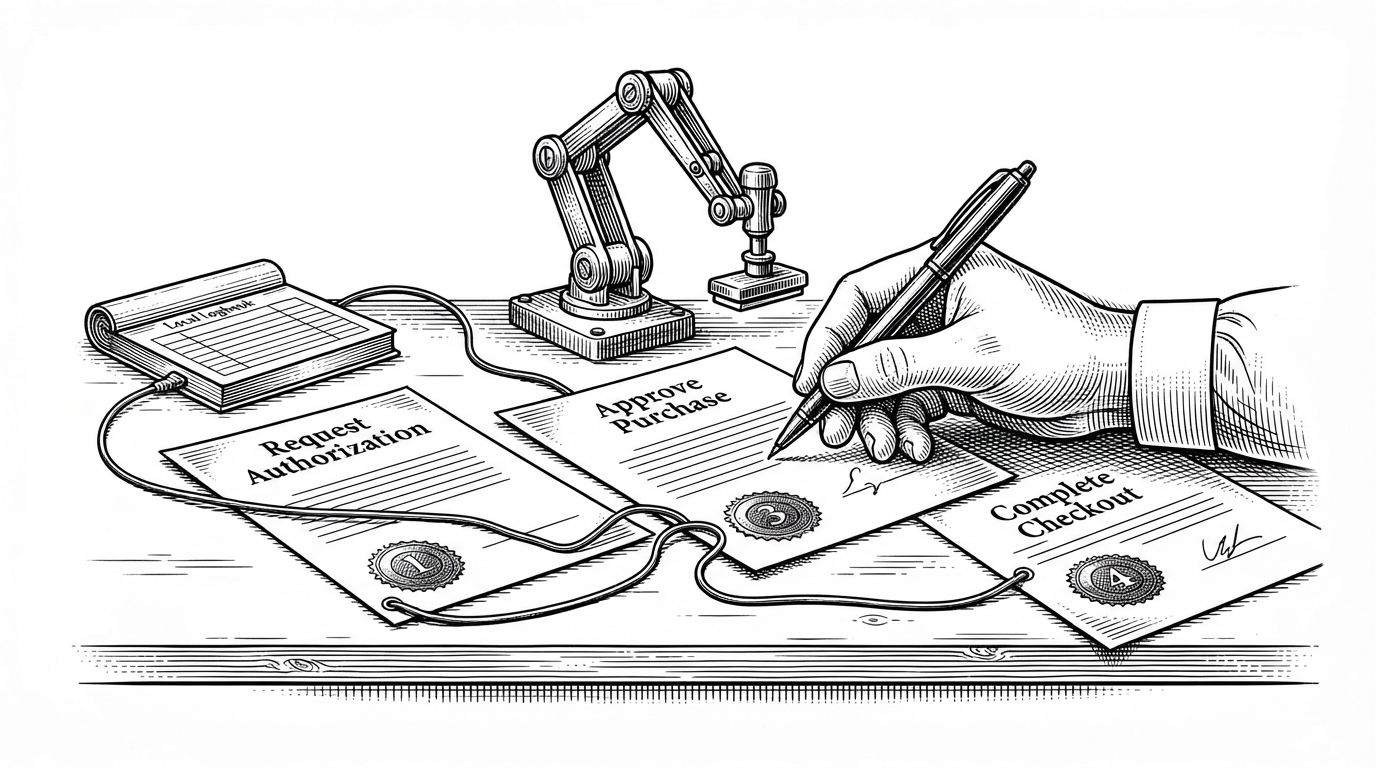
- Its mandate gate splits research, authorization, and checkout into separate states, so an agent can investigate without silently gaining spending power.
- The local client recomputes ranking and keeps logs on the buyer’s machine, which turns neutrality from a promise into something inspectable.
- Its narrow scope is the point. NorthCinder gives up general browser automation so it can make commerce legible, auditable, and harder to manipulate.
The marketplace is the adversary
NorthCinder starts from a simple but uncomfortable premise: commerce is not neutral. Sellers have incentives, marketplaces have ranking games, and the default shopping stack is built to optimize conversion, not buyer intent. In that world, a shopping agent is not just a convenience layer. It is a control surface.
That is why NorthCinder feels different from a generic browser agent. It does not try to be everywhere at once. It is narrower, stricter, and more suspicious by design, because the interesting problem is not can the agent click buy? It is who gets to decide what happens before the click.
Seller payment and affiliate data never improve a result's position. NorthCinder is software you run. It works on your computer alongside the AI app you already use. The repository owner does not operate a NorthCinder service.
NorthCinder’s real product is the mandate gate
The central invention in the codebase is a three-step commerce flow: request authorization, approve purchase, complete checkout. That sounds procedural, but it is the whole thesis. The agent can research, compare, and propose, yet it cannot collapse those steps into a silent transaction.
| Stage | What the agent can do | What the buyer controls | What cannot happen |
|---|---|---|---|
| Request authorization | Gather offers and form a proposal | Budget, preferences, and price ceiling | No spending permission |
| Approve purchase | Wait for approval | Issue a buyer-bound mandate | No checkout without human sign-off |
| Complete checkout | Bind the exact offer and quantity | Accept or reject the final transaction | No open-ended purchase loop |
Deterministic ranking is the trust layer
NorthCinder’s ranking logic is not just another recommendation model. The client recomputes the ranking locally and checks it against the upstream view. That matters because once you assume sellers, affiliates, and sponsored placement can distort what the agent sees, the ranking function becomes part of the security model.
This is the subtle move in the repo. NorthCinder does not merely ask the market for options. It asks for evidence, then re-runs the decision on the buyer’s side. If the seller-facing signal diverges from the buyer-side computation, the system can flag the mismatch instead of silently accepting it.
type ResearchLimits = {
  maxQueries: number
  maxSourceReads: number
  reservedCounterevidenceQueries: number
}

const limits: ResearchLimits = {
  maxQueries: 12,
  maxSourceReads: 8,
  reservedCounterevidenceQueries: 3,
}

if (queriesUsed >= limits.maxQueries) {
  throw new Error('research budget exhausted')
}
Research is treated like a finite resource
That code shape matters because it makes investigation deliberate. NorthCinder’s research skills are budgeted, with room reserved for counterevidence, so the agent cannot vanish into an endless search loop. The result is less like a chatbot wandering the web and more like a disciplined buyer assembling a case.
This is also where the project’s trust story gets sharper. If an agent only ever collects confirming evidence, it is easy to hallucinate confidence. By budgeting for negative signals, NorthCinder treats skepticism as a first-class input, not an afterthought.
Why local-first matters here
The launcher and local aggregation model are not just privacy flourishes. They keep budgets, preferences, addresses, and approval state on the buyer’s machine, where they can be inspected, logged, and revoked. That is what makes the trust claims testable.
If the buyer-side state lived in a hosted service, neutrality would become a promise from the same party you are supposed to distrust. NorthCinder flips that relationship. The local machine is not just where the app runs. It is where the evidence lives.
Compared with browser agents, NorthCinder is narrower on purpose
General browser automation can do almost anything, which is exactly its weakness in shopping. It can drift, overreach, and spend in ways that are hard to audit after the fact. NorthCinder gives up that breadth so it can make a smaller, cleaner guarantee.
| System | Strength | Weakness | Buyer trust model |
|---|---|---|---|
| NorthCinder | Buyer-owned ranking, mandate gate, local audit trail | Narrower scope | Inspect the logic on your machine |
| browser-use | Broad browser control | Open-ended automation with weaker commerce controls | Trust the session and the agent |
| Vendor-run shopping assistants | Convenient integration with the marketplace | Neutrality is not independent | Trust the seller to police itself |
That trade-off is the whole point. NorthCinder is not trying to become the universal shopping assistant. It is trying to be the shopping assistant you can actually reason about when incentives get ugly.
What NorthCinder suggests about the next wave of commerce
If agents will increasingly shop on our behalf, the real question is no longer whether they can browse. It is who controls ranking, approval, and evidence. NorthCinder argues that buyer-side agency needs a trust architecture, not just a better interface.
That idea should travel. The pattern applies anywhere the platform has incentives to steer the outcome and the user needs a verifiable boundary around action. NorthCinder is a shopping repo, but its deeper claim is broader: autonomy only matters if it comes with controls you can inspect.