curiefense-1: Curiefense: The WAF That Thinks in Flows, Not Just Packets
A cloud-native security layer for Envoy that blends Rust, Lua, GitOps, and sequence-aware inspection into one proxy-side defense system.
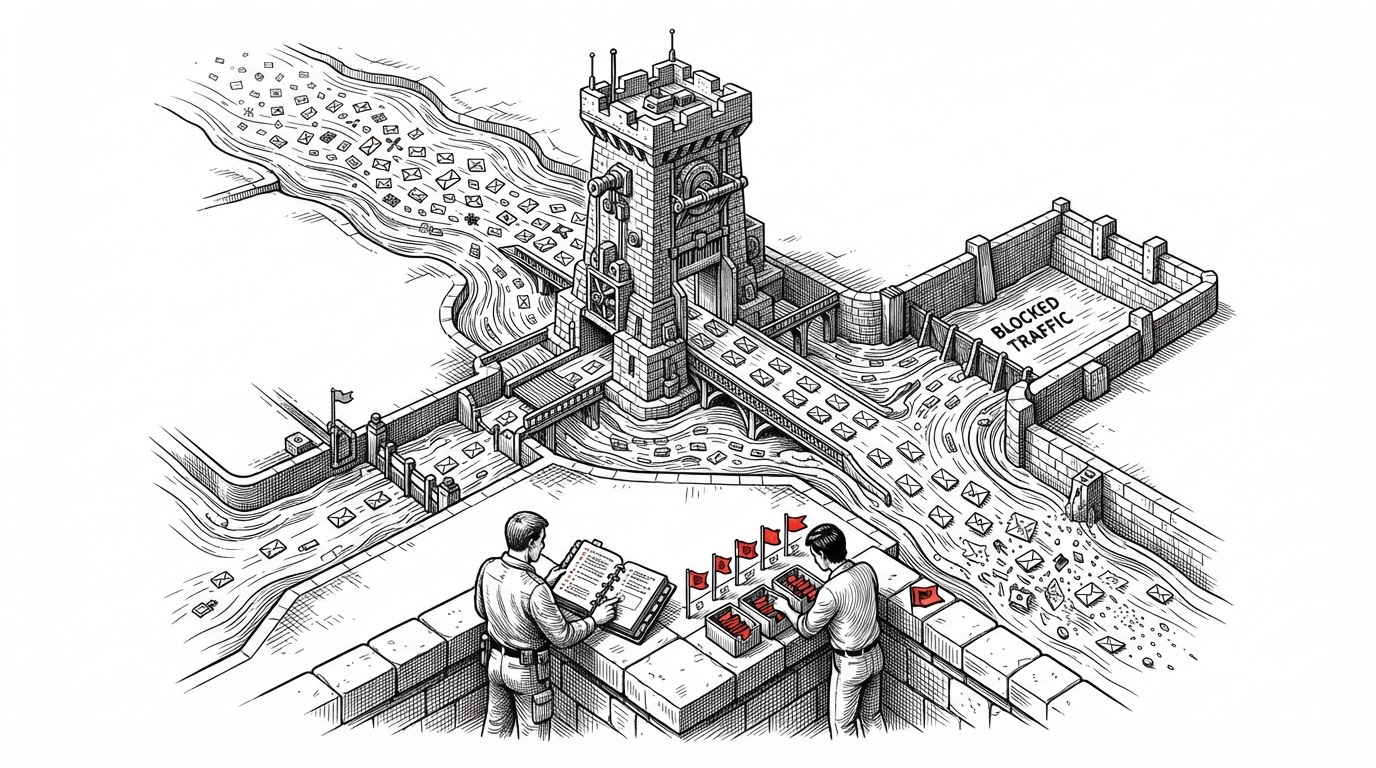
- Curiefense’s distinctive move was to make proxy security sequence-aware, so policy could react to how requests unfold instead of treating each request as an isolated event.
- Its architecture split the job across Rust, Lua, Python, Go, Redis, and Git, which let the data plane stay fast while the control plane stayed reviewable.
- The project stood out because policy lived in version control, which made WAF changes auditable, reversible, and closer to application development practice.
- Curiefense was influential because it pointed toward security-as-code in the service mesh, even if the project itself did not build lasting momentum.
Most WAFs ask a narrow question: does this request look bad? Curiefense asked a broader one: does this traffic make sense as a sequence? That shift is the whole project in one sentence, and it is why the repo still feels unusually modern even though it is now archived.
The project was built to live at the proxy layer, especially in Envoy and NGINX deployments. That placement matters. It lets Curiefense inspect traffic before the application sees it, which is the only practical place to combine WAF checks, bot mitigation, rate limiting, and flow-aware decisions without bolting on a pile of separate systems.
The proxy can see more than one request
Curiefense’s flow control model treats earlier requests as evidence. A login attempt, a sequence of page visits, or a path that skips expected steps can all change the judgment on a later request. That makes the system useful for abuse patterns like credential stuffing, scraping, and suspicious navigation, where the problem is not a single payload but the pattern around it.
Why Curiefense lives in the proxy layer
The placement is the product. Curiefense runs near the edge of the system, where it can make a decision before a request reaches the app. That means it can stop bad traffic early, but it also means the engine has to be lightweight, composable, and safe enough to sit in a hot path.
That is why the repo is polyglot. Rust does the inspection core. Lua bridges the proxy integration. Python handles the control plane. Go ships logs. TypeScript and Vue power the UI. The stack looks busy because the problem is busy.
Rust does the hard part
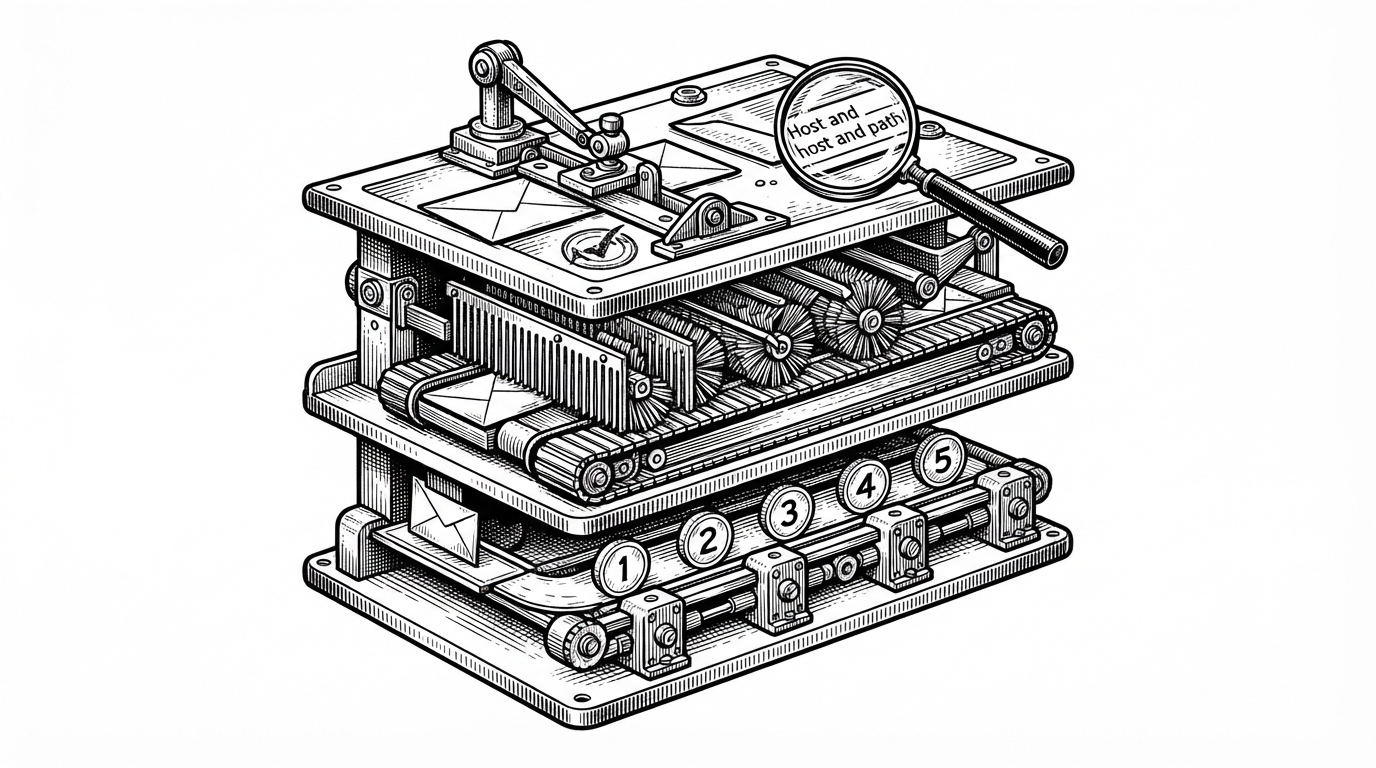
The Rust engine is the heart of the data plane. It runs Curiefense’s staged inspection pipeline, moving a request through policy matching, tagging, content checks, and then stateful work like rate limits and flow control. The important part is not just speed. It is the shape of the pipeline: cheap decisions first, expensive decisions later.
That staging matters because proxy security lives under latency pressure. Curiefense uses asynchronous state handling so Redis-backed checks do not stall the whole path, and it keeps the decision logic organized as a state machine rather than a single monolithic filter. In practice, that makes the engine easier to reason about and easier to extend.
Curiefense is an open source project backed by Reblaze. As such, ongoing maintenance is a combined effort of the user community and Reblaze's teams.
Content filtering is only one layer
Curiefense is not only a signature scanner. It combines libinjection for SQLi and XSS detection, Hyperscan for high-throughput matching, and request section omission to avoid wasting effort on trusted fields. That layered approach is the point. It lets the system cut false positives without pretending every request part deserves equal scrutiny.
The effect is practical. You can inspect aggressively where risk is high, then selectively skip content that policy has already declared safe. That is a better trade than a blunt always-on parser, especially in environments where every extra microsecond competes with throughput.
Security policy as Git history
Curiefense’s control plane is where the repo becomes opinionated. Policy is managed through Git-backed workflows, which pushes security changes into familiar software practice: review the diff, approve the change, roll it back if needed. That is a big deal for teams that do not want firewall rules trapped inside an opaque admin console.
| Dimension | Curiefense | Traditional WAF | Modern cloud-native alternative |
|---|---|---|---|
| Core engine | Rust data plane with Lua integration | Mostly rule engine or module | Library, Wasm, or ML-backed engine |
| Where policy lives | Git-backed control plane and UI | Vendor console or local config | CRDs, declarative config, or SaaS policy |
| Understands request sequences | Yes, via flow control | Usually no | Sometimes, but often not the core model |
| Primary deployment target | Envoy and NGINX | Apache and NGINX | Ingress, service mesh, or edge proxy |
| Operational model | Security as code with reviewable diffs | Admin-managed rules | Mixed platform and policy workflow |
| Project status | Archived | Active or legacy maintained | Mostly active |
Compared with a classic WAF, Curiefense is less about a giant ruleset and more about where control lives. Compared with newer cloud-native options, it is strikingly explicit about GitOps. The architecture says security policy should behave like software, not like a hidden appliance setting.
Why the project stood out, and why it stalled
Curiefense was ahead of the curve in one important way: it treated proxy security as a system design problem, not a ruleset problem. That made it unusually clean for service-mesh environments and unusually appealing to teams that wanted infrastructure and policy to share the same workflow.
But ambition does not guarantee momentum. The project was archived after maintenance and community activity faded, which is a reminder that strong architecture is not the same thing as ecosystem adoption. Curiefense helped define a direction. It did not become the default.
Based on the responses in the issue with the project, this should likely move to archive due to inactivity.
| Project | Strength | Trade-off |
|---|---|---|
| Curiefense | Proxy-native, GitOps-friendly, sequence-aware | Archived, smaller ecosystem |
| Coraza | Active, modern WAF engine with SecLang compatibility | Less focused on flow-sequence judgment |
| open-appsec | Broad cloud-native security posture | More platform-centric than proxy-native |
| ModSecurity | Battle-tested legacy baseline | Heavier operational fit for modern meshes |
The best way to read Curiefense is as a prototype of a stronger idea. It showed that a proxy can do more than filter packets. It can understand context, remember a sequence, and turn policy into versioned code. That idea has outlived the project’s active phase.