The Disposable Database: Inside duplicati/documentation
How a GUI-first backup engine uses field-level SQLite encryption and stateless caching to survive complete hardware failure.
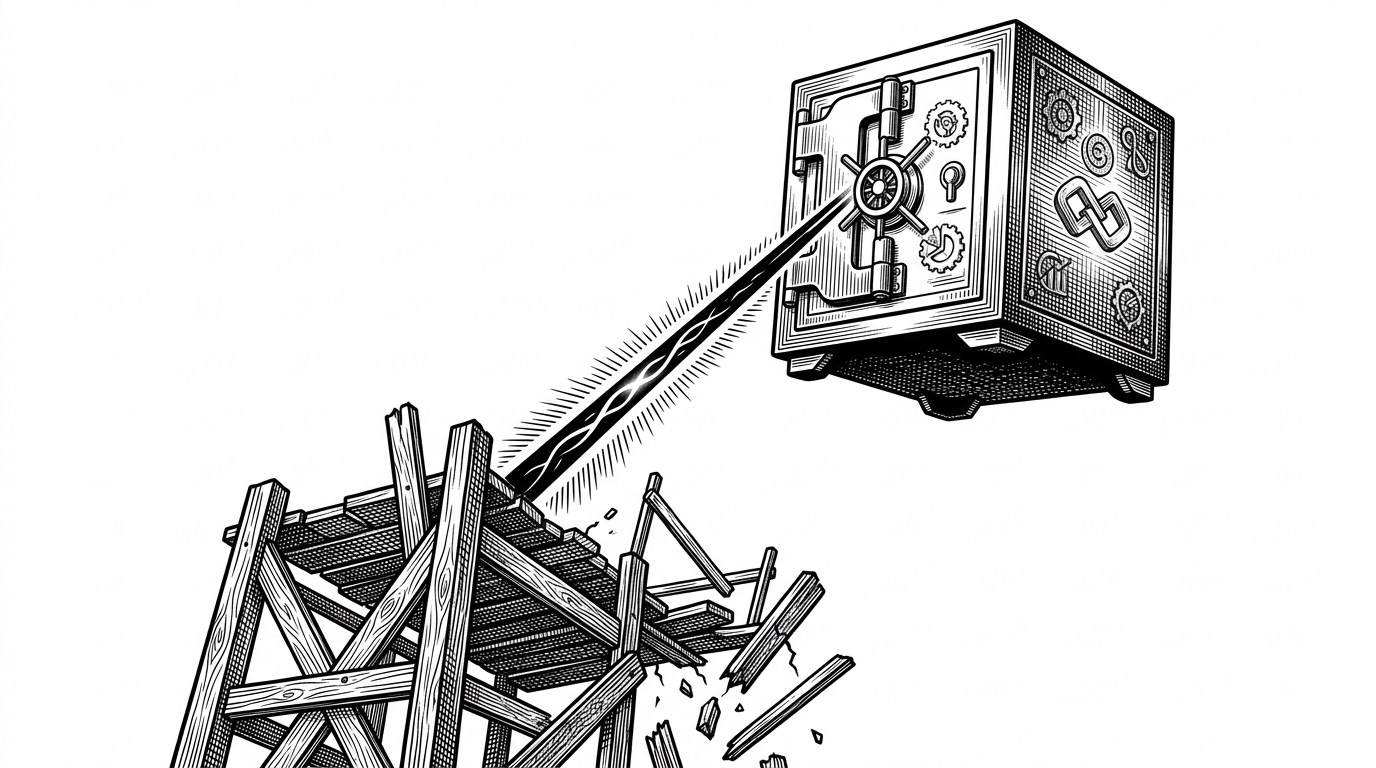
- Duplicati treats its local SQLite database as a high-speed, disposable cache that can be flawlessly reconstructed from remote encrypted shards.
- To preserve debuggability, the engine employs field-level SQLite encryption rather than encrypting the entire database file.
- The project's documentation repository acts as a massive GitBook routing engine to modernize years of fragmented community wikis into a unified hierarchy.
- A strict GUI-first philosophy separates Duplicati from CLI-native peers by abstracting complex retention mathematics behind a visual console.
The Paradox of the Local Cache
Building a reliable backup system requires solving a fundamental paradox. The software needs massive amounts of local state to efficiently compare file hashes and calculate incremental changes. Yet the local machine hosting that state is exactly the hardware that will eventually be destroyed or compromised.
The duplicati/documentation repository reveals how the core engine resolves this tension through a dual-database architecture. The system maintains a Server Database for global settings and authentication alongside a Local Database for per-backup caching. The documentation heavily emphasizes a critical design principle: the Local Database is entirely disposable.
Security in Plain Sight
Encrypting an entire SQLite database file is a common approach to securing local credentials. It is also an operational nightmare. Full-file encryption breaks standard database inspection tools and complicates debugging for maintainers.
Duplicati solves this via field-level encryption. The technical manuals detail how the engine encrypts only specific sensitive strings, such as passwords and API tokens, before writing them to the database. The surrounding schema, timestamps, and file paths remain perfectly readable in plaintext.

Compiling the Source of Truth
The documentation repository itself is a masterclass in managing legacy knowledge. For years, Duplicati relied on a fragmented community wiki. The transition to a modern GitBook architecture required more than just converting markdown files.
The repo utilizes a massive .gitbook.yaml redirect engine. This configuration preserves years of accumulated SEO value by mapping legacy flat URL structures to a strict, categorized new hierarchy. It is a docs-as-code pipeline designed to respect history while enforcing order.
The GUI-First Divide
The open-source backup landscape is dominated by CLI-native tools that prioritize terminal speed and content-defined chunking. Duplicati targets a completely different demographic. It is built around a native web interface and integrated support for over 25 cloud storage providers without requiring external command-line utilities.
Duplicati is better if you need a web UI for configuring backups or prefer a point-and-click interface over writing scripts.
| Feature | Duplicati | Restic / Borg |
|---|---|---|
| Primary Interface | Web UI (Integrated) | CLI Native |
| Deduplication | Block-level Incremental | Content-Defined Chunking |
| Cloud Support | Native (25+ Providers) | Requires rclone or SSH |
| Target Audience | Prosumer / Home Server | Sysadmin / Developer |