claude-skills: The Project Manager Hidden Inside Claude Code
It scans the repo, weighs blockers, and splits work into what Claude can finish versus what only a human can unlock.
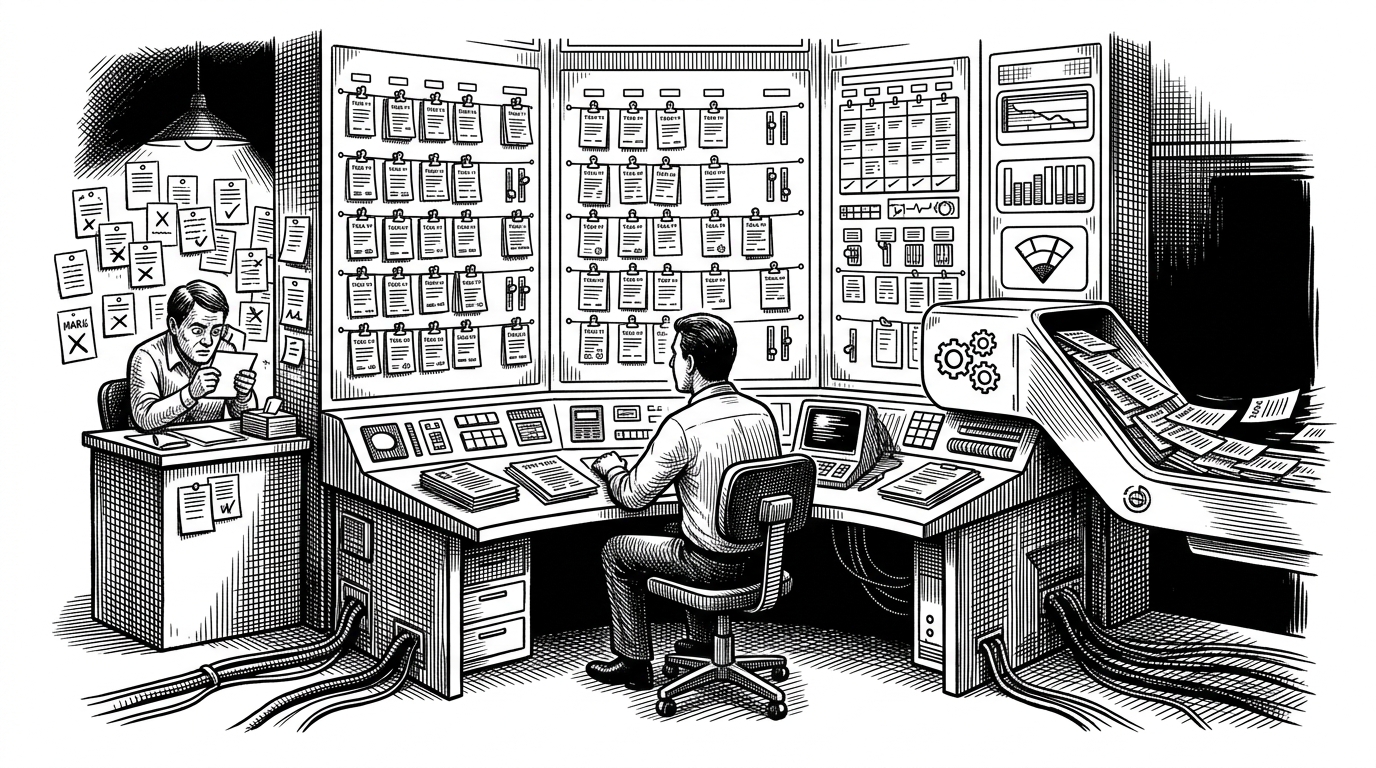
- `track` is a control plane for Claude Code, not a tracker, because it decides what work is worth touching and what should stay with the human.
- The `← auto` and `← user` split turns agent limitations into an explicit operating contract.
- Its scan logic switches between full, incremental, skip, and kickstart modes so Claude spends less context on repetition and more on useful work.
- The dashboard matters because it persists operational memory inside the repo, so the next run begins with context instead of guesswork.
The repo is not the product. The decision engine is.
This is not a tracker in the usual sense. track turns Claude Code into a coordinator that inspects the repo, decides which tasks are worth touching, and leaves behind a dashboard that survives the session. The surprise is not the markdown file. It is the policy engine behind it.
Under the hood, the repo is tiny. SKILL.md carries the behavior, install.sh places it where Claude can load it, and the dashboard file holds the live state. That is enough to make the skill feel less like a utility and more like an operating layer.
The contract: what Claude can do, and what it cannot
Most agent tools blur ownership. track does the opposite. It makes the boundary explicit with ← auto and ← user.
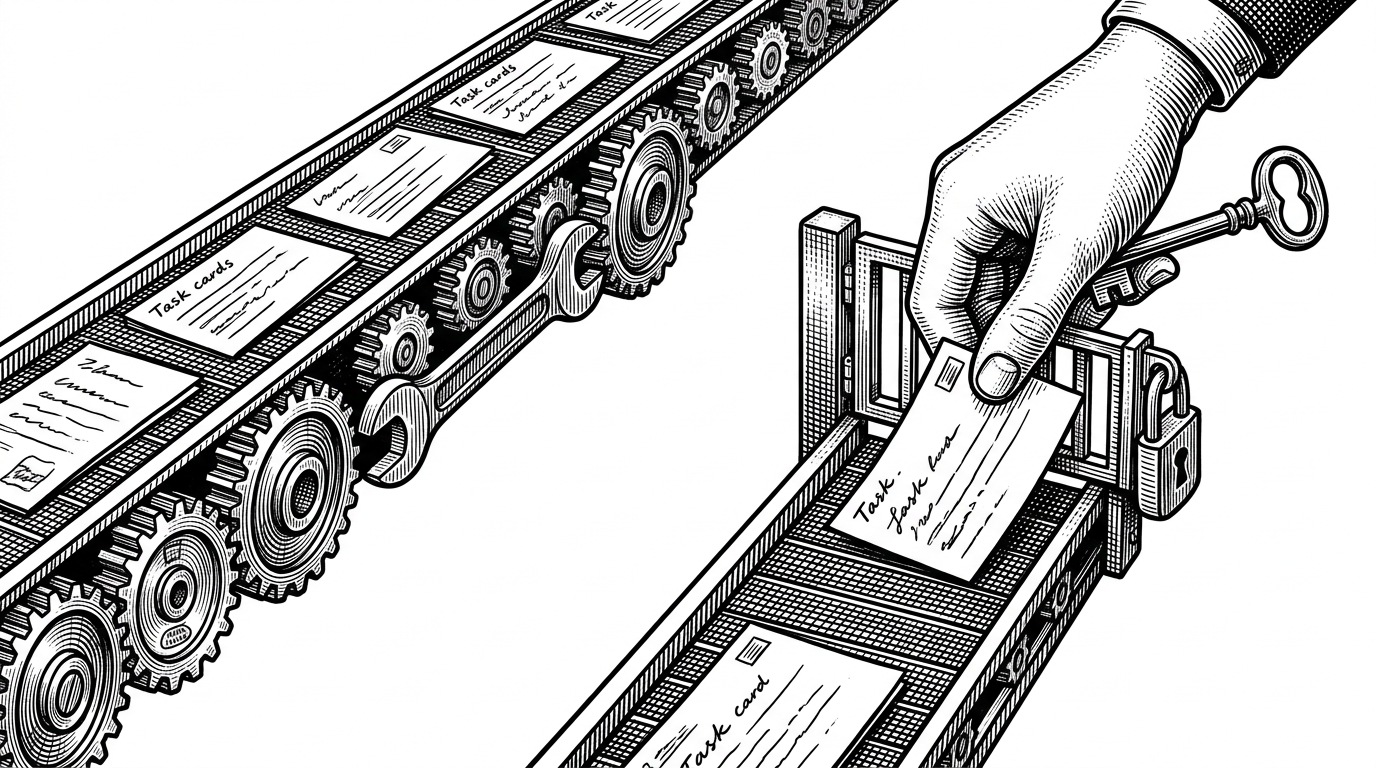
That distinction is the whole contract. Claude should spend its context on file edits, scans, and docs. It should hand back anything that needs credentials, external access, approvals, or a human judgment call.
How the scan decides: full, incremental, skip, or kickstart
The scan is a state machine disguised as a skill. It checks whether the repo is empty, whether the last sync is stale, and whether the commit hash has changed. From there it chooses FULL, INCREMENTAL, SKIP, or kickstart.
That matters because context is not free. A full repo pass is expensive. An incremental pass is cheaper. A skip is a gift when nothing changed.
It also keeps the dashboard honest. Launch readiness is not a vibe. Blockers count more than easy wins, so the file does not pretend that cosmetic progress equals shipping.
Why the dashboard matters more than the command
The dashboard is the real interface. The command starts the work, but the file is what makes the work legible later. Progress bars, build health, security posture, and change logs turn the repo into a persistent operations board.
That persistence changes the unit of value. Claude does not just answer a prompt. It updates a shared artifact that another run, or another person, can read without reconstructing the whole story.
The repo becomes a memory surface. Every run can compare itself against the last sync timestamp, the last commit hash, and the current state of the launch checklist. That is how a skill stops being a helper and starts behaving like a coordinator.
What it replaces
Compared with raw Claude Code, track moves state out of the operator's head and into the repo. Compared with manual status docs, it refreshes itself from actual repository signals. Compared with broad extension bundles like claude-forge, it is narrower and more opinionated: one workflow, one contract, one dashboard.
| Approach | Where state lives | What breaks | What track adds |
|---|---|---|---|
| Raw Claude Code | In the operator's head | Context resets between sessions | A repo-level dashboard and decision logic |
| Manual status docs | Markdown files and memory | They drift as soon as someone forgets an update | Automatic regeneration from repo signals |
| Broad extension bundles | Distributed across agents, hooks, and commands | Power without a single readiness surface | A focused skill that centralizes launch state |
| track | Inside <code>SKILL.md</code> plus the dashboard | Human approval still needed for locked-down work | Explicit ownership, weighted progress, and scan modes |
What to steal from it
The real lesson is simple. Teach the agent to refuse work it cannot finish. Preserve context in the repo, not in the session. Make the handoff visible, because visible handoffs are easier to trust.
That is the strongest version of AI-assisted development right now. Not magic. Governance. A skill can be small and still reshape the way a team sees progress, blockers, and ownership.