OBLITERATUS: How to Cut Refusal Out of an LLM Without Retraining
A research-grade toolkit that treats safety guardrails as geometry, then uses SVD, projection, and feedback loops to excise them while trying to preserve the rest of the model.

- OBLITERATUS treats refusal as a geometric signal inside the model, then removes it with projection-based editing instead of retraining.
- The repo matters because it closes the loop from probing to extraction to verification to self-repair checks, which turns a technique into a system.
- Its compatibility layer, evaluation harness, and UI make it feel like infrastructure, not a one-off jailbreak script.
- The engineering is the point, but so is the discomfort: the same machinery that explains guardrails also makes them easier to remove.
OBLITERATUS is not interesting because it helps people ask a model for something forbidden. It is interesting because it treats refusal like a thing with shape, direction, and weight. In this repo, “no” is not a policy blob. It is geometry.
That is the move that changes the story. Instead of prompt gymnastics, the project uses activation probes, SVD, projection, and verification to find the refusal signal and cut it out. The result is a toolkit that sits halfway between mechanistic interpretability and model surgery.
Refusal, Reframed as Geometry
The repo’s core thesis is simple: safety refusal is not mystical. It emerges from internal representations that can be isolated, measured, and then removed. That makes the project feel less like a jailbreak and more like a lab procedure.
That loop matters. A static edit can look successful while the model quietly compensates in a later layer or a later pass. OBLITERATUS tries to catch that, which makes the repository feel more like an adaptive system than a script with a few math tricks attached.
The Six-Step Surgery
The public pipeline is bluntly practical. Load the model. Probe it with restricted and unrestricted prompts. Distill refusal directions. Project them out. Verify the model still works. Save the edited checkpoint.
# Simplified shape of the pipeline
model = load_model()
activations = probe_with_prompts(model, restricted=True, unrestricted=True)
refusal_dir = distill_direction(activations, method="svd")
edited_model = project_out(model, refusal_dir)
report = verify_capabilities(edited_model)
save_model(edited_model, report)
The important part is not that each step exists. It is that the repo makes them depend on each other. Probing informs extraction. Extraction informs editing. Editing informs verification. Verification can trigger another pass. That is what turns a technique into tooling.
Break the chains. Free the mind. Keep the brain
Why informed_pipeline.py Is the Real Brain
If `abliterate.py` is the scalpel, `informed_pipeline.py` is the operating room. It adds an analysis-informed feedback loop that tries to infer the model’s alignment shape, choose a better intervention, and then check whether the model is rebuilding the removed behavior.
That is where the repository stops being static. The pipeline can adjust `n_directions`, regularization, and layer selection based on what the analysis modules detect. It also includes robustness evaluation, which is the unglamorous part that tells you whether the model has quietly repaired itself after the first cut.
That self-repair check is the strongest engineering signal in the repo. It says the authors are not satisfied with a one-shot edit. They want a repeatable process that can react when the model resists the intervention.
The Trick: Projection, Not Brutal Ablation
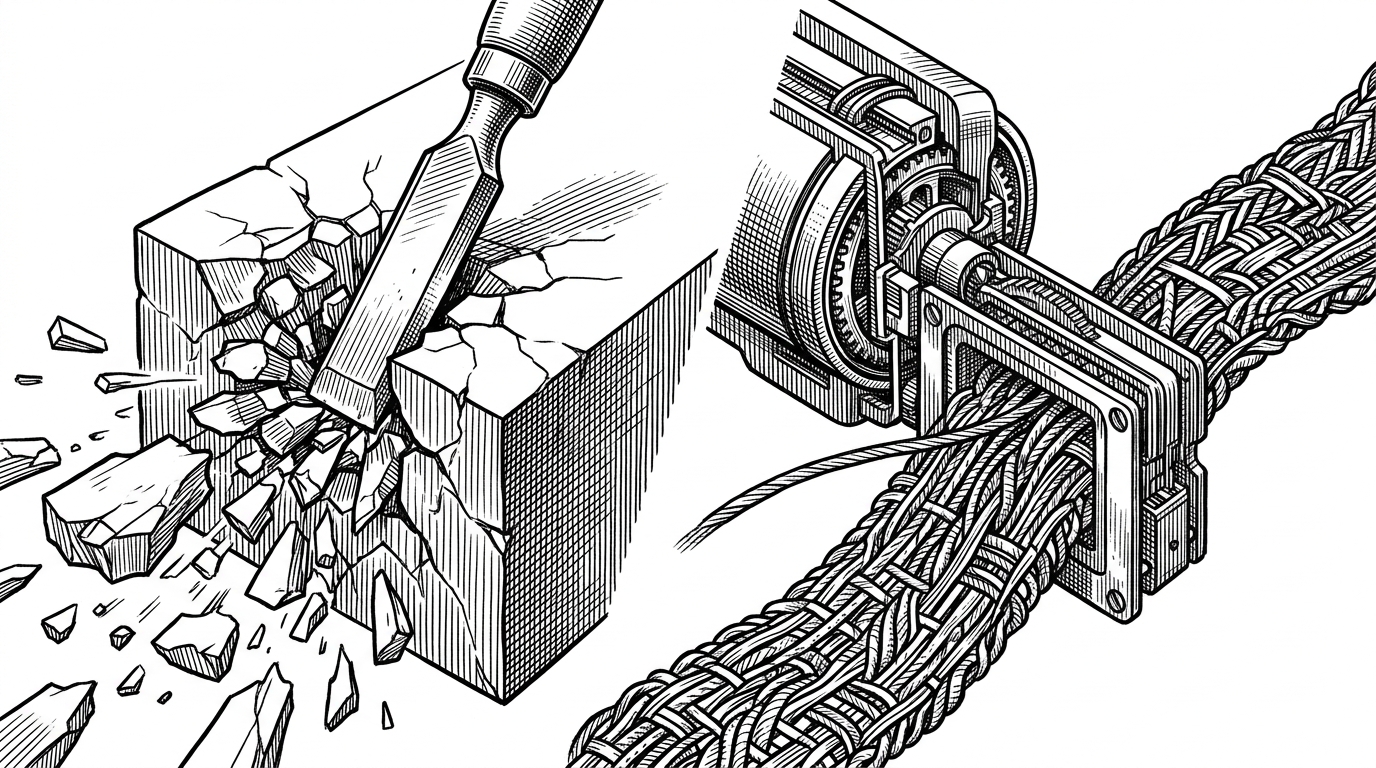
OBLITERATUS is careful about how it removes behavior. The goal is not to zero out a chunk of the network and hope for the best. The goal is to project away the refusal direction while preserving the rest of the tensor’s structure as much as possible.
| Method | What it changes | Risk of capability loss | Verification step | When it fails |
|---|---|---|---|---|
| Brutal ablation | Blanks out the target behavior directly | High | Usually minimal | When useful knowledge is entangled with the target |
| Projection-based editing | Removes only the targeted direction | Lower | Capability retention checks | When the target is not well isolated |
| Whitened SVD path | Normalizes variance before extraction | Lower than naïve PCA | Downstream evaluation harness | When the signal is weak or dispersed |
| Norm-preserving biprojection | Removes the direction while rescaling energy | Lower | Norm checks and benchmark runs | When the edit is numerically unstable |
That distinction is why the repo reads like engineering instead of ideology. It cares about collateral damage. It cares about norm drift. It cares about whether the model still answers normal questions after the refusal vector is gone.
OBLITERATUS is the most advanced open-source toolkit for understanding and removing refusal behaviors from large language models — and every single run makes it smarter.
Why This Is a Real Toolkit, Not a Demo
The maturity signals are hard to miss. There is a broad model loader, an evaluation layer, a Gradio app, ZeroGPU fallback logic, typed Python, tests, and a paper directory. This is not a notebook that happened to work once.
| Signal | What it tells you | Why it matters |
|---|---|---|
| `analysis/` modules | The repo can inspect several model-internal views | The intervention is informed, not blind |
| `evaluation/` harness | The edited model is tested after surgery | Capability loss is measurable |
| `app.py` UI | The workflow is usable outside the terminal | The tool is intended for broader access |
| `paper/` directory | The work is written up like research | The project is meant to be cited, not just run |
| `py.typed` and tests | The codebase expects maintenance | The repo is built like software infrastructure |
That maturity is part of the tension. The more polished the toolkit becomes, the less it behaves like a curiosity and the more it behaves like infrastructure. A system like that changes the cost of model editing, which is exactly why it matters.
The Compatibility Layer Tells You Everything
One of the most revealing files is `models/loader.py`. It carries shims for newer Transformers versions and older custom model code, which is a polite way of saying the repo expects reality to be messy.
# Conceptual shape of the loader layer
if transformers_version >= "5":
    patch_generic_utils()

model = load_custom_or_standard_model(
    name_or_path,
    trust_remote_code=True,
    quantization=maybe_bitsandbytes,
)
That kind of compatibility work is boring in the best possible way. It says the project was built for people who will actually try to run it on different architectures, library versions, and hardware tiers. That makes it useful, and it also makes it harder to dismiss as theater.
The Ethical Oddity at the Center
OBLITERATUS is a sharp example of a broader contradiction in open model tooling. The same methods that help researchers understand latent structure can also make safety mechanisms easier to remove. Those are not separate stories here. They are the same story.
That is why the repo is consequential. It is not just a jailbreak artifact, and it is not just an interpretability project. It is a fully engineered argument that model behavior can be edited after training, and that the people who ship models may not be the only people who can decide what stays in them.