muse-gadget-sdk: Muse Gadget SDK: How Meta Turns a $20 Board Into a Body for AI
An ESP32 firmware stack, a Noise-based voice tunnel, and a Hatch pairing model reveal a different way to build AI hardware: not as a smart speaker, but as a distributed agent peripheral.
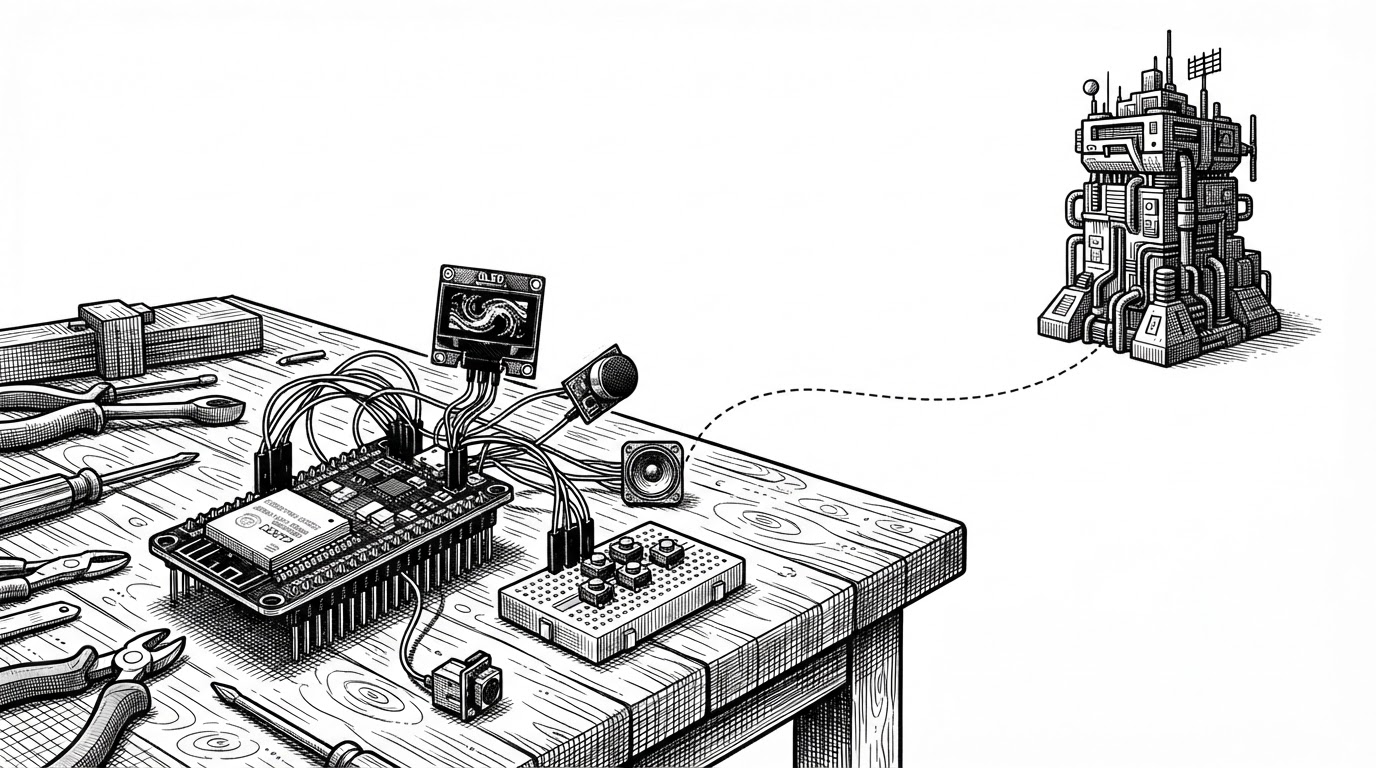
- Muse Gadget SDK matters because it treats cheap hardware as an authenticated body for a remote AI agent, not as a self-contained gadget.
- The repo’s real innovation is its glue layer, which isolates Muse logic from board-specific hardware details and lets one firmware model span many devices.
- Hatch pairing and Noise transport make the device feel stateful and identity-bound, which is closer to a distributed system than a normal IoT accessory.
- The project is unusually open at the hardware layer, but the most important AI capabilities still live inside Meta’s ecosystem and token rules.
The Strange Idea at the Center: AI Gets a Body
Muse Gadget SDK is not just another firmware drop. It is a way to give an AI agent a physical interface that can listen, speak, show state, and stay linked over time.
That changes the category. A smart speaker is a product. A Muse gadget is closer to a peripheral for an agent, with the board acting like the hands, ears, and display while the intelligence sits somewhere else.
| Frame | What the hardware is | Where intelligence lives | What makes it distinct |
|---|---|---|---|
| Traditional smart speaker | A closed appliance | Mostly hidden behind the product | The device is the product, not a peripheral |
| Home Assistant style device | A local automation node | Mostly local | The device executes rules and automations itself |
| Muse Gadget SDK | A signed body for Muse | Remote in the Muse VM | The hardware is open, but the agent relationship is stateful and authenticated |
What the Repo Actually Is
The repository splits cleanly into two SDKs. The ESP32 side is the main event, with firmware for boards, displays, audio, sensors, and voice interaction. The Linux side broadens the idea to Raspberry Pi class machines and local bridges.
The file structure reflects that split. Under ESP32, the core Muse code sits apart from board-specific definitions, while Noise handling, UI, and audio support live in dedicated components. The design reads like a small platform, not a demo app.
It's built by hackers, for hackers, just for fun. Side effects of tinkering may include bricked boards, voided warranties, brownouts, or bankruptcies. Proceed at your own risk!
The Glue Layer Is the Real Product
The architectural move that matters is the glue pattern. Core Muse logic talks through an interface, while the board layer handles the ugly reality of Wi-Fi, BLE, audio init, and boot behavior.
That separation lets the same application behave very differently depending on the board. A device with audio becomes a voice peripheral. A board without it can still act as a display or state endpoint.
| Layer | Role | Why it matters |
|---|---|---|
| Muse core | Owns link state and product behavior | Keeps the application consistent across boards |
| Glue interface | Bridges Muse to board services | Prevents board details from leaking upward |
| Board implementation | Handles radios, audio, sensors, power | Lets each device adapt without rewriting the app |
This is why the repo feels disciplined. It is not a pile of device hacks glued to a cloud API. It is a reusable embedded architecture with a narrow seam between product logic and hardware specifics.
Why Hatch Makes This Feel Like a Distributed System
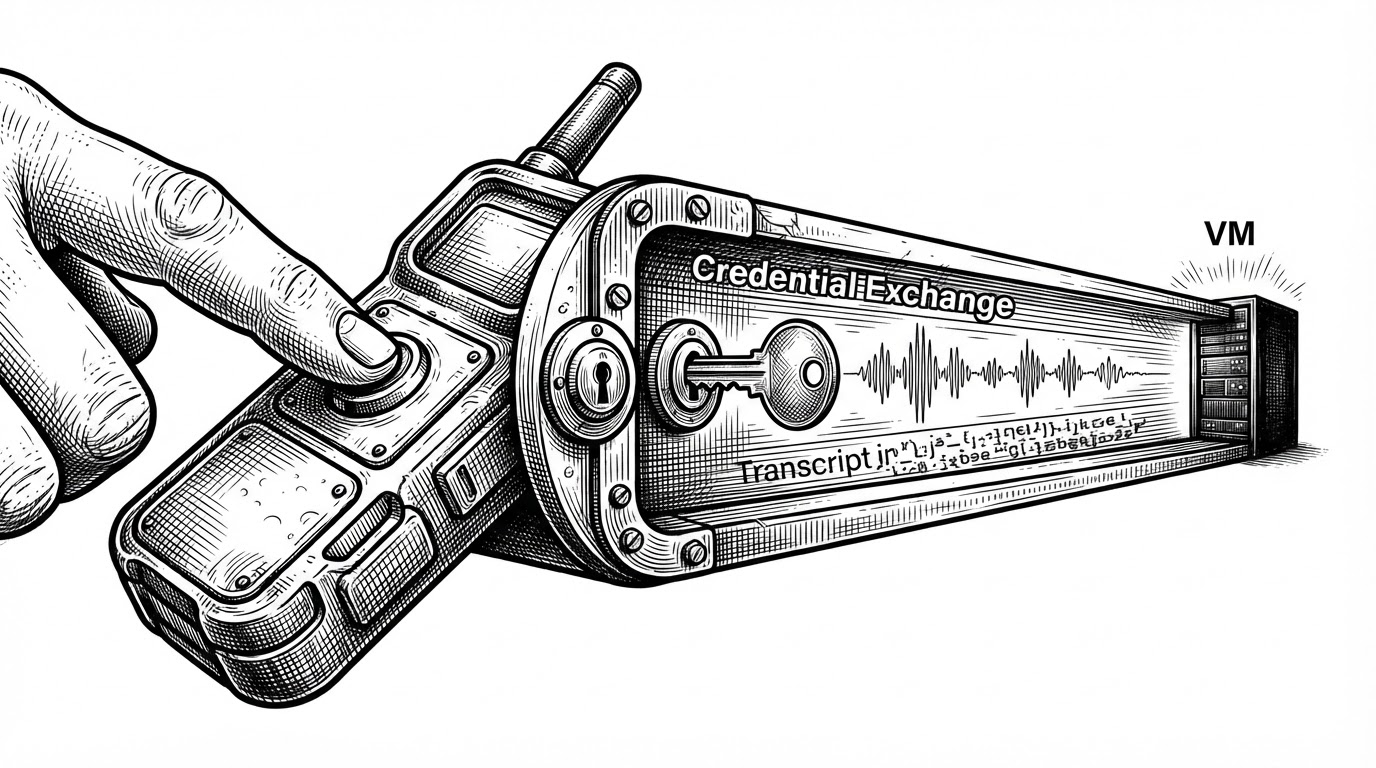
Hatch is not just signup flow. It is a pairing model that binds the gadget to a specific Muse VM, which makes the relationship feel identity-driven and persistent.
That matters because the device is not talking to a generic endpoint. It is joining a named agent instance, then carrying its own tokenized relationship forward through future sessions.
The result is a gadget that behaves more like a remote limb than a one-off client. Once paired, it belongs to a specific agent context.
How Voice Actually Moves Through the System
The voice path is the most revealing part of the repo. Push-to-talk opens a live session, audio is streamed as 16 kHz mono PCM, transcripts arrive as NDJSON, and TTS comes back through the same secure relationship.
The transport choice is unusual. The code uses HTTP over Noise, which is a more opinionated stance than a plain WebSocket or generic HTTPS wrapper. The emphasis is on mutual authentication and a tight session model, not just moving bytes.
Power management is part of the same story. The device can move between FULL, DOZE, and REST states, which means radio behavior and responsiveness are treated as first-class product decisions, not afterthoughts.
One Codebase, Many Boards
The repo leans hard on abstraction. A single codebase can span very different hardware because the board definition carries the details that matter: audio init, display support, sensors, and device quirks.
That makes the SDK feel surprisingly polymorphic. The same app can become a voice gadget on one board and a screen-first endpoint on another.
| Board trait | If present | If absent |
|---|---|---|
| Audio init | The device can join the voice pipeline | The device can stay display-focused |
| Display support | Muse can show state and interaction | The device can still function as a minimal peripheral |
| Power-sensitive radio behavior | Battery life gets managed as part of the UX | The board can run with simpler expectations |
The important point is not compatibility for its own sake. It is that hardware capabilities directly shape what kind of agent peripheral a board becomes.
The Comparison That Matters
Muse sits between three familiar models: local automation, consumer AI hardware, and classic smart-speaker ecosystems. It borrows pieces from each, but it is none of them.
| Model | Strength | Weakness | Muse's difference |
|---|---|---|---|
| Home Assistant and ESPHome | Local control and broad maker support | The AI layer is usually not the center | Muse pushes the agent relationship to the front |
| Rabbit and Humane style hardware | Integrated consumer experience | Hardware risk is concentrated in one product | Muse shifts hardware experimentation to builders |
| Smart-speaker ecosystems | Simple voice UX | Closed platform boundaries | Muse keeps the hardware side open while the agent remains proprietary |
That positioning is clever. Meta does not have to ship the perfect gadget first. It can publish the software bridge and let builders explore the form factor around it.
What This Model Suggests
Muse Gadget SDK points toward a different future for AI hardware. Instead of one monolithic device, you get authenticated peripherals, local affordances, and agent endpoints that can wear many forms.
That is a strong idea. It also comes with a catch. The hardware is open, but the most valuable behavior still runs inside Meta’s ecosystem, under token rules and product boundaries that the builder does not control.
So the repo is both liberating and limiting. It opens the door to hardware experimentation, then reminds you that the agent behind the door is still someone else’s.