Agentic-development-dapps: The Actor is the Agent: Inside Gear's Autonomous dApp Blueprint
How the Agentic-development-dapps stack uses the Actor Model to build blockchain applications that can wake themselves up and finish the job.
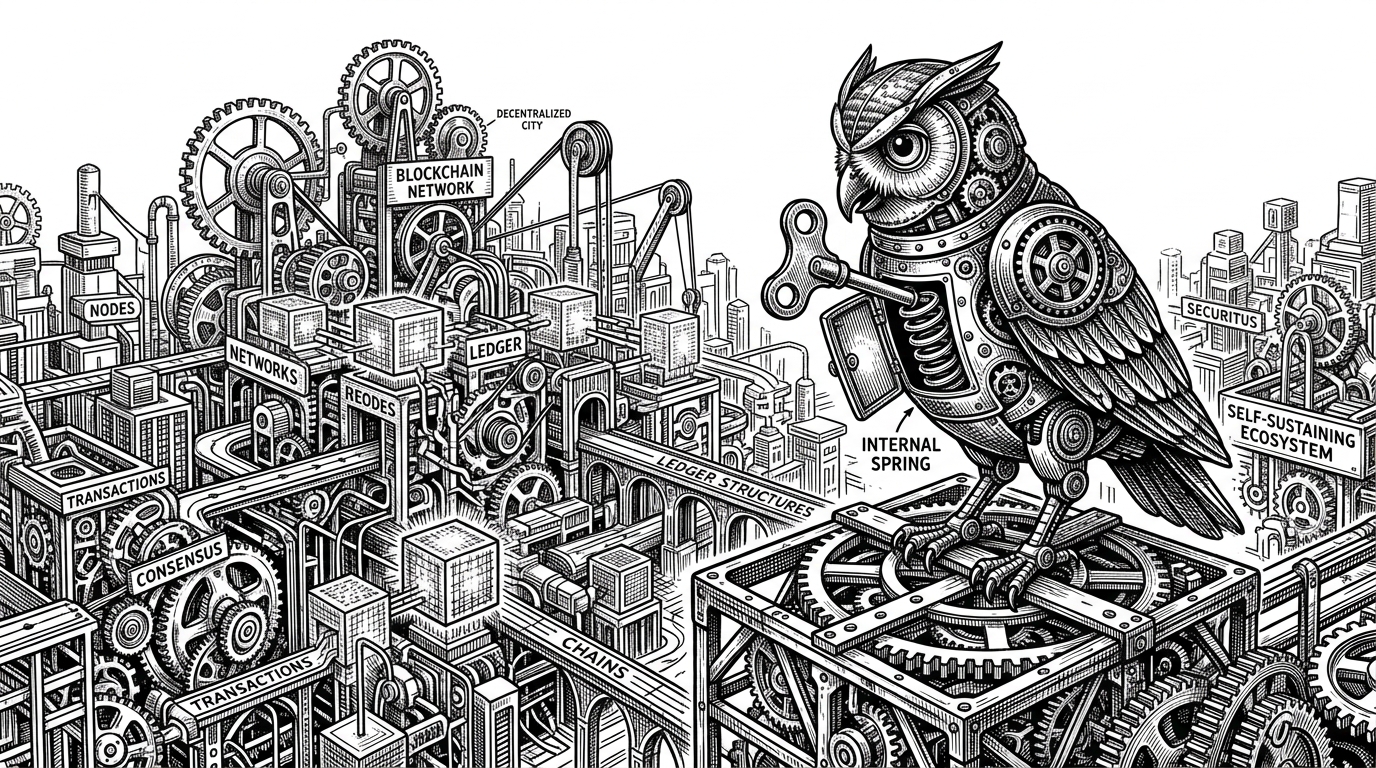
- Gear uses the Actor Model to enable on-chain programs that execute their own logic via native delayed messages.
- The Sails framework provides an IDL bridge that maintains type safety between Rust contracts and TypeScript frontends.
- Autonomous agents on the Vara Network function as self-triggering programs rather than external bots or wallet-based accounts.
- Frontends for agentic dApps synchronize with asynchronous backend state by polling the network block height as a system clock.
The Program That Sets Its Own Alarm
The agentic story is rarely about AI writing code. It is about AI managing state. Most AI coding tools dump a file and leave. The gear-foundation's Agentic-development-dapps project is a prototype for a new species of software. It is a dApp where the backend is a self-triggering Actor on the Vara Network and the documentation is a living record of an AI agent's architectural decisions.
The most compelling hook is the delayed self-trigger. This is a blockchain program that wakes itself up to execute logic without a human or a centralized cron job. It is the first step toward truly autonomous on-chain organisms.
msg::send_bytes_with_gas_delayed(
    exec::program_id(),
    payload,
    trigger_gas,
    0,
    delay_blocks,
).expect("Failed to send delayed message");
Sails and the IDL Bridge
The repository utilizes the Sails framework. This introduces an Interface Definition Language (IDL) that acts as a type-safe contract between Rust and TypeScript. This removes the integration friction that usually kills AI-generated code.
The IDL file acts as the single source of truth. Changes to the Rust contract automatically update this file, which then informs the TypeScript types on the frontend.
The Actor vs. The Account
The competitive landscape for agentic development on decentralized applications is rapidly evolving. While other networks focus on Account Abstraction, Gear leans into the Actor Model.
| Feature | Gear (Actor Model) | Starknet (Account Abstraction) |
|---|---|---|
| Execution | Parallel | Sequential |
| Trigger Mechanism | Native Delayed Message | External Relayer |
| State Storage | Persistent Wasm Pages | Key-Value Storage |
| Agent Identity | Program-as-Agent | Wallet-as-Agent |
Designing for Asynchronous Reality
Building UIs for autonomous agents requires a different approach. The frontend must stay sane when the backend is an autonomous actor changing state while the user is away.
The solution is a robust background polling strategy. The frontend utilizes a custom hook to fetch the current block height from the Gear network every three seconds. This block number serves as the system clock, allowing the UI to react to state changes initiated by the delayed messages rather than direct user input.